






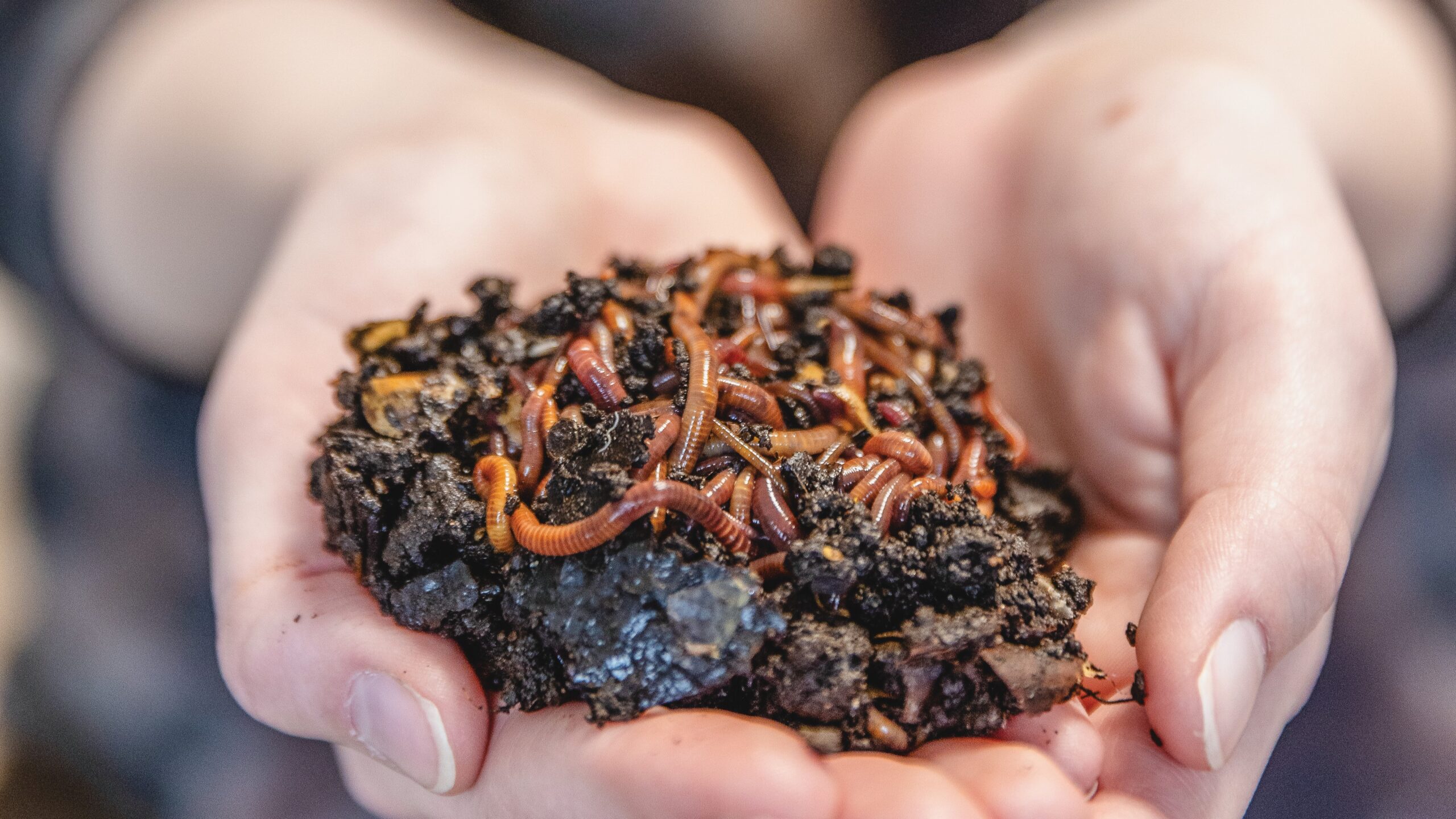
In the corner of the Sustainability Office’s kitchen stands a small box full of powerful little friends—wriggling earthworms.
“We love the worms,” Megan Butler, the director of sustainability at Mac, says fondly.
The soft-bodied invertebrates, mini compost creators, are small but mighty contributors to Mac’s commitment to zero waste. Fed food scraps from staff lunches and dinner events, the worms enjoy a nearly endless buffet, delicacies that their human neighbors intentionally saved from the waste bin. Eventually the Sustainability Office hopes to find the little composters additional homes in staff and dorm kitchenettes around campus.
“We want to make sure that when people are at Mac, they recognize that sustainability is part of the culture here—this is really important, and a part of who we are,” Butler says.
It’s all part of Macalester’s work to advance a lofty—but definitely attainable—goal: to become the first campus in the US to achieve zero waste.
Zero waste, as defined by the Zero Waste International Alliance, means regularly diverting 90 percent of all waste from landfills, incinerators, or other disposal mechanisms, through reuse, repair, recycling, or composting—anything that promotes maximum use of an item or material. Macalester has been reaching for this goal since 2011. Current diversion rates sit around 73 percent—and while progress has not always been steady or linear, it’s an astronomical improvement since the college recorded a rate of 19 percent in 2007.
No institution in the US has reached the magic number yet, but Macalester leads the pack among peer colleges. The college has earned first place in the national Campus Race to Zero Waste and maintained a 70+ percent diversion rate for the past three years. It fell only four points short of becoming the first small campus to earn a platinum ranking in the Sustainability Tracking, Assessment & Rating System (STARS). The self-reporting framework is offered by the Association for the Advancement of Sustainability in Higher Education (AASHE) for institutions to measure sustainability efforts.
To hit this benchmark, Macalester has been busy. Each year, the community saves thousands of pounds of food from the trash, mends countless outfits, rehomes mini fridges, and repairs dozens of bicycles in the campus bike shop. The list goes on and on.


Building a zero-waste culture
Guiding the work is the new 2025 Zero Waste Action Plan (ZWAP), developed in partnership with the nonprofit Post-Landfill Action Network. The culmination of three years and more than 700 hours of work from five student fellows and Sustainability Office staff, the plan has three areas of focus: infrastructure, behavior, and policy.
The college has made significant investments in infrastructure in recent years—it boasts compost and recycling facilities in every residence hall, a reusable to-go food container system called Reuzzi for students, and all-compostable catering supplies from Bon Appétit. Together, these efforts make zero waste measures easy to access and easy to internalize, which supports the second focus area, behavior.
Atlas fellows Abby White ’26 and Lorenna Graham ’26, who helped develop the new ZWAP, both note that even perfect infrastructure and policy proposals will fall short without behavioral change. “A huge part is education and making it as easy as possible,” Graham says.
“Using language that makes it feel possible helps,” adds White. “Some people might not know exactly what ‘zero waste’ means. So creating fun events and promoting free resources on campus helps students understand what it actually is—we’re not saying you can never throw anything away again. We’re not the garbage police!”
While working on developing the ZWAP, the two fellows contributed to a financial assessment of infrastructure, logistical planning for new programs, and helped create new training videos and activities for students who take the Sustainable Scots first-year workshop.
“We’re working on creating a culture of sustainability and zero waste—we want it to be one of the pillars of Macalester,” Graham says. “It’s like, you come to this school, and you’re gonna do your homework: we’re academically rigorous. And we’re stewards of our community: we’re going to be sustainable.”
Even though progress can be challenging at times, they both say that the Macalester community is still on board. “It feels very easy to participate in sustainability and zero waste here,” White says.
The Sustainability Office has other ways to subtly encourage people to get involved in zero waste efforts, too. Learn-to-mend and repair workshops happen frequently in the Idea Lab, and the office has partnered with clubs across campus to encourage more people to participate in environmental and outdoors activities—putting on a learn-to-bike workshop with the Biking Club and a Camping 101 program with the Outdoors Club.
“The idea is to get more people outside, hoping that that will lead to more of an appreciation,”
Butler says. “If somebody has a good experience with camping, maybe they’re also going to recycle and compost more because they’ve had that positive interaction with sustainability in other ways.”


Student-driven change
Other projects the students are working on include setting up an internal digital asset management system to redistribute hard-to-recycle items like furniture throughout campus, maintaining the Reuzzi takeout container infrastructure, participating in weekly food recovery and delivery, piloting an app that alerts students within MacNav (Mac’s student-facing app) when there’s leftover food from events, running reuse/repair workshops, piloting projects like appointing a “green representative” for each sports team, and partnering with community and student organizations on environmental justice initiatives.
One of the most visible efforts on campus is MacShare, a student-run food co-op that brings local, sustainable, and cheaper produce to campus. Student volunteers purchase fresh fruits, vegetables, and other staples like tofu and eggs from local co-ops and then sell them at cost out of the Janet Wallace Fine Arts Center.
“MacShare was initially conceived as a justice-focused mutual-aid organization,” explains Nurain Jiwani ’26, who has been involved since his first year and also co-leads food recovery efforts across campus. “Living up to that vision is both a great goal and a great challenge. MacShare distributes free food to students who need it via free vouchers, which are funded by the Open Pantry. We do what we do because we believe everyone should have access to affordable and healthy food.”
The Free Swap Outlet/Garage is one of the Sustainability Office’s top points of pride, and a major cornerstone of the ‘infrastructure’ bucket of the ZWAP. The free item exchanges, one located on Summit Avenue and another in the garage in the Sustainability Office’s backyard, are open to students, staff, faculty, and community members. Also contributing are local organizations that distribute clothes, appliances, and other items to folks in need around the Twin Cities. It’s a big win for both reaching diversion goals and supporting the community.
“It really serves an important purpose and has a big impact,” Butler says. “And the sheer scale of it is impressive. It’s a crazy quantity of things we’re processing. It’s unheard of for such a small campus.”
Environmental impacts
Environmental justice, community engagement, and mutual aid are northstars of the ZWAP. Initiatives like food recovery work toward zero waste goals but, more importantly, help reduce food insecurity on and off campus.
The Sustainability Office partners with Loaves and Fishes, a Minneapolis non-profit that provides healthy meals to food-insecure Minnesotans. Students, volunteers, and Bon Appétit staff recover food from Café Mac each week. Recovered food—anything that is untouched, unopened, and safe to eat—is then driven by students to Loaves and Fishes’ distribution centers. Any food classified as waste is sent first to a nearby pig farm, or to composting.

Most of the waste produced on campus is food-related. At the same time, food insecurity
is increasing across the Twin Cities. “It feels wrong to have both,” Butler says. “I think it inspires us to keep investing time and effort into making sure food is accessible that would have otherwise been wasted.”
“Marginalized communities bear responsibility for waste they didn’t produce,” says Jiwani. “Macalester is a community in and of itself, and it can be easy to forget about the larger community we live in. If our neighbors need the food we don’t want anymore, the least we can do is to share it.”
Food recovery is just one part of environmental justice work, though. Butler emphasizes that historically disadvantaged communities already bear a disproportionate burden of waste’s environmental impacts—pollution, hazards, and toxic emissions. The less Mac can throw away, the better.
“Waste doesn’t just go away,” she says. “At Macalester, we send our waste to landfills and incinerators in Red Wing and Mankato—it’s the same story, with a disproportionately burdened community bearing the brunt. It’s just not in our backyard anymore. We need to do our part to reduce and eliminate these impacts.”
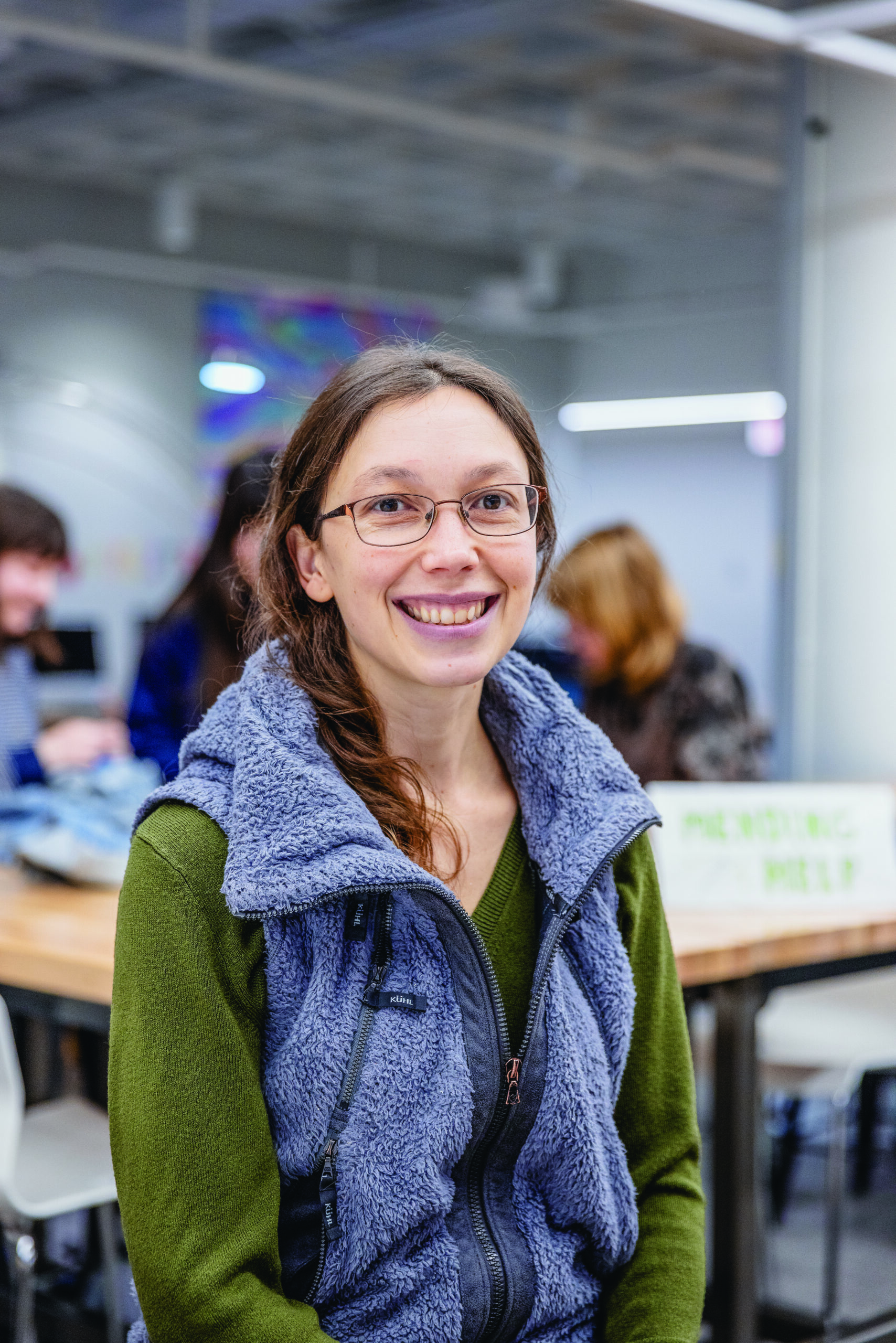
“Waste doesn’t just go away. At Macalester, we send our waste to landfills and incinerators in Red Wing and Mankato—it’s the same story, with a disproportionately burdened community bearing the brunt. It’s just not in our backyard anymore.”Megan Butler Director of Sustainability

Finding joy in the work
The enthusiasm found within Facilities Services and the Sustainability Office is infectious—an attitude that Butler intentionally takes, knowing the emotional toll this work can require.
“I know climate anxiety around environmental issues can really shut folks down,” she says, “so I really focus on what can be done, and the empowering components of everyday actions—which is something I need, as an inherently impatient person. On this scale, I can see the impact of my work every day, and getting to interact with people—it’s rejuvenating.”
White echoes this. “It can feel so daunting, but there’s so many ways on campus, almost entirely student-led, to help make a difference,” she says. “We might not be stopping climate change, but we’re helping provide people with things they need and finding solutions to other sustainability problems so that they don’t negatively affect others.”
Jiwani sees this firsthand during MacShare hours, too. “It’s more than an on-campus market—it’s a community space. Every Friday, a line starts to form before we open, abuzz with energy. I love to chat with everybody and help them pick out their produce. My favorite part is when a new customer gets to the end of the line and I can see their surprise at the low total. It’s a great feeling knowing that we are helping increase food access on campus.”
“We know we’re not going to end all waste by implementing all these initiatives,” says Graham, “but it’s so important to remember that doing what you can is better than doing nothing.”
Beyond Zero Waste
As an institution, Macalester is committed to advancing sustainability goals of all kinds—not just zero waste. Reducing emissions and energy consumption is a central facet of the college’s strategic plan. And one of the biggest examples of that commitment will soon be found underneath the college’s new residence hall and welcome center, which is currently under construction.
Crews are installing a geothermal pump system under the new building, a rare feature for colleges in urban and northern climates. Aquifer-based geothermal systems are a newer technology that taps into the thermal energy stored in groundwater. Underground temperatures are steady year-round, creating opportunities for thermal exchange. During summer months, the naturally cool groundwater provides a head start on air conditioning, and in winter, the same water is significantly warmer than the air outside, requiring less heating to meet indoor temperature needs.
Eventually, the college plans to expand the energy-efficient system across campus. “The geothermal technology being integrated into the building provides urban campuses with a viable pathway for moving away from fossil fuels,” says Nathan Lief, associate vice president for facilities services. “As the system is expanded to include other buildings, it will be a game changer in lowering emissions and reducing costs for the college.”
To help create a culture of sustainability around these issues, the Sustainability Office regularly promotes opportunities to get a better sense of how bigger-picture infrastructure works at the college. Boiler plant and steam tunnel tours, along with a solar panel tour of campus rooftops, are community favorites.