






Even before universities came under scrutiny by the Trump administration, a cultural conversation was under way about the value of a college degree. Thought leaders wondered aloud: Is the high cost of tuition worth paying? Are the skills students learn at college relevant to the workplace? Do all students have fair access to higher education? What is the purpose of college?
“Higher education is evolving, yet our mission remains largely unchanged,” says Lisa Anderson-Levy, Macalester’s executive vice president and provost. “We’re still fundamentally in the business of helping young people figure out their place in the world and empowering them to contribute meaningfully to a society that’s becoming increasingly complex.” That noble pursuit exists in tandem with career preparation at liberal arts schools, which cultivate timeless and transferable skills: Clear communication. Critical thinking. The ability to analyze data and transform it into a narrative.
Not everyone wants or needs to go to college. Still, surveys clearly show that college graduates’ lifetime earnings eclipse those of people without a degree, and graduates are more likely to pursue a job they consider a calling. Overall life satisfaction is higher among those who’ve continued their education.
“A big part of what we’re doing at liberal arts schools is helping students have exposure to different ideas and develop their critical thinking skills and their ability to adapt to change,” says Laura Renée Chandler ’03, special advisor to the provost and dean for community engagement at Colby College. “That’s a huge purpose of college, along with helping students be prepared to interact with people from different backgrounds and experiences.”
In these pages we talk with four Macalester alumni who work in higher education administration, along with the co-chair of Mac’s Strategic Plan Implementation Committee, Paul Overvoorde, about the challenges facing colleges and universities—and why they still give higher ed an A.

The college search has gotten easier; recruiting students is getting much harder.
When Rick Bischoff ’89 was conducting his college search, he drove half an hour to the library in his small Washington town to skim the hefty Fiske Guide to Colleges. Later, he sifted through the brochures colleges had mailed him, doing his best to pick the schools that looked like they had smart students. These days, “our ability to reach the right student with the right message is vastly different than it was forty years ago,” says Bischoff, the senior vice president for enrollment management at Chapman University. A small-town kid with internet access can learn about any college from their bedroom and communicate with multiple admission offices via email and text.
Colleges still flood prospective students with postal mail, but the deluge starts much earlier, as even freshmen (and their parents) are thinking about college. Enrollment management directors like Bischoff also harness digital advertising and social media and rely on sophisticated data analytics to determine which students receive what communication. The Common Application has both simplified the process, by allowing students to fill out one set of paperwork for multiple schools, and made it more complex, by increasing the number of applications those schools receive and making admission more competitive.
Bischoff’s job is about to get a lot harder. This year marks the precipice of the “demographic cliff,” a sharp decline in the number of high school students. Far fewer babies were born during the Great Recession that began in 2008, as young people focused on economic concerns—and the trend has not reversed. Already, the number of high school graduates in parts of the Northeast and Midwest has shrunk.
Colleges that draw applicants from across the country—rather than the immediate region—are better positioned to weather the changes. “One of Macalester’s strengths is that it has, for quite some time, been recruiting very broadly and has developed a national reputation,” says Overvoorde, who, beyond his strategic planning work at Mac, also serves as an associate provost. “Having that diversified portfolio of where our students are arriving from is a big advantage.” Mac’s expansive international recruiting and long relationship with United World Colleges may buffer it against the uncertainty many colleges face as the Trump administration has reduced access to student visas.
One type of institution is not short on students: private Historically Black Colleges and Universities, which have seen domestic application numbers skyrocket in the past few years. Howard University, where Tonija M. Hope ’97 is associate provost for international programs, has experienced four record-breaking application seasons. “I believe it is because a lot of these attempts to make students of color feel comfortable at traditionally white institutions are disappearing, and so they are flocking to us,” she says.
It’s a great—if stressful—time to be a college student.
“From the student perspective, the experience of going to college today is as good as it has ever been,” Bischoff says. “Colleges and universities have put a lot of attention into the student experience.” That focus is somewhat self-serving, he adds: U.S. News rankings factor in retention and graduation rates, and happy students are more likely to stay in school and graduate. To attract students in an increasingly competitive marketplace, colleges are investing in better facilities and experiences. Public flagship universities in particular, Bischoff says, have improved undergraduate teaching and added honors programs and additional housing.
Colleges of all types, including Macalester, have expanded career and internship programs as students worry more about finding a job. “Students are under a lot of pressure,” Chandler says. “They want to have a career that makes their family happy but also will help them care for their family members as they get older. So they are working really hard, and they are really stressed.”
As part of its strategic plan, Macalester is updating its general education curriculum with the goal of more clearly articulating the value of skills such as critical thinking and writing in a career context. The college is also working to expand participation in high-impact practices such as internships, study away, and summer research opportunities. Among recent graduating classes, 88 percent of students participated in at least one of these activities. It’s an impressive number—but, Overvoorde says, “for the 12 percent that do not participate, we have started to gather some information about whether there are barriers: life circumstances or other issues that have cropped up that have prevented people from participating.” The college can then determine how best to close the gaps.
Numerous institutions are investing in study away, particularly in shorter, faculty-led trips that are more accessible than semester-long programs. This is especially true at Howard University, where Hope says faculty-led programs are a strategic priority in the College of Arts and Sciences. “The transformation that happens to students when they leave their comfort zone; the level of independence gained from solving problems on their own; the amount of social capital gained from having had an experience abroad—when they come back, it’s like they’re a whole new person.”
All of this takes money.
Every college and university is focused on the sustainability of its financial model, Overvoorde says. “At Macalester, we’ve been very fortunate because the model has been generously supported by alumni donations,” he says. The more financial aid donors contribute, the more the college can sustain its mission.
Medical schools, too, are trying to raise enough money to support the best students, says Mark
Anderson ’81, dean of the Pritzker School of Medicine at the University of Chicago. The University of Chicago currently awards full-tuition scholarships to about half its students, and some assistance to 90 percent of them. But it’s not enough. The institution has prioritized being able to underwrite the full cost of tuition as well as housing, food, textbooks, test fees, and professional travel for meritorious students who lack the means to attend. “What I’m trying to solve here at the University of Chicago is making sure we don’t turn away the very best people who we’re trying to recruit because they can’t afford it,” Anderson says.
His and his colleagues’ work has been complicated by funding cuts under HR1, the “One Big Beautiful Bill” signed into law by President Trump in summer 2025. The university’s teaching hospital, like others across the country, serves a large number of patients who rely on Medicaid to pay their bills. Such hospitals already struggle to balance the books, as Medicaid does not cover the full cost of care. But the cuts to Medicaid in the One Big Beautiful Bill exacerbated the problem.
“Couple that with the cuts to our other mission, which is research,” Anderson says, pointing to proposed budget reductions for the National Institutes of Health (NIH). “Almost all of the current therapeutics came out of foundational, fundamental work that was NIH-sponsored. Those cuts, should they manifest, would make it even harder to do this research that has such a clear return on investment.”
As funding issues grow, the pipeline of students interested in becoming scientists is often put in jeopardy. “The tools we have to make scientific discoveries are just mind-blowing, and the ability to have impact as a young scientist is better than ever before,” Anderson says. “My biggest concern is that talented young people considering careers in scientific research aimed at curing diseases will be dissuaded from pursuing this important work.”

Colleges want to support all kinds of students—regardless of what that’s called.
The practices that have been called “diversity, equity, and inclusion” have existed under various names for decades. “The impetus comes from the Civil Rights Movement and changes that were happening both in society and within higher education,” Chandler says. More recently, colleges and universities have realized it’s not enough simply to recruit students from varied backgrounds without providing the resources they need to succeed. “These efforts have expanded to include things like inclusion and belonging that focus on the overall climate of the institution and how welcoming it is,” she says.
Such efforts include offering adequate financial aid and organizing heritage month programming. Hiring faculty from diverse backgrounds is key, says Chandler, who describes her Macalester experience as significantly shaped by professors such as Duchess Harris in American studies and Kendrick Brown in psychology. “I remember thinking how amazing it was to have these faculty members of color with PhDs who were incredible teachers,” she says. “It’s important for students to see themselves reflected in the classroom.”
Chandler’s own work at Colby College focuses on faculty development, multicultural programs, and restorative practices such as talking circles that build community and help it deal constructively with conflict. She also oversees support programs for the 17 percent of Colby students who are, like Chandler, the first generation in their families to attend college.
The current pushback against inclusion efforts is part of an ongoing cycle, Chandler says. “These fights have been going on for quite some time, and this is the newest iteration. I have ancestors and people who came before me who were fighting this and didn’t know what the outcome was going to be, but they continued to push forward, and I will do the same. This moment is particularly challenging and difficult, but the importance of the work remains.”
Our Panel of Experts
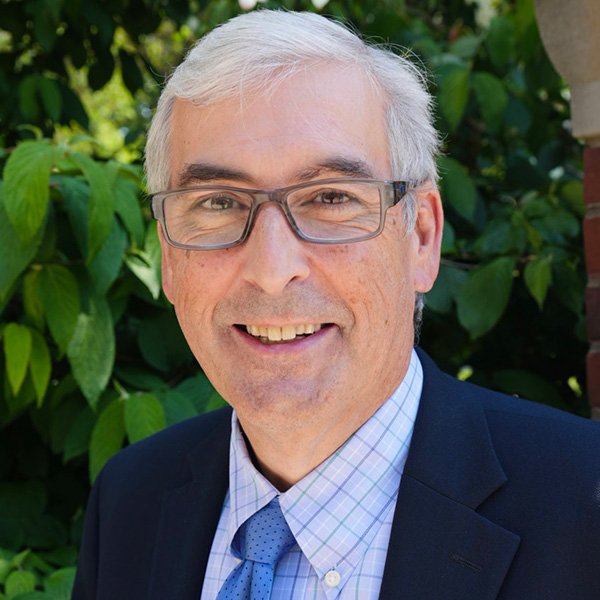
Mac major: mathematics
Senior vice president of enrollment management at Chapman University.
College highlights: Political science faculty Dorothy Dodge and Chuck Green. Educational studies professor Ruthanne Kurth-Schai sparking an interest in educational policy. His first job in admission as a work-study student.
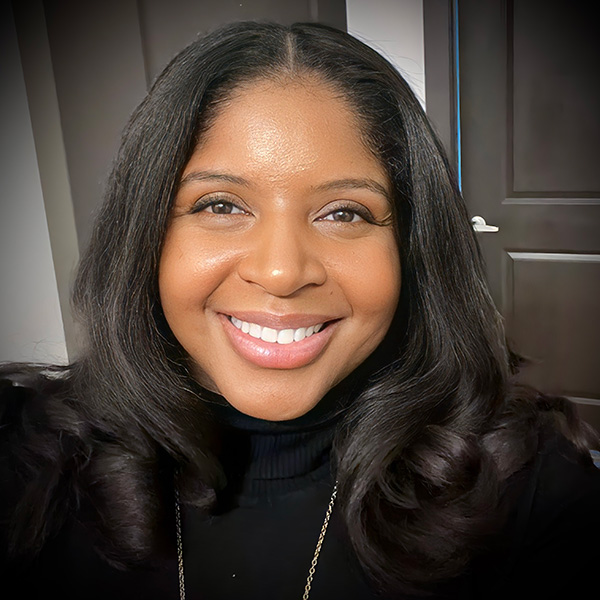
Mac major: political science
Special advisor to the provost and dean for community engagement at Colby College.
College highlights: Spirited classroom debates with Harry Hirsch in political science. Mentorship from Peter Rachleff in history. The course Blacks in Paris with Duchess Harris in American studies and a Mellon Mays Undergraduate Fellowship.
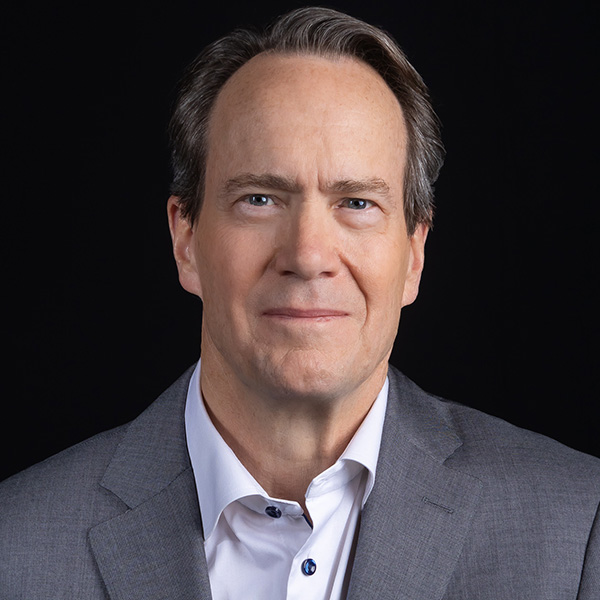
Mac major: biology
Executive vice president for medical affairs, dean of the division of the biological sciences, and dean of the Pritzker School of Medicine at the University of Chicago.
College highlights: Engaging teaching by Truman Schwartz and Janet Carlson in chemistry and Russ Whitehead in biology. A stint during January term in a biomedical research lab.
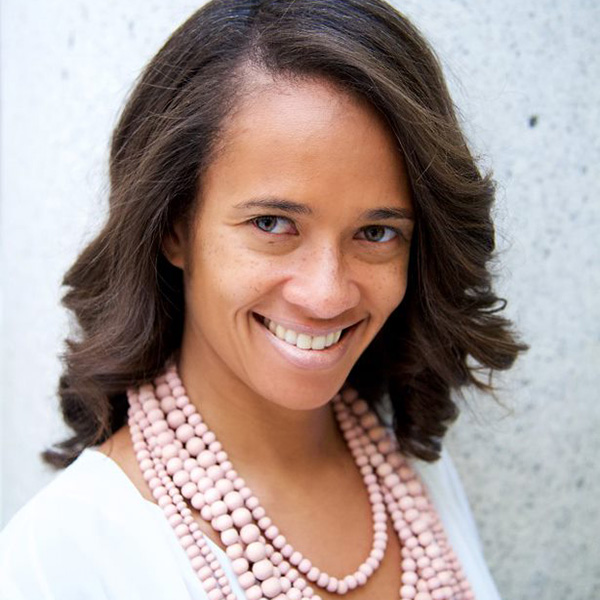
Mac majors: Latin American studies and Spanish
Assistant provost for international programs at Howard University.
College highlights: Studying in the Dominican Republic during the country’s 1996 presidential elections and writing an honors thesis about race and politics in the DR. Dancing mere feet from Prince during a spontaneous visit to Paisley Park.
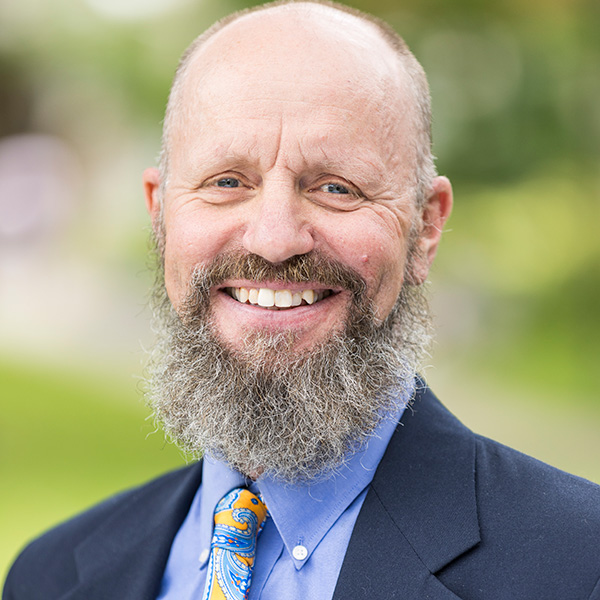
Associate provost at Macalester, co-chair of the Strategic Plan Implementation Committee, and professor of biology.
This is his twenty-fourth year at Macalester.
Robyn Ross is a writer in Austin, Texas.