





Photo Credit: Leah Nash
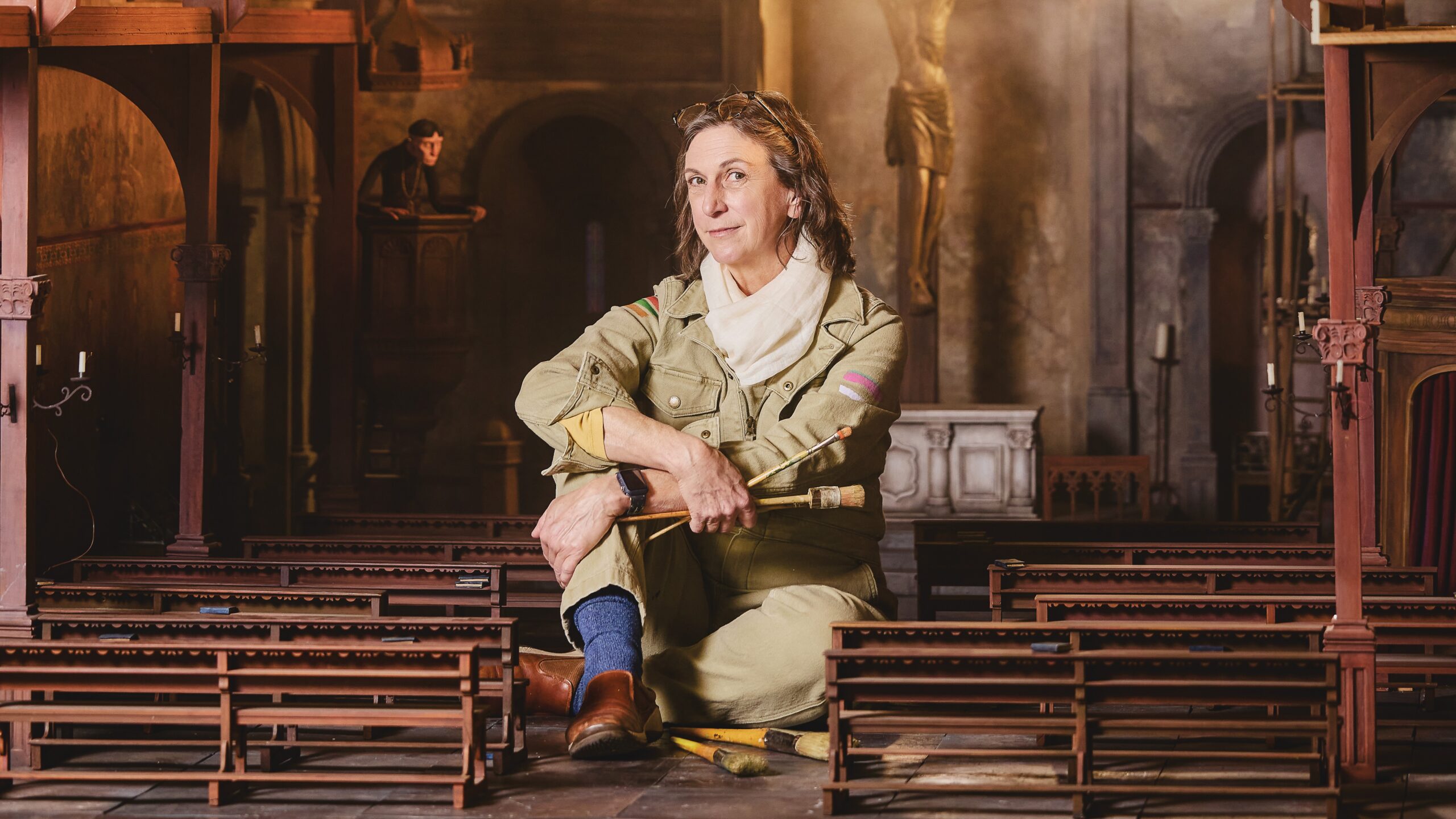
Polly Allen Robbins ’85 painted many of the iconic objects and sets for the Academy Award-winning animated film Guillermo del Toro’s Pinocchio. She’s been hired by top national brands to help create striking stop-motion commercials. And her work has been showcased in an exhibition at New York’s Museum of Modern Art.
But it’s possible that none of that would have happened if she hadn’t bombed a computer science test at Macalester. “We were learning how to do BASIC programming, and the instructor told us a good percentage of us would get to the first test and decide we couldn’t do it. And that’s how far I got,” she recalls. “I knew it wasn’t going to work out, so I combed through the course catalog and decided to transfer to Dan Keyser’s Theater Technology and Design class.”
In Keyser’s class, she and a half-dozen other students learned the foundations of technical theater: the basics of drafting and scenic construction, painting techniques, and principles of lighting and design. She loved the hands-on craft and the collaborative energy of production work, especially as the group built and finished the sets for Macalester’s spring play.
And Robbins wasn’t just good at it—she was hooked. She graduated with an interdepartmental independent major in studio art and theater technology and design.
During her twenties, she worked on set design projects for some of the Twin Cities’ most prestigious theaters—Guthrie, Penumbra, and the Children’s Theatre Company. She then entered the University of Texas–Austin’s highly respected theater design program, and, after earning her MFA, headed to Portland, Oregon, where she’s been ever since.
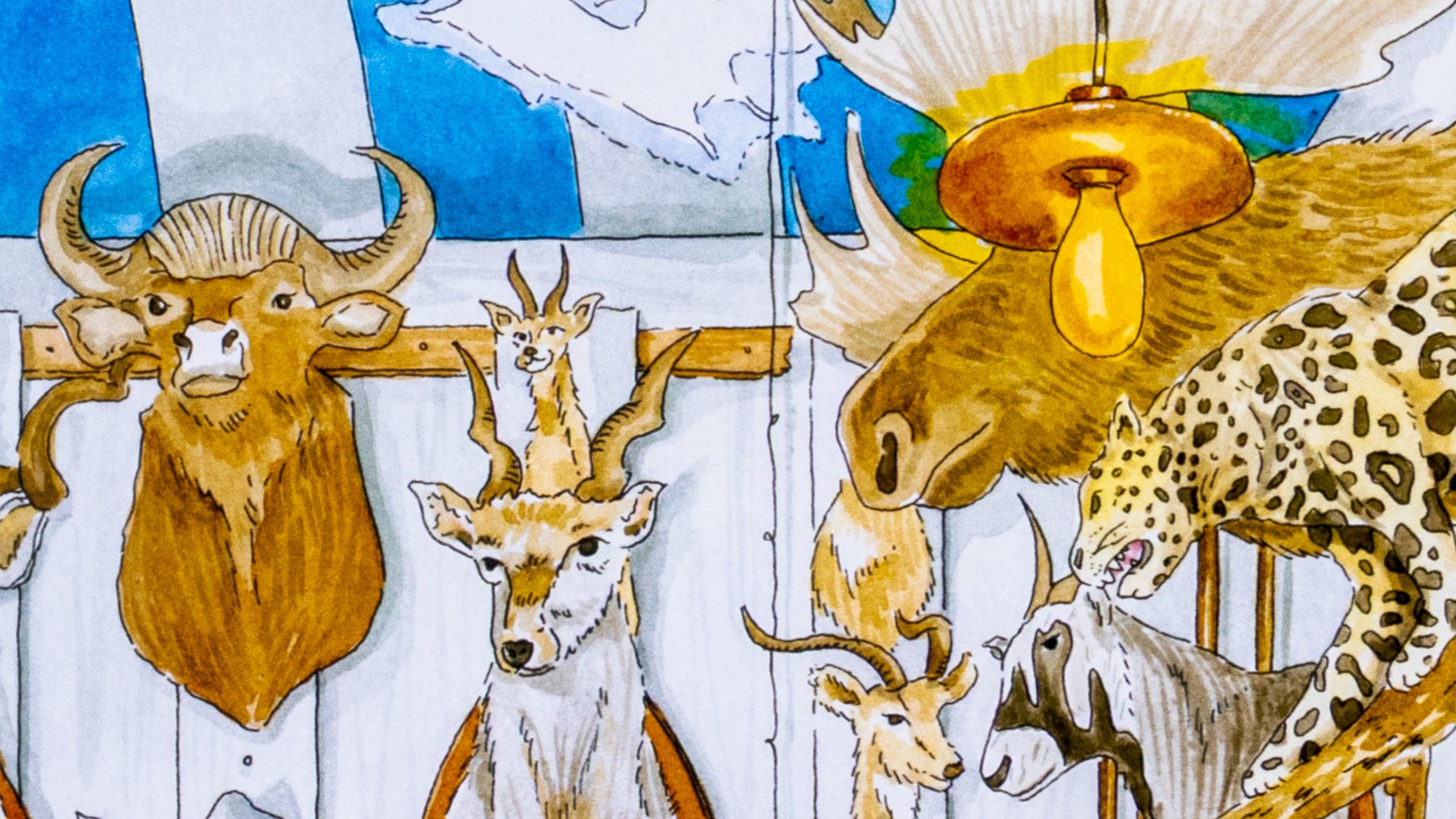
She found her way to Will Vinton Studios, a pioneering animation outfit known for its iconic California Raisins claymation projects. Portland was becoming a hotbed for stop-motion animation, and many of Robbins’ skills—painting, fabrication, and lighting—translated almost seamlessly. Unlike two-dimensional animation drawn by hand, stop-motion animation pieces together thousands of photos of three-dimensional objects arranged on a miniature set. Among her projects with the studio was The PJs, an Eddie Murphy-created stop-motion animation television show that debuted in 1999 and ran for two years.
She eventually took on specialty painting and fabrication roles for projects that varied widely in tone, like the unsettling Adult Swim show The Shivering Truth, from animation studio ShadowMachine, and the vibrant Nickelodeon project Tiny Chef. She’s been called in to help craft holiday commercials for Buffalo Wild Wings and Petco. When she’s not working on stop-motion animation projects, she often works as a set painter, most recently for Apple TV’s Palm Royale.
Robbins brings her signature collaborative spirit and attention to detail to each project. As a rule, her job is not to stand out with a specific style. “I’m like an actor who is stepping into a role,” she says. “I’m collaborating with an entire team to bring one style to an audience that is supported by a story.”
For example, she was one of nine scenic artists on Guillermo del Toro’s Pinocchio, a stop-motion animation of the nineteenth-century tale set in Italy. She describes the experience as a “dream project,” even though she was doing much of her work during the pandemic.
Her work shows up across the film, including on a large crucifix that appears in numerous scenes. While the object itself was constructed by another artist, she painstakingly applied layers of masking tape and paint to create the precise, striking wood-grain finish the piece needed.
After COVID-19 shut studios down in early 2020, she found herself doing much of her work at home. “At some point, they delivered the attic to me,” she recalls. “It’s the first place we meet Pinocchio in the movie, and I painted it in my garage.”
Helping create a set during a pandemic was one of Robbins’ tougher challenges, but the chance to solve seemingly impossible puzzles attracted her to the work in the first place. “This is a field that pulls together people who are passionate about solving problems as a community,” she says. “You’ll start something and realize: I have no idea how to do this. But you know you’ll figure it out.”
The results speak for themselves: the film was recognized with numerous awards, including a Golden Globe for best animated motion picture and an Oscar for best animated feature film. Even today, Robbins still feels a deep connection to the film—a pride that she suspects is shared by all 350 people who worked on the project. “What I contributed was just a tiny piece, but I feel such complete ownership of the finished product,” she says.
It echoes what she discovered in Dan Keyser’s class decades ago: when you build something together, the result can be extraordinary.
Erin Peterson is a Minneapolis-based writer.