






My undergraduate major was called American civilization (now American studies). Because it is an inherently interdisciplinary field, I was able to immerse myself in history, philosophy, sociology, political science, and literature to better understand our country and its unique attributes. Through that lens, I read and studied many different perspectives on the ambitious and inspiring aspects of what some call “the American experiment.” For me, E pluribus unum is not just a slogan, it’s a profound and worthy goal. Of course, in many respects, we have not yet achieved it, but the process of striving is itself an important aspect of our democracy. It struck me then, and I remain moved by it now, that, when French philosopher Alexis de Tocqueville came to the United States in the 1830s, he marveled at the ways in which civic groups shaped American society. People in this country, he wrote, “of all ages, all conditions, all minds, constantly unite” through associations. American greatness, Tocqueville posited, stems from the freedom of its people to meet, to exchange ideas, to learn from one another, and to work together.
This year, through all the political tumult and amid numerous critiques leveled against the higher education sector, I’ve been reflecting on how American college campuses—and, especially, Macalester—are paragons of this Tocquevillian ideal. Nearly two hundred years after the philosopher made his observations, higher education institutions in the United States contribute to a stronger and more prosperous society by serving as powerful conveners of people from all walks of life—and all corners of the globe—who choose to live and learn together. College and university campuses are vital spaces where free expression is essential, where hard questions are asked, and where democracy is not only studied but strengthened. They are intentional communities in which we practice the skills of listening with curiosity and settling our differences peacefully. As anchor institutions in their cities and towns, they also are employers, discoverers of ideas, promoters of creativity, and cradles of innovation. All of this is made possible because different kinds of people find common ground and form alliances in service of shared interests and goals. The magic is made through association.
At Macalester, for example, we build connections across differences through a deep appreciation for celebrating the variety of lived experiences within the human family—even when we disagree vehemently, even when it gets messy or uncomfortable. We learn with one another and from one another. United by our distinctive institutional mission, we celebrate those attributes that make each person special. We do this not only because it is good and right to honor each other’s gifts, experiences, and perspectives, but also because it is necessary for a thriving pluralistic society.
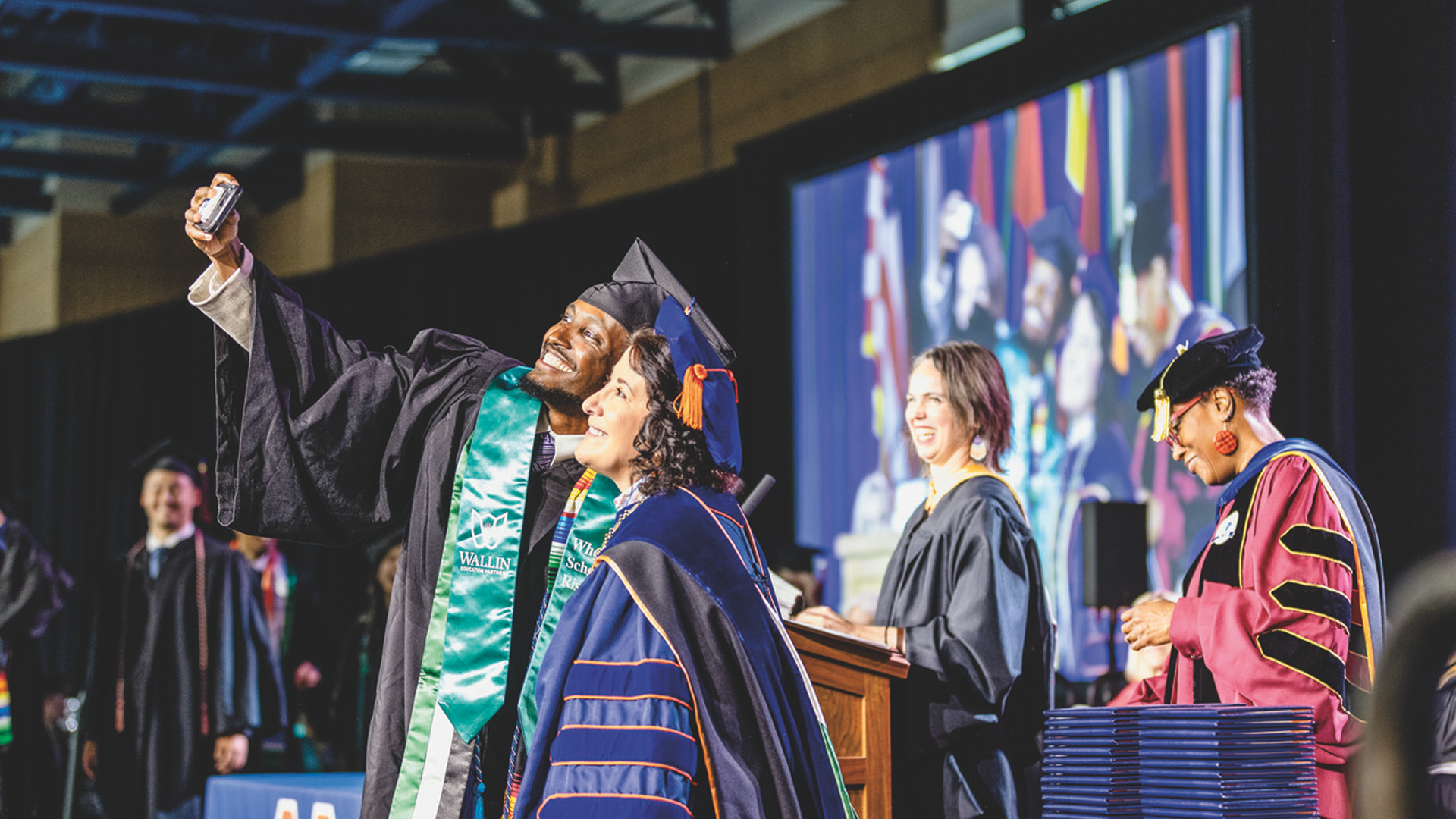
Our students explore the power of association in many different ways, beginning with the global Mac network that they join as soon as they choose Macalester. They experience association through affiliations with the people and organizations on campus where they find a home: first-year courses, residence halls, athletic teams, clubs, choirs and bands, religious organizations, and cohort programs like Posse, QuestBridge, and Bonner. As I told the Class of 2025 at Commencement, these ties will endure for the rest of their lives, if they tend to them.
Indeed, I think our greatest strength is our capacity to work together and care for one another. We are stronger in collaboration, in solidarity, and in our shared belief that a better tomorrow is possible. And we’ve seen the power of collective action this year, among our students and institutionally, such as Macalester’s participation in national coalitions to promote access to higher education, celebrate its public purpose, and elevate democratic principles.
I witnessed an extraordinary example of the Mac network in action in May, when the college pledged to offer housing and meal plans for international students who needed a safe place to stay this summer, out of concern that our visa holders might not be able to get back into the United States this fall to continue their education if they were to go home between semesters. Our alumni and friends answered the call for help by raising more than $425,000 to support these unforeseen expenses.
While recent federal policy shifts have made it more difficult for international students to join our community, we are doing all we can to foster an environment rich in diversity—of experiences, perspectives, and points of view. I like to think Tocqueville would be pleased to know that the tradition of association among people of “all minds” lives on at Macalester. For more than 150 years, in joyful and challenging times alike, we share a sense of purpose. And, on campus and around the world, we are stronger together.
Dr. Suzanne M. Rivera is president of Macalester College