






By Erin Peterson
On a wintry weekday evening in the mid-1980s, Jon Gordon ’88 was hosting a radio show at WMCN in the studio on the second floor of the student union. One floor down, students packed the building, watching the snow pile up as they studied, chatted, and listened to WMCN over the student union speakers.
Gordon saw an opportunity to break news on his show and called up Macalester President Robert Gavin. “I asked him, ‘What’s the status of school for tomorrow?’” he recalls. “He announced that there would be no school, and as soon as he said that, a roar lifted from the first floor. Pretty soon, there was a march of Macalester students down to the nearby O’Gara’s pub.”

Nearly four decades later, Gordon now serves as deputy managing editor of Marketplace, an American Public Media show about economics that draws more than 12 million listeners each week. While he appreciates both the privilege and the responsibility of leading a program with national reach, he notes that there was something uniquely beautiful about his work at the campus station, where he could speak so directly to a deeply invested audience. “In some ways, I’ve been chasing that ghost of radio purity ever since,” he says.
For about a century, Macalester students have been broadcasting from some version of a campus radio station. Though music has always been its backbone, the station has also aired talk shows and other types of programming. It has served as a joyful experience in and of itself while helping many of its DJs, music directors, and station managers develop skills that have proven valuable after graduation.
And while there is no question that the role of radio has shifted in a world of unlimited streaming, podcasts, and algorithm-driven content, WMCN has remained remarkably resilient: about one hundred students are involved with the station each semester. They draw on the experience to hone their taste, sharpen their voice, and find a community where they belong.
We asked alums from across the decades—as well as current students—to share some of their favorite WMCN stories and the ways that their experience at the station influenced them.
Two generations at WMCN

Father and son Grant ’86 and Owen Killoran ’27 each found a home at WMCN—four decades apart. Grant, a partner at the Milwaukee-based law firm of O’Neil Cannon, currently cohosts The Happy Monday weekly radio show at the alternative radio station WMSE with Pat Buckley ’96. Owen, who is majoring in political science and environmental studies, is a host and an incoming station manager at WMCN.
Here, they share how the campus radio station has influenced and connected them.
Grant: I was involved at the radio station at my high school in Green Bay, Wisconsin. When I went to Macalester, I knew I wanted to get involved with its radio station, too. I realized that my musical tastes were not quite adventurous enough for Mac’s station at first, so I waited until my sophomore year to apply for a show. At the time, they needed a Broadway show tunes show, so I did that to start but later played a bunch of different formats.
Owen: I was very much influenced growing up by the musical tastes of my dad and my mom [Carrie Norbin Killoran ’94]: artists like Prince, the Replacements, and Bob Mould [’82], and Hüsker Dü. Every once in a while, I’d join my dad on his show in Milwaukee. No matter where I would have gone to school, I think I would have been involved in campus radio.
Grant: When I was doing radio at Mac, there were not many outlets for listening to alternative music. You could listen to the left end of the dial on commercial radio or try to find cable TV to watch MTV. Or you could go to a record store and buy albums or cassettes. I think the campus maybe was more involved in listening to the station when I was in school for that reason.
Owen: Right. Radio is less of a main source of listening now; there’s an abundance of choices for hearing music. I’ve almost evangelically tried to recruit my friends to join WMCN. Some students don’t even know what campus radio is.
Grant: I try to listen to Owen’s WMCN show here in Milwaukee in real time online. It’s during the workweek, so whether or not I can listen is a little hit or miss, but when I can listen, it’s pretty awesome.
Owen: My show, which I’ve had all four semesters, is Good Albums, Bad Advice. I play albums in their entirety, and in between songs, I give satirically bad advice to problems people send in to the show through social media channels. Like, if someone asks how to impress their professor, I’ll tell them to sit close to the front and breathe loudly so that the professor knows that you’re focusing.
Grant: One of the things Owen and I talk about sometimes is the structure of a music show. He’s a musician. I am not. He plays the drums, so I think he hears music differently than I do. I always think about how I want the songs I play to mesh together and build during a show. To me, it’s like a crossword puzzle.
Owen: One thing I appreciate about my time at WMCN is just being exposed to a huge industry full of people. I’ve learned what it’s like to talk to venue managers and bands, and I’ve learned what it’s like to set up a concert and know what gear you need. I’ve just gotten a glimpse, but I’m excited to keep learning and experiencing it.
Left of the dial*
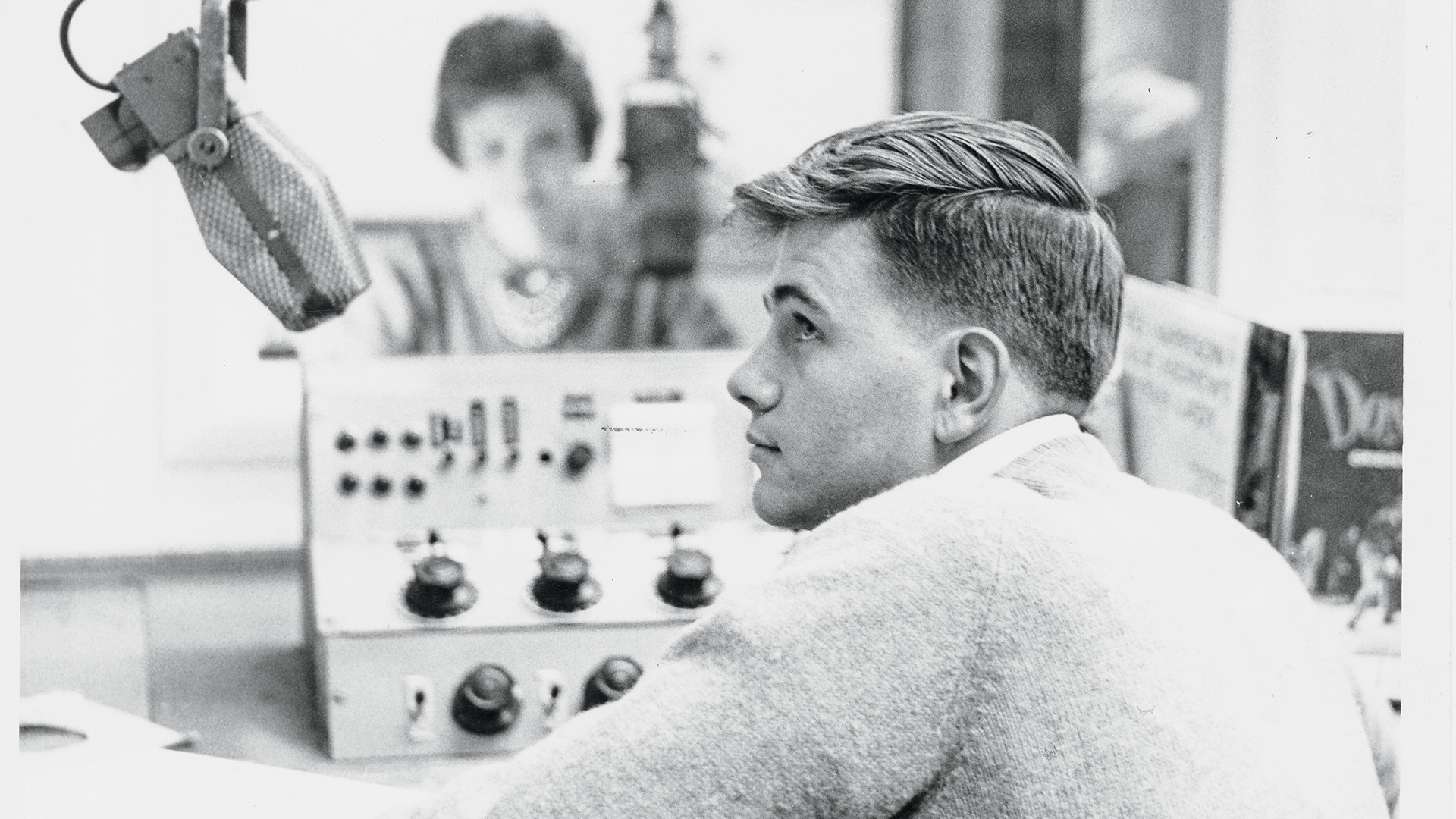
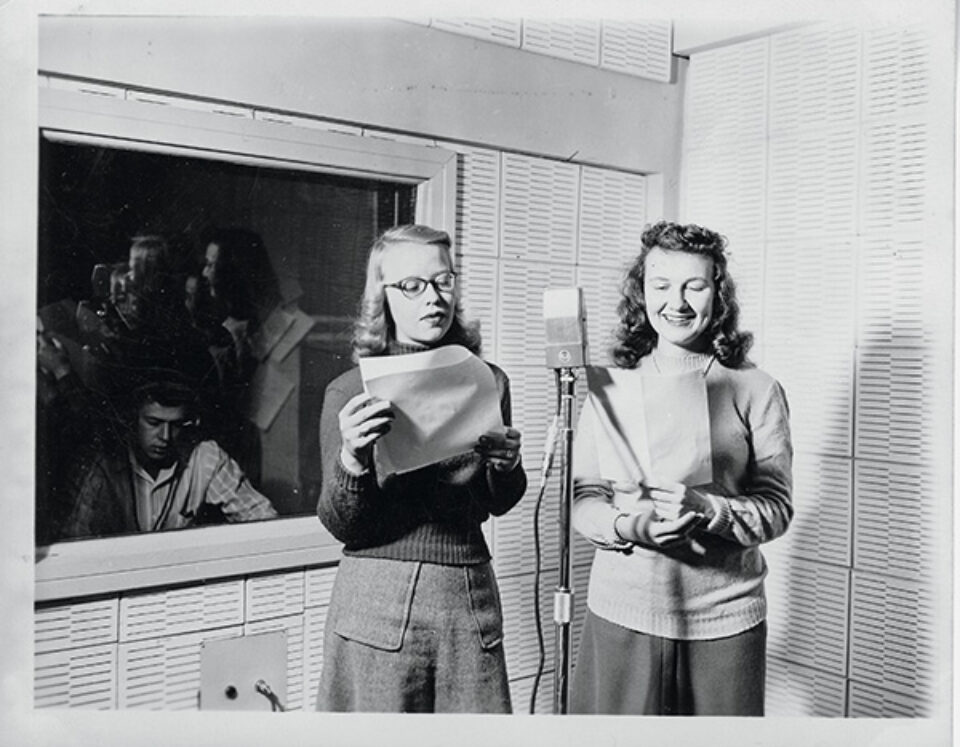
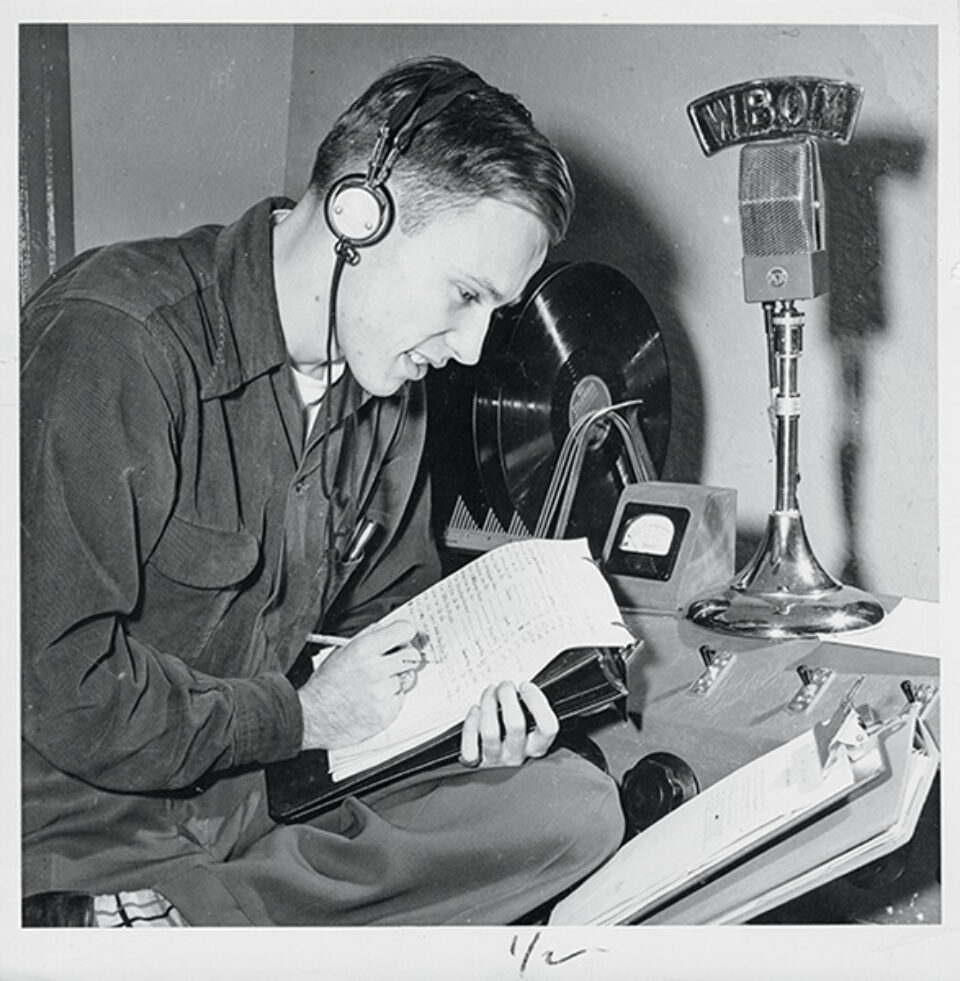
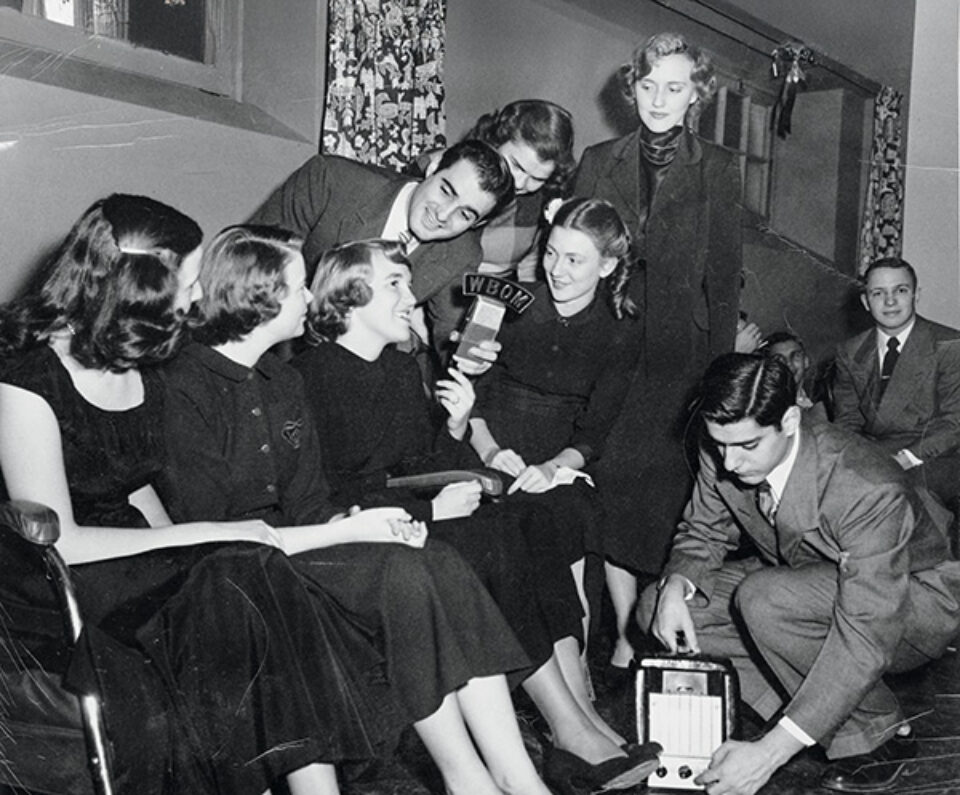
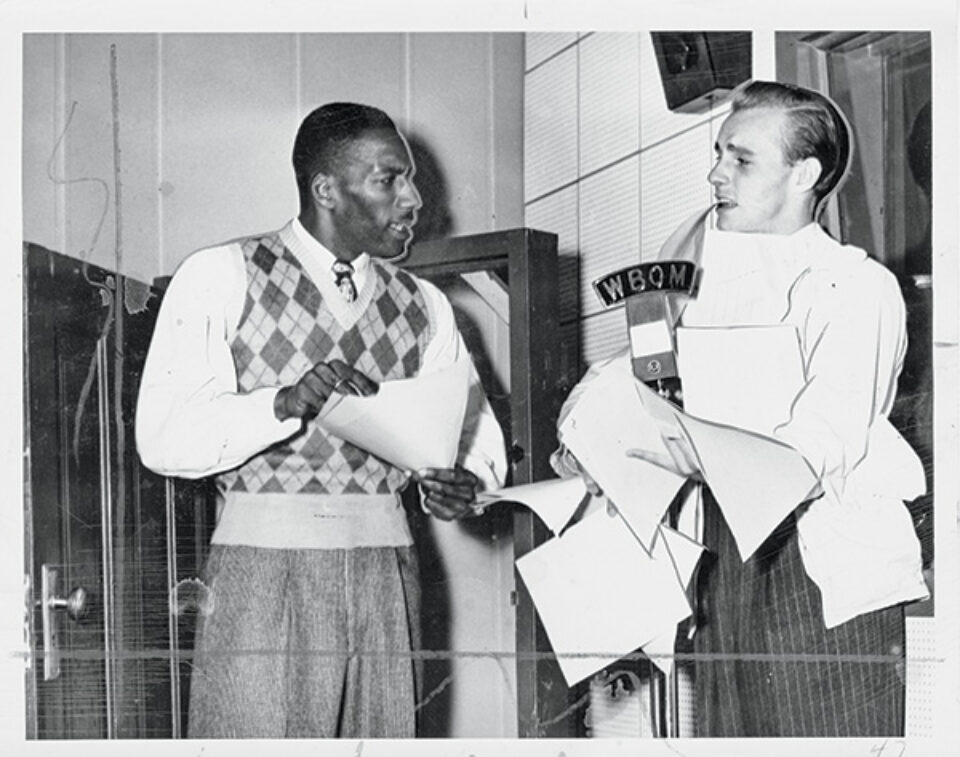
WMCN 91.7 went live on the airwaves in the fall of 1979, but Macalester’s radio history stretches back to the 1910s. Students formed a class in wireless telegraphy in 1917 and an active radio club on campus as early as the 1920s, with students and staff appearing on local radio stations including WMIN, WCCO, and KSTP.
In 1946, the college installed a “wired wireless” system that operated through dormitory fuse box circuits (rather than over the air with an antenna), and the college cycled through stations in fits and starts for the next thirty years. For more than a decade, KMAC could be found at 550 on the AM dial.
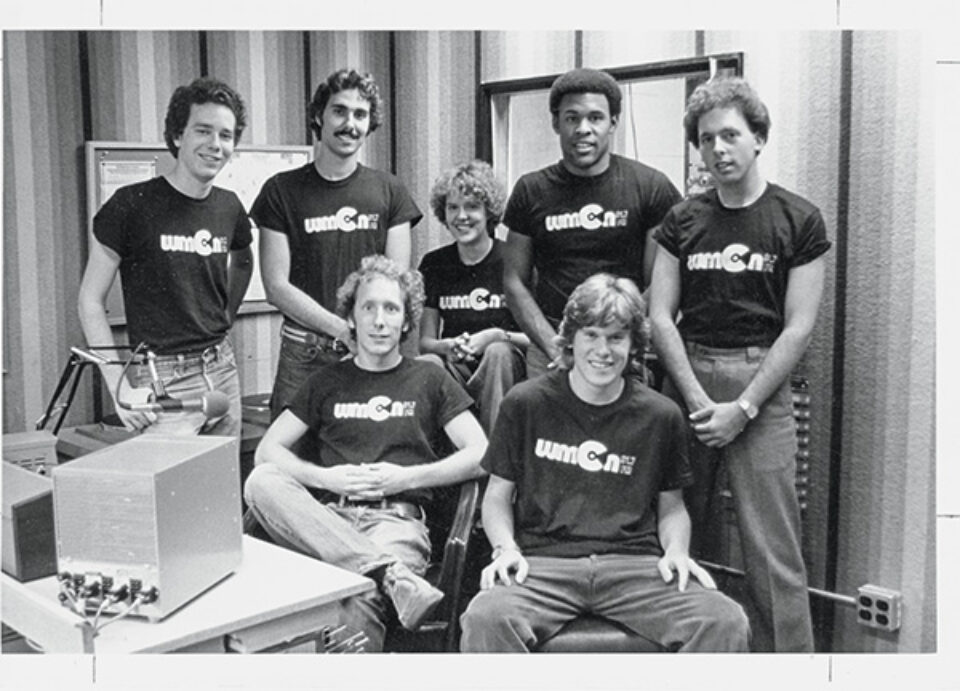
In 1978, the FCC granted approval to build an FM station with the call letters WMCN. The broadcast radius was—and remains—about three miles. On October 6, 1979, three bands broadcasted from the student union to celebrate the station’s launch.
* “Left of the dial” refers to college and other noncommercial radio stations broadcasting on the lower end of the FM spectrum; the phrase was popularized by the Replacements’ song of the same name.
Fuel for First Avenue

As a high school student, Sonia Grover ’97 was captivated by the Twin Cities music scene and says it was one of the reasons she chose to attend Macalester in the first place. She landed her first WMCN show—an unenviable weekday time slot from 2 to 4 a.m.—the fall of her first year.
Despite the early hour, it wasn’t long before she was earning notice for her love of local music. Grover spun tunes and interviewed musicians from bands including the Jayhawks, Polara, and Run Westy Run as part of her show, Indie 500. “I’d start and end every show with a song from my favorite band, the Replacements,” she says.
She took on roles outside of hosting, including record room manager—keeping the space with records, CDs, and cassettes organized—and, by her senior year, music director. “I was one of the few people who had keys to the station,” she recalls. “That meant that I’d have to trek across campus from Kirk at 7 or 8 a.m. to let the first DJs in. It was cold! But that was how much I loved the station.”
Her experience at the station helped her land a position in 1998 at the iconic Twin Cities venue First Avenue, where she has remained since, becoming a nationally recognized talent buyer who identifies and books musical acts. Over the years, she’s been named the nation’s best by trade industry organizations and publications including Pollstar and the International Entertainment Buyers Association.
Grover is happy to talk with current Macalester students about her work in part because of WMCN’s impact on her. “Getting two hours to play whatever you want, learning about different artists and different genres that I might not have otherwise been exposed to? That’s what helped sustain and fuel my love for music,” she says.
From behind the mic to behind the camera

As an award-winning independent filmmaker—her most recent short documentary project, Chainstitch, landed a De Laurentiis Film Prize from the National Italian American Foundation—Nina Slesinger ’14 has had to master a range of different skills to excel.
Slesinger’s job requires her to be a crisp storyteller and smart marketer. It also demands sharp management skills and a boldness of purpose and execution. She strengthened all of those skills during her years at WMCN.
After an initial foray into music-based shows—classic country, glam rock—Slesinger switched to a storytelling format for Romantic Comedy, a show in which guests shared lighthearted tales about their dating lives. “I liked picking guests, meeting new people, and hearing funny stories,” she recalls. And she learned a trick for reaching a larger audience: “When you have a guest, the guest will tell people to listen.” The show instilled in her a fearlessness when it came to reaching out to new people. It also helped her stay open to a wide range of conversations.
Eventually, she took on leadership roles at WMCN, including program manager. She helped fundraise for a new soundboard and expanded the range of on-air talent, adding an employee from the nearby Common Good Books. “He was outside of the ‘Macalester bubble’ who cared about the station but who became more tied to the campus that he had been working across the street from for years,” she says. “It felt like a special connection.”
More than a decade after her final show ended at Macalester, Slesinger still values the skills and mindset she built at the station. “WMCN is very community-oriented and scrappy. It gave me a lot of practice in getting people together to be excited about the same thing,” she says.
WMCN today

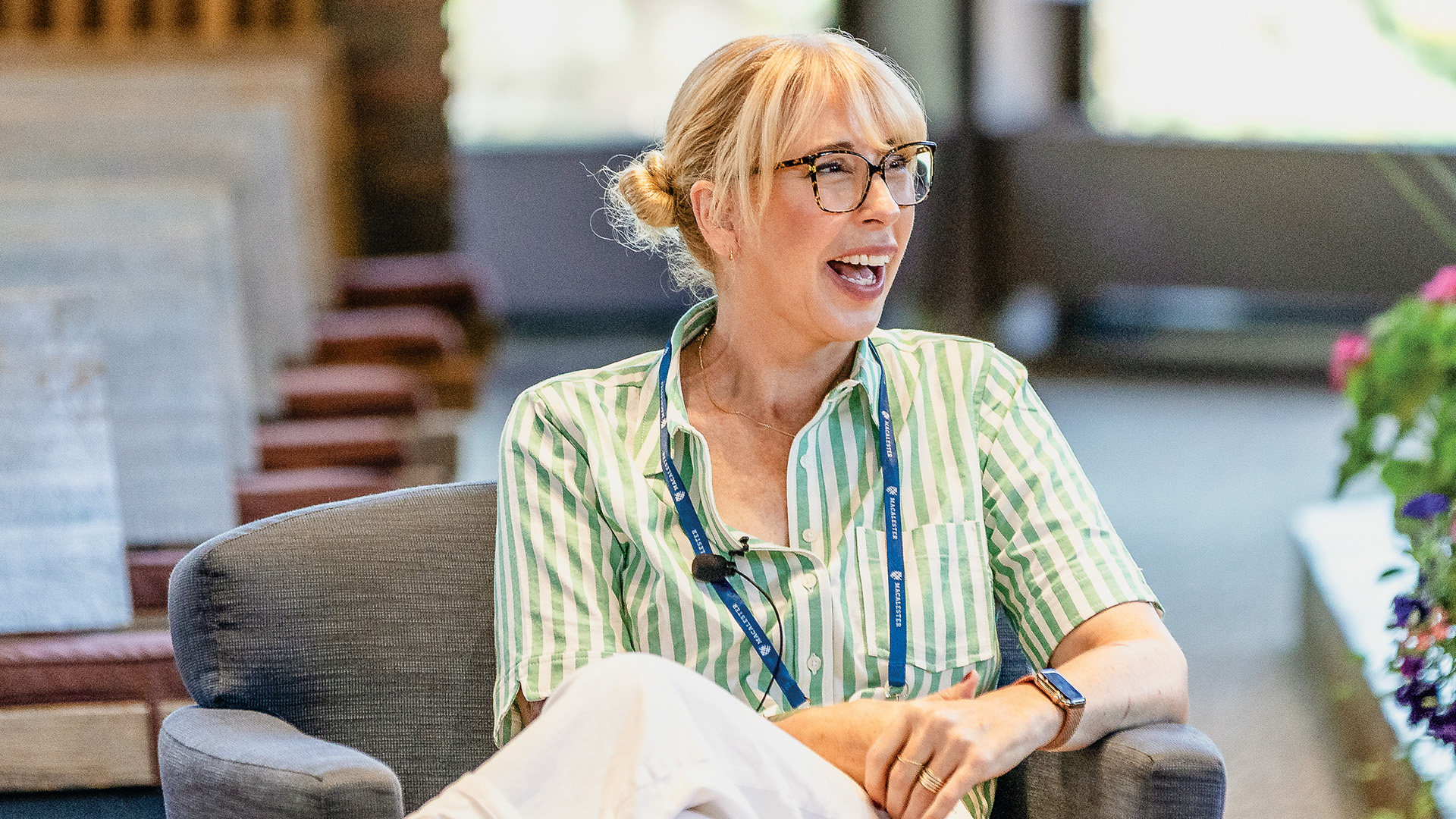
Current station managers, from left to right, Elliot Pearson ’27, Emily Hueser ’26, and Cade Klein ’27 pose for a photo inside the WMCN studio.
Emily Hueser ’26 had no particular passion for radio her first year at Mac when she tagged along with a friend to the station. But almost immediately, she felt at home. “The physical space is really cozy and comfortable,” she says of its current basement location in Bowman Hall. The space is filled with shelf after shelf of records and CDs. “It’s covered in art and graffiti from students, and there’s a window where you can watch people walk back and forth from the dorms.”
It wasn’t long before she was hosting shows including How Not to Get Laid (“a joke about different music stereotypes that losers listen to”) and Hot Girl Walks (“different types of walks you might take, and the music that fits that”).
The shows have been a creative outlet and connection point. “WMCN is a platform that really encourages people to explore their passions and find the people who really connect with that,” she says. “You feel not just like you’re engaged physically in the community, but you’re also talking to the community.”
Today, Hueser is one of three station managers, along with Elliot Pearson ’27 and Cade Klein ’27. The trio helps manage show hosts, FCC requirements, and events including Live at Garth’s, which brings bands to campus to play live sets.
Director of Campus Center and Programming Andy Williams says that while WMCN’s role on campus has evolved over the decades, the experience continues to be deeply rewarding for those who are involved. “We hope that students have multiple touchpoints on campus where they feel at home and feel a connection with others, and I think for many people, WMCN is that place.”
Williams adds that WMCN has shown a staying power across the generations: When he volunteers at Reunion, he’s often asked by alumni if they can get back into the station. “The thing that has always struck me is the sense of community that exists. It’s like, once you’re a part of WMCN, you’re always a part of WMCN.”
Erin Peterson is a Minneapolis-based writer.