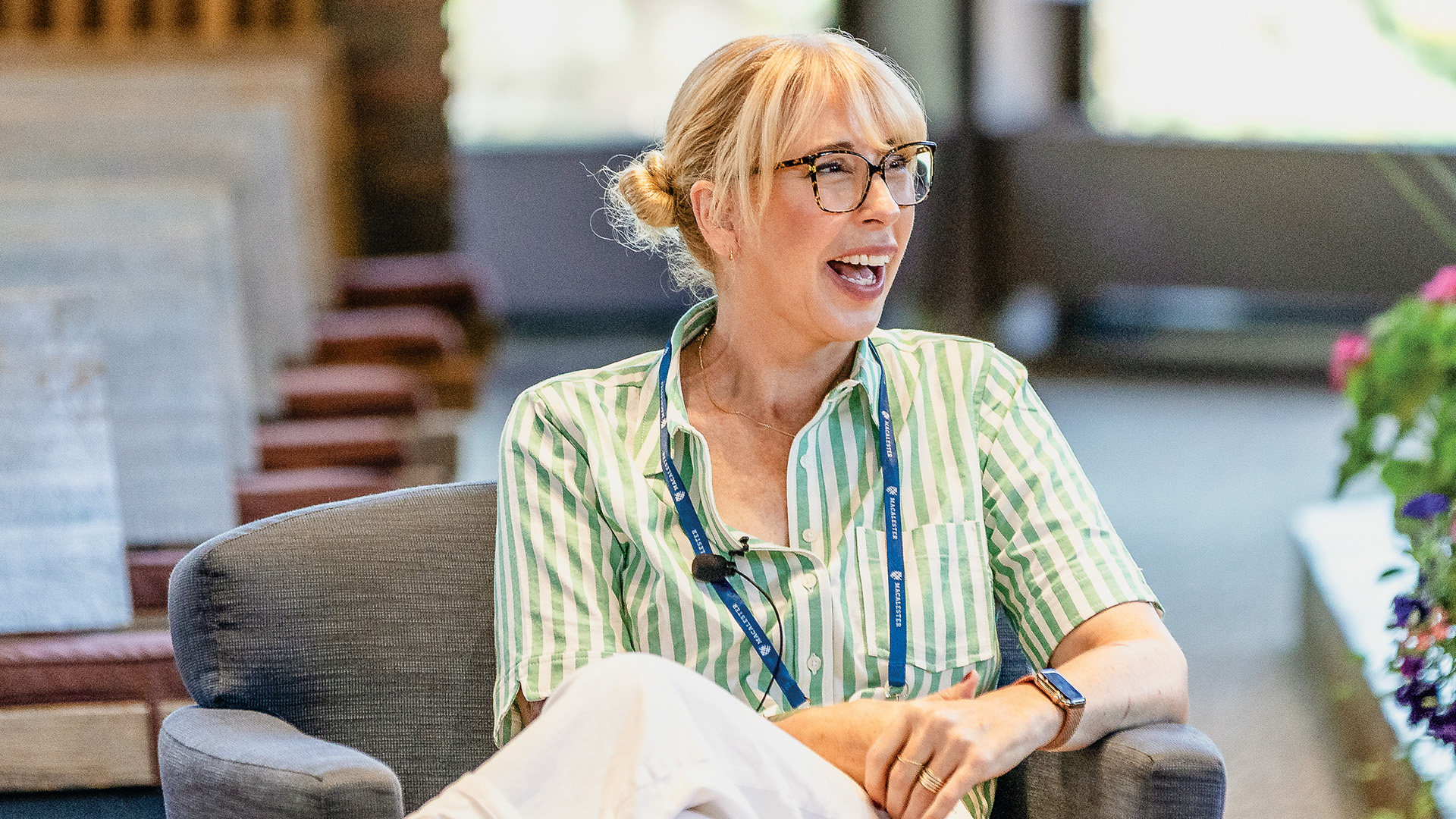







When Yeukai Mudzi ’12 graduated from Macalester, she quickly identified a dream employer: the World Bank Group. An economics major, Mudzi entered the job market with a passion for driving sustainable and inclusive economic development around the world. Attracted to the World Bank Group’s mission to inspire economic growth in more than one hundred countries, the possible pairing seemed like an obvious fit.
But snagging a full-time staff job at the World Bank Group—where she now serves as an operations advisor to the director for Central Africa and Anglophone West Africa —hardly happened overnight. In fact, it took more than a decade and plenty of resilience.
“I used to have this five-year plan, and there’s nothing wrong with that, wanting things to go a particular way,” Mudzi says. “But you can’t anticipate everything, and you can always figure it out on the way.”
Mudzi refers to much of her career journey as strategic meandering, trusting God while pursuing positions that aligned with her professional interests—internationalism, strategic thinking, and strengthening innovation ecosystems. That triple threat of true norths guided her to projects and roles in more than a dozen countries. Along the way, she earned an MBA from the University of Oxford and a master’s in public policy from the University of Maryland.
“Some people follow a straight line, but often you are meandering,” she says. “I learned to seek advice, make the most of each moment, trust in the Lord, and make the best decisions I could based on my true norths and the opportunities before me.”
At the World Bank Group, Mudzi now advises on a variety of economic development opportunities across Africa and works to solve critical economic development challenges. Here, she shares some of what she’s learned in her career journey.
Build resilience.
There are so many lessons that I’ve learned through the meandering between roles, navigating contracts that you may or may not know if they are going to be renewed, and moving between countries. But I’ve learned to be resilient through each moment, embrace a willingness to learn from each experience, and through it all, be true to what you want to do with your life. There are many times I could have given up. And that’s where the growth happens. It happens in the lessons learned and the openness to learning those lessons along the journey.
Always deliver with excellence.
Whether it’s a highly visible task or a seemingly insignificant one, always turn in quality work. Building this track record will allow people to remember you over the years. And, at the same time, it’s OK to pivot if you’re in a space in which you are persevering but not finding yourself learning and thriving.
Remember that you work with people.
Relationships and people are so important. As much as tasks need to get done, we work with people. You need people to do things, so consider people and your relationship, not just the task. And don’t forget that your own ability to influence others or even advance in your own career relies on others feeling respected by you. It’s not enough for others to think you’re smart or that you have the right answers; they must respect you.
Track your outreach.
Create your own client relationship management tool. It could be a Google sheet or an Excel sheet, but it doesn’t have to be anything sophisticated—just enough to track the name and how you’ve connected with someone. What was the last thing you spoke about and when? So when you’re job hunting, you can ask yourself, “Do I have a connection there?” Whatever it is, embrace the notion of being structured in your networking.
Don’t let the pebbles get in your shoes.
There are some things in life that really are not a big deal in the grand scheme of things. But you could make these smaller issues a bigger issue, and along the way, you may ruin relationships or just get yourself frustrated over something you don’t need to. Learning how to identify what’s a pebble versus what’s actually important to flag can help you in so many situations.
Seek advice.
Really. Seek out advice. That sounds so basic, but I’ve met people who don’t necessarily seek advice, and I think it’s such a disadvantage. If you’re not actively seeking advice, then you’re not leveraging what other people know, and people know quite a lot that you don’t. Seek that knowledge. Seek advice.