






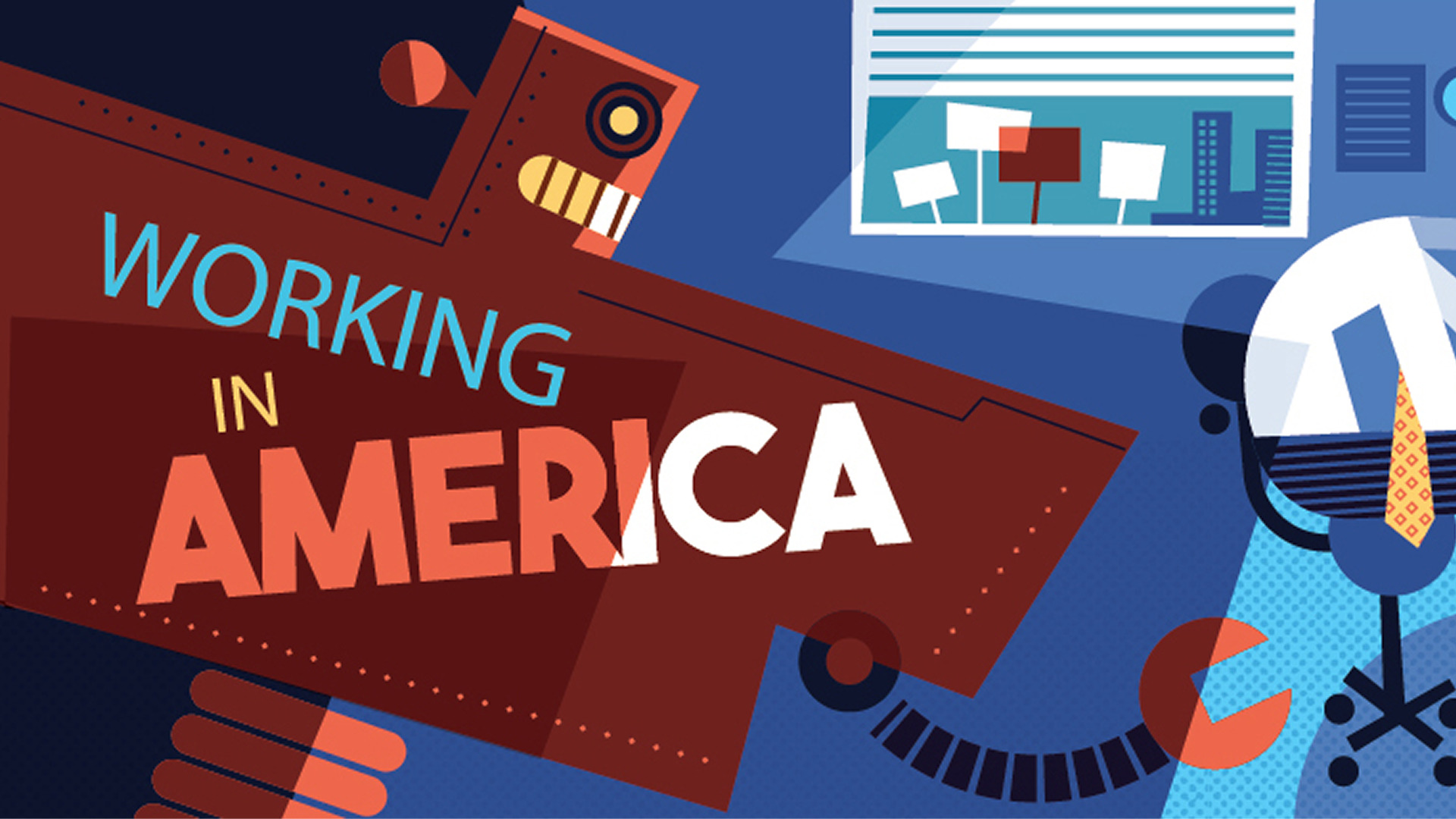
The world of work is constantly evolving, and so are the words we use to describe it. From “panic hiring” to “the great resignation,” post-pandemic buzzwords reveal just how much our feelings around work have shifted. In economics professor Elizabeth Engle’s course Working in America, students work to understand the trendy headlines but also the underlying forces shaping markets. At the top of the list in 2026, technological disruption—hello, artificial intelligence. Other factors at play: labor market discrimination, unionization, and the minimum wage. Through economic models and real-world analysis, Engle works to inspire a new generation of critical minds, ready to engage energetically (and skeptically) with new ideas and policy proposals.
The job market sure has a lot of trendy terms these days. What are these buzzwords telling us?
I love all the fun names because they highlight aspects of the market that economists haven’t traditionally measured. Often we’re focused on: Do you have a job? How much does it pay you? How many hours are you working? But a lot of these broader trends that have been spotted post-pandemic are more about how people experience their work and their satisfaction with that work and their relationship with their employer. For example, the term “quiet quitting” implies that you’re not actually working your hardest and from that we can examine why you may be cutting back. Having that knowledge can challenge our traditional models and inspire economists to think further about how a worker’s engagement affects their own experience and the firm’s productivity, together.
Working in America has changed drastically over time. What are some of the biggest changes you explore with students?
One of the big things that I try to keep up with is technological developments and how they shape work. A big one we talked about this semester is artificial intelligence. Usually technological advances hit low-skilled jobs, positions that typically require minimal formal education or specialized training, the hardest. Meanwhile, impacts to high-skilled workers, who typically rely on higher education, are more limited. But AI has the potential to reverse that. That kind of flip is really interesting to me and something I’m exploring alongside my students.
What does labor economics teach us about how workers might adapt in the era of artificial intelligence?
New technology in the labor market brings with it transitions. When you have a technology that can substitute what some workers do, there’s always concern that those workers may be out of a job. And yet, we’ve never created a piece of technology that has led to mass unemployment. The market has always found other things for people to do because people are such versatile instruments. Of course, that’s not to say the period of transition is comfortable or that it’s accessible to all workers, but generally, the market provides new avenues of opportunity. As for AI, is it going to follow that same pattern? No one can say for certain, but we have a lot of past examples that suggest that it will.
With a new administration in the White House, there’s been a lot of give and take with tariffs, immigration, and tax policy. How do you help students think through the impact of those policies?
One of my favorite things in this class is our final project, a policy brief. This is an opportunity for students to pick a policy, examine the literature on such a policy, apply our models from class, and then to try and make predictions about the effects of such a policy and to estimate the costs and benefits. This year, I’ve had students examining the new $100,000 fee for H-1B visas for foreign workers. Others researched Minnesota’s new sick and safe leave program. No matter the policy, students have a chance to deeply engage with something happening now, and often they can share what they find with decision makers and make a difference.
How does this kind of detailed policy review benefit economics majors and non-majors?
What I want students to walk away with is the instinct to think through a policy that sounds like a good idea. There are a lot of policy ideas or fixes for the labor market thrown out there that sound really awesome. But what I want is to develop the instinct in all of our students—no matter their major—to think through, okay, what does this do to all the people involved? What are the costs and benefits of this policy? To have that moment to step back and analyze in addition to saying, “Yeah, that sounds like a great goal. Will it get us there and at what cost?”
As a labor economist, what kind of research do you participate in outside the classroom?
A lot of my work right now focuses on the home health and personal care market. These are workers who go to the residences of older adults and people with disabilities to help them with the kind of daily activities you need to do to continue living independently. Right now, I’m looking at the supply of workers into those jobs. If we have an economic downturn, we could see an influx of workers here. On the other hand, if the economy is booming, workers may look elsewhere. As we have a large chunk of our population aging into need for these services, the home health industry is expected to experience rapid growth in the coming years.