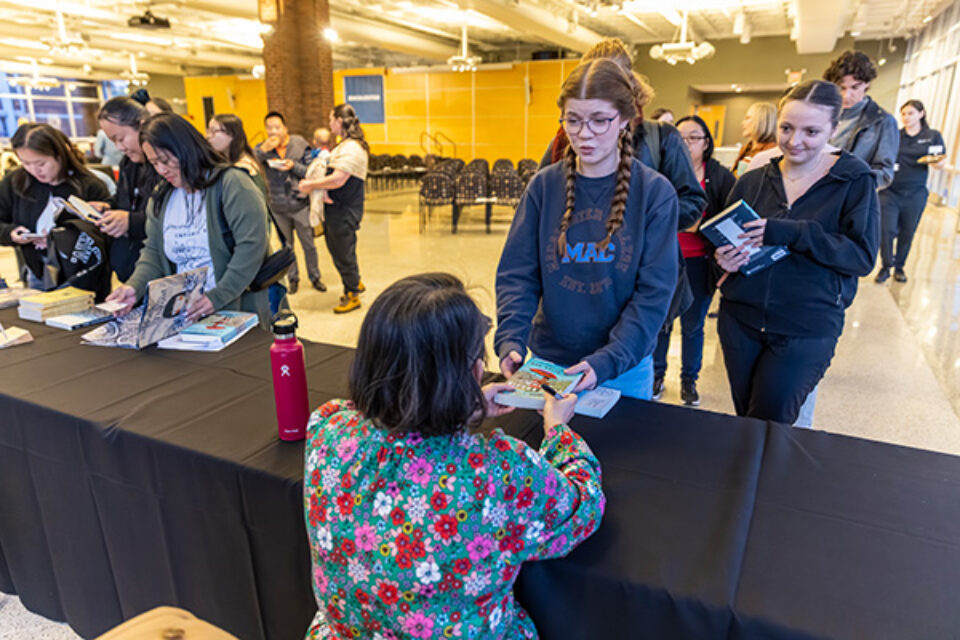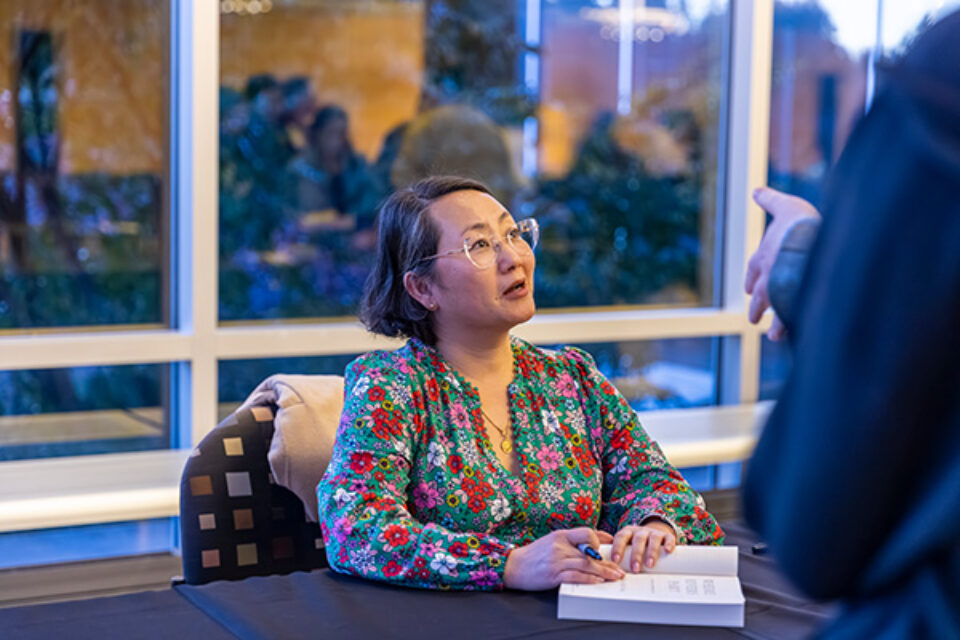






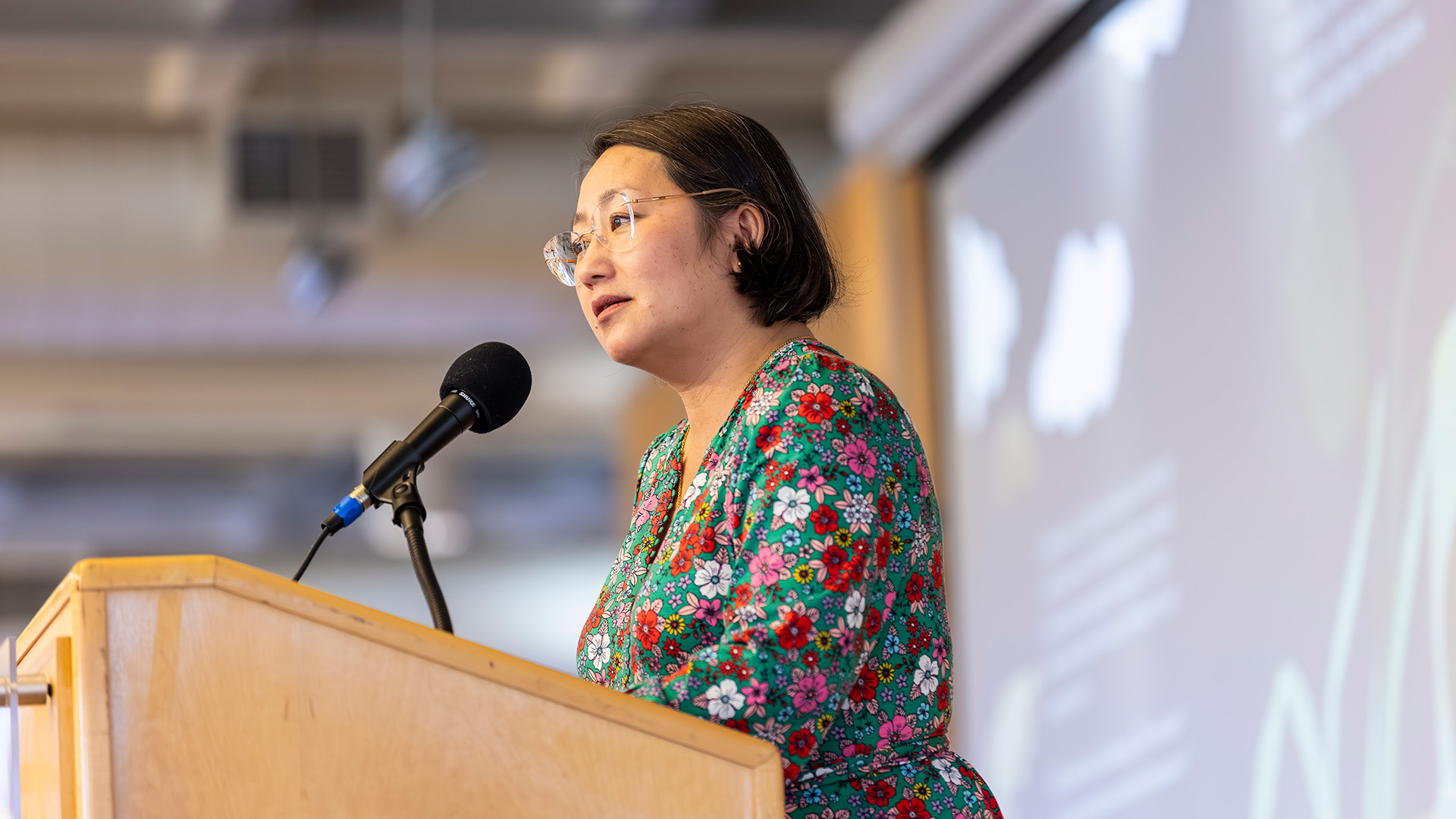
For award-winning author Kao Kalia Yang, to tell a story is to create a home on and off the page. It’s a chance to provide a place of belonging for those in search of refuge. And, it’s a powerful tool in a world that is so often forgetful.
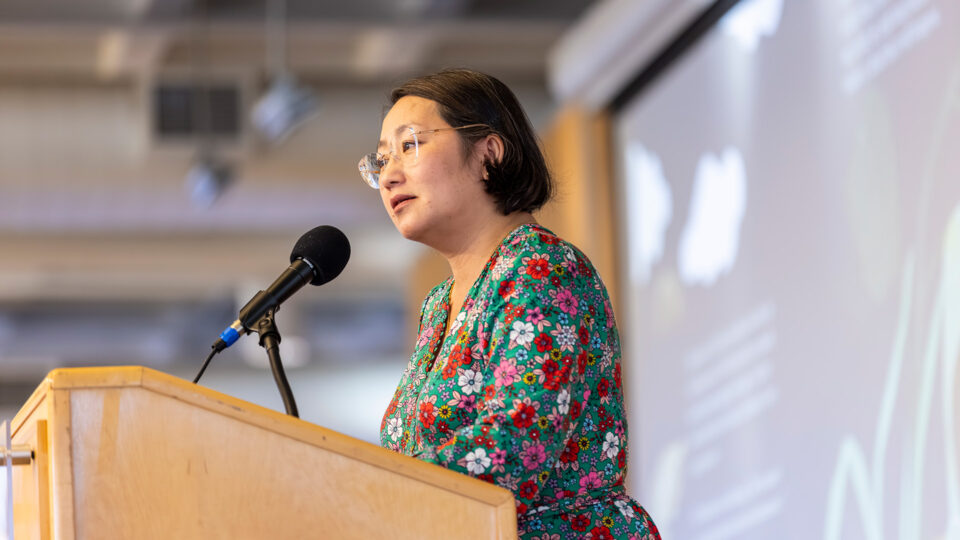
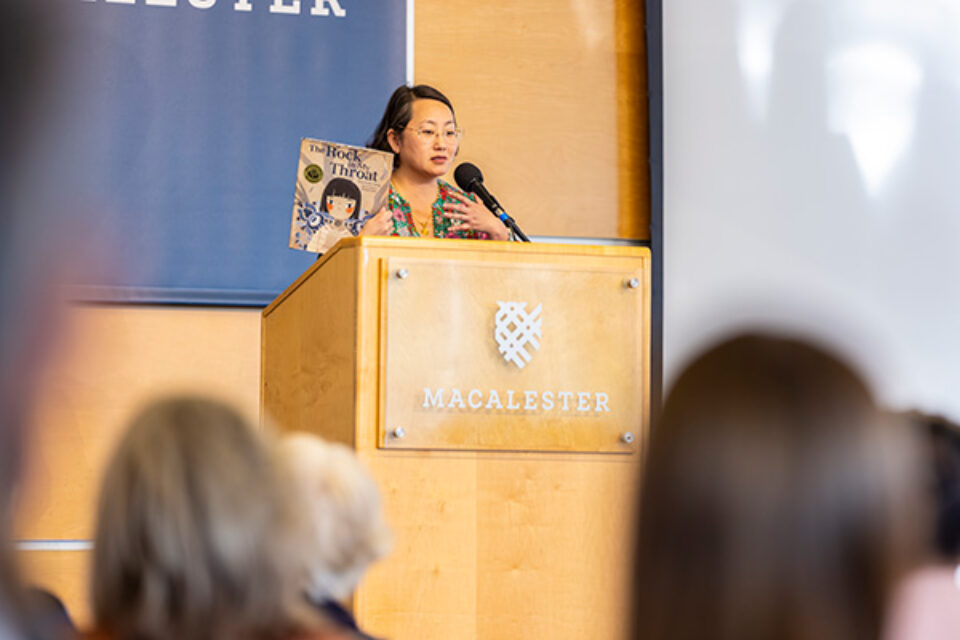
“When my memories grow wings and they start flying far away from me, wouldn’t it be nice if the world remembered?” she asked the crowd at Macalester College’s 32nd Annual International Roundtable. The Hmong American writer served as this year’s keynote speaker, reading aloud passages from her critically-acclaimed memoirs and a particularly personal children’s book to illustrate the power of stories.
In her talk on October 22, the Guggenheim Fellow explored what it means to live in a story, to grow within one, and to be charged with the happy ending our ancestors have been waiting for. Here are five takeaways from the evening:
Using silence as resistance
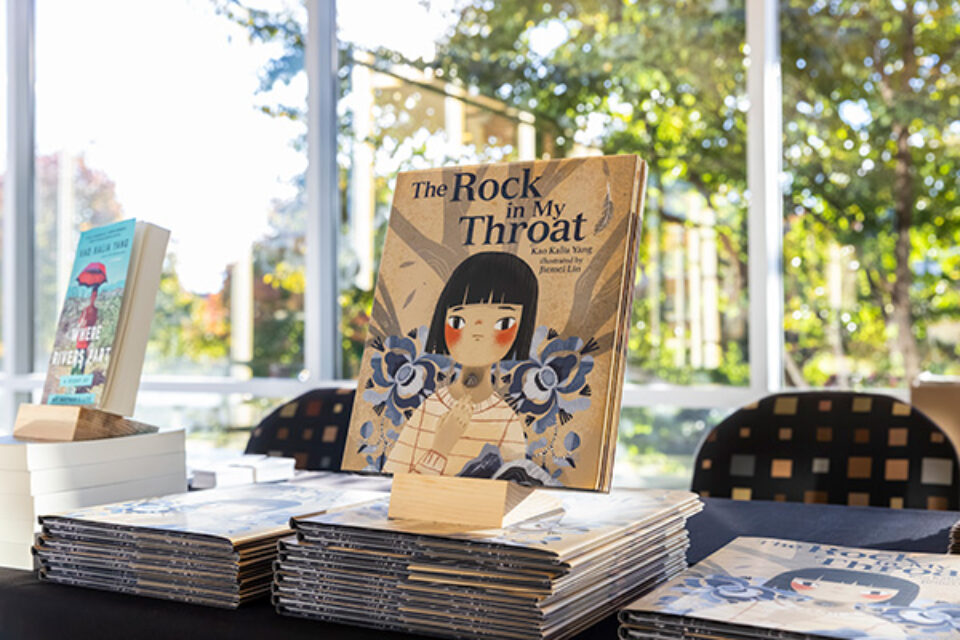
Known for being a lyrical and passionate public speaker, Yang’s relationship with language is a deeply nuanced one. She opened the evening with a reading from her newest children’s book, The Rock in My Throat, an autobiographical story which details her childhood experiences with selective mutism.
Shortly after coming to Minnesota as a six-year-old Hmong refugee, Yang witnessed her mother struggle to find the correct English words when speaking with a store clerk. The clerk showed little patience. It wasn’t long after that interaction that Yang stopped speaking English in public altogether. “It was my great revolution against a world I knew was not listening,” she said.
Yang would not speak English voluntarily again until she was in college. Over time, the future author found her voice not in speech, but in writing: “Sometimes the words that I cannot speak into the world, I can write in it.”
Remembering in an age of forgetting
Storytelling is an act of moral necessity for Yang. Drawing on her family’s legacy, her books vibrantly bring to life the struggles and victories of her father, mother, grandmother, and other refugees from around the world. With each story, she pushes back against erasure in an “age of forgetting.”
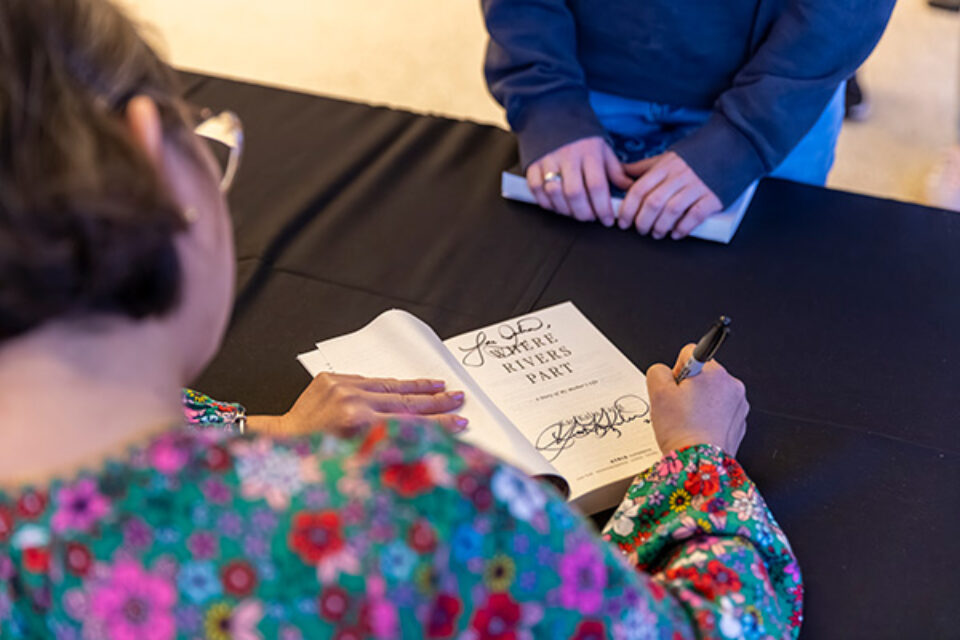
Yang illustrated her point with readings from her newest memoir, Where Rivers Part, which focuses on her mother’s quest to leave war-torn Laos and deliver her family to safety. Another reading from Somewhere in the Unknown World highlighted the story of Majra Mucić Gibbons ’11, a Bosnian refugee.
“Histories are getting erased all around the world,” she said. “It is our remembering that’s going to lead us to the future. Stories are the way we remember the beat of the human heart. Not the numbers. It’s the stories.”
Taking artistic risks
For years, Yang has explored a variety of mediums for her work, including children’s literature, young adult novels, and memoirs. But in 2023, she took an artistic risk unlike any that had come before. She agreed to help turn her memoir The Song Poet into an opera, serving as the show’s librettist.
When Minnesota Opera first approached Yang to write the libretto, she initially hesitated. But, realizing what was really at stake—the show would become the first Hmong story adapted for the operatic stage—it didn’t take long before she agreed.
“If I say no,” she recalled, “then I’d be saying to some kid from the poor side of town that just because you’ve never been exposed to something, you can’t do it.”
Demanding multiple chances
One of the recurring themes of Yang’s keynote was her message to audience members that everyone is worthy of multiple chances. “The hardest thing for me to learn,” she said, “is that I was worth more than one chance.”
Yang insisted that every human life deserves renewal—second, third, fourth chances to begin again. “To demand many chances,” she said, “is to insist that one’s humanity is vast and renewable—that no story, no life, is ever finished after a single telling.”
Finding belonging in your story
Yang closed out the evening by responding to a Hmong student in the audience who asked about how to move through life while being “the minority.”
Yang maintained that belonging is an act of persistence and self-recognition. “We are valuable human beings. Our bodies work in the world. They tire in the world. So you must hold this place, because many, many more will come after you.”
In the end, Yang said, everyone’s story is a necessary gift to the world. “We have so much to offer the world. We’re vessels of untold stories and universal truths.”