








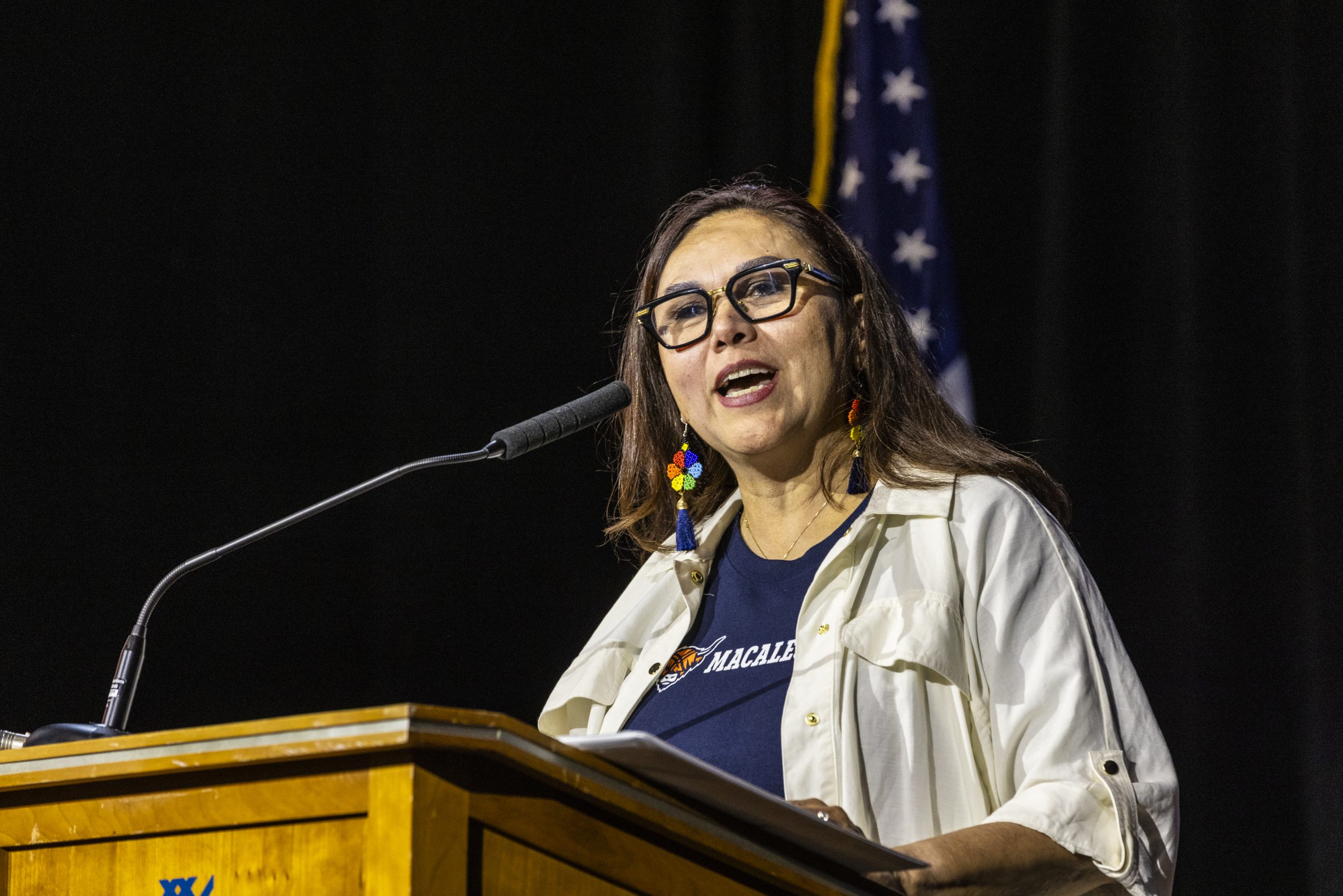
This year’s celebration includes a Community Luncheon featuring Gloria Perez ’88, President and CEO of the Women’s Foundation of Minnesota and a member of Macalester’s Board of Trustees. Ahead of her visit to campus, we sat down with Perez to talk about the experiences and identities that have shaped her career. From her time on campus to her decades of work advancing gender and racial equity across Minnesota, she reflects on what it means to bring her full self to her work and to her community.
You’ve spent more than twenty-five years addressing gender and racial equity in Minnesota. What drew you to this work, and what keeps you in this space?
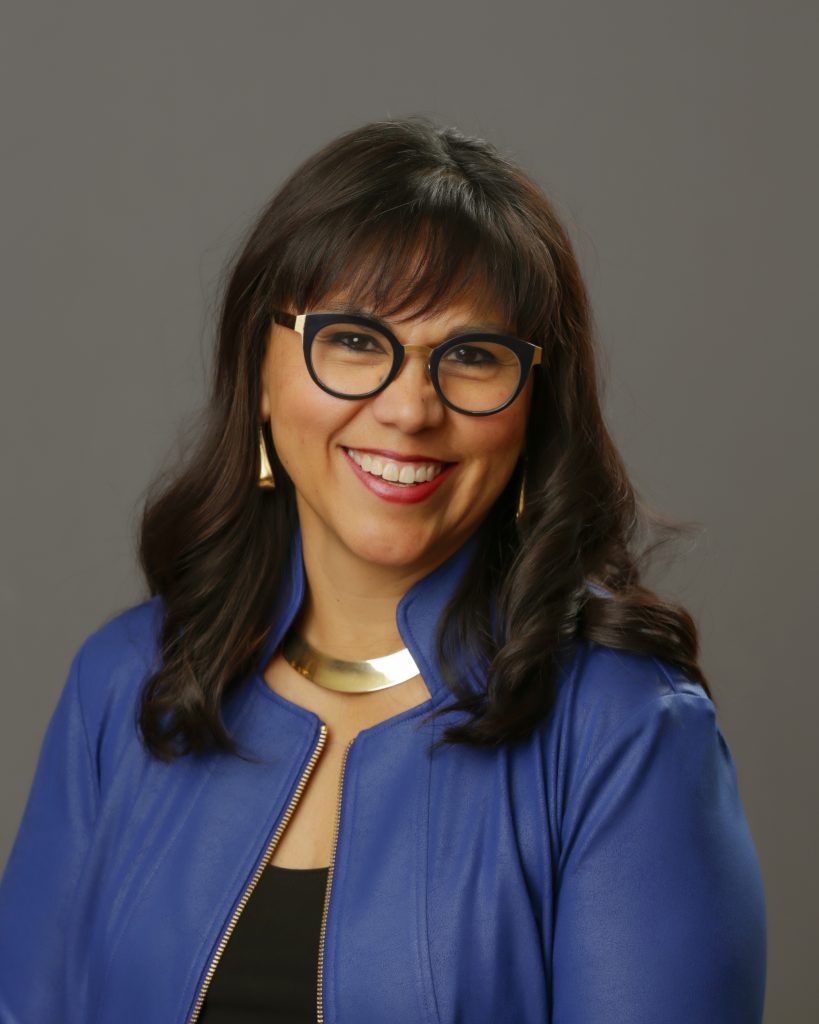
When I think about my career over the last 30 years, I’ve really always focused on women and youth and people who haven’t had access to opportunities. I think that comes from my own life experience, having grown up being raised by a single mother, and just seeing some of the barriers that exist because of systems and how they are designed to favor certain groups or of people. That’s where I have spent the bulk of my career, whether it was professionally or volunteering. Then, when I came to the Women’s Foundation about six years ago, I started to think about how the work that I had done in direct service aligned toward these broader systemic issues of gender and racial equity.
What keeps me grounded is that I understand that the experience that people have is often not what people do as individuals, but how systems can limit people from having certain opportunities.
As President and Chief Executive Officer of the Women’s Foundation of Minnesota, what are the current priorities you’re working on at the foundation?
Unlike other foundations, we raise money to give away money. One of the things that we focus on is inspiring generosity across the state, and we recognize that less than two percent of philanthropic dollars center women and girls and gender-expansive folks. We know that as a population, that particular group’s needs are unmet, and so we’re trying to both elevate what those gaps are in terms of wage inequality, access to opportunities in leadership, or just basic safety.
How do you sustain yourself in the work of community transformation?
There’s nothing like being in times of crisis, like the pandemic, to highlight the fragility of our systems. At that moment, I realized that this notion of sustainability and transformation were really challenging, and it caused me to think about what is important, and why am I doing this again? I’m doing this work, for and on behalf of, the Latine community, women, and all the folks who have been marginalized. I’m really doing it for them, and so that as I think about future generations, whether it’s in my own lineage or just people in community, I don’t want them to experience the same hardships. Knowing my “why” really sustains me.
You’ve said that in college you were “encouraged to see the power” within yourself. Was there a mentor, class, or moment at Mac that fostered that view?
I was a communications major, and, at the time, had a women’s studies emphasis. Professor Anna Meigs in the Department of Women’s Studies really helped me understand these identities I hold. I had very few Latina peers when I arrived in Minnesota. I think what my professor taught me was that there was something to be gained from sharing how my experience was different from some others in the community. She really taught me to see that difference as a strength, as not only a way to connect with other people, but another way to influence how they were thinking about their experiences and thinking about people who are different from them.
For current Macalester students who identify as Latine/x, what advice would you give to them?
Have the courage to be yourself, because I think it will be more welcomed than you think. Have faith that people will find a way to connect with you, and find a way to accept you. That is something that I found really wonderful about the Macalester community—that curiosity, that interest in difference. In doing that, don’t sit around and wait for somebody to do something for you, but figure out where those points of interest are, whether it is in joining a club of people who have similar interests—that could be music, it could be debate, it could be sports. And then don’t be afraid to bring your unique qualities to that, because everybody in that experience will also benefit, by seeing you be yourself.
Are there Latine/x traditions, foods, or stories from your own life that you make a point of sharing with your family or community, especially this time of year?
Certainly always music and food. I remember when I was at Mac and started to feel more comfortable expressing my Latina heritage, I offered to make brunch for some of our classmates. So I went over to the Mexican market, and bought food, and prepared this meal—and just the ability to share that, and be able to storytell was really meaningful. So I love to do that at this time of year. I also like to think about the Day of the Dead traditions that come up in the fall. I think it is valuable for all of us to think about our ancestors and to bring them forward and storytell, because they are always with us.
Continue the Conversation
The Latine/x Heritage Month Community Luncheon takes place on Thursday, September 24, at 11:30 a.m. in the Weyerhaeuser Boardroom, hosted by Institutional Equity and Alumni Engagement. Alumni, students, staff, and faculty are welcome, but space is limited. RSVP here.