







By Sia Bombhore ’29
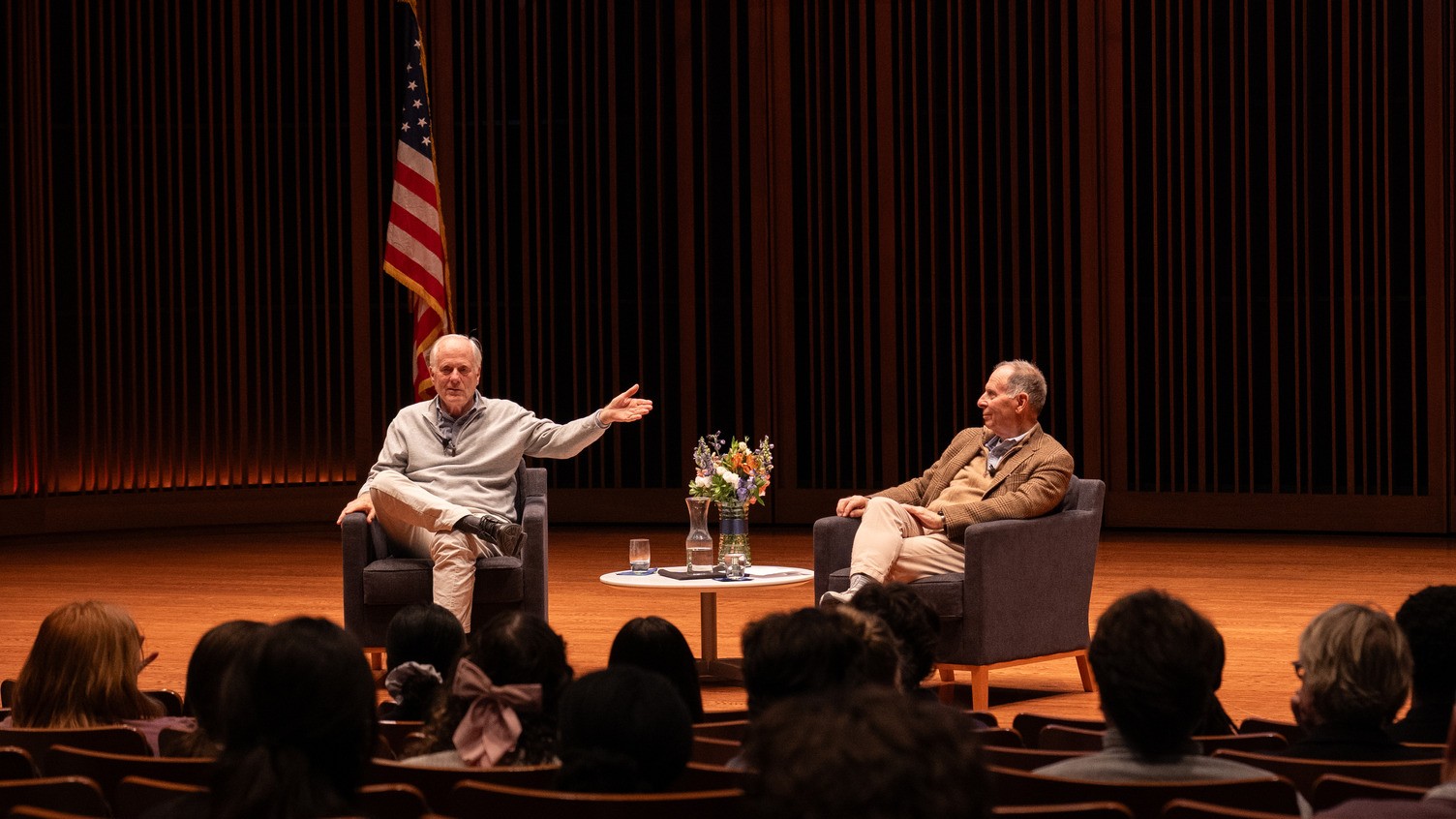
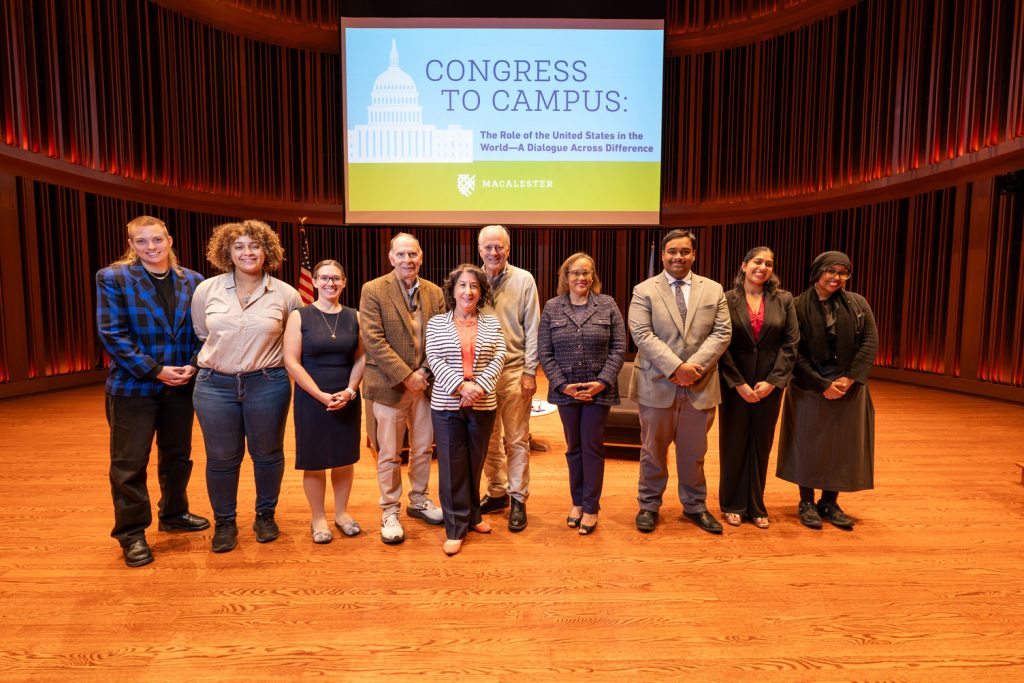
Former US Representatives Scott Klug (R–Wis.) and William Enyart (D–Ill.) visited Macalester College as part of the national Congress to Campus program, an initiative of the Association of Former Members of Congress that encourages dialogue across political differences.
Held on Monday, October 19, 2026, in Mairs Concert Hall at the Janet Wallace Fine Arts Center, the event centered on the United States’ role in the world, with Macalester students Tani Gangal ʼ29, Rohini Chatwani ʼ29, and Sihaam Barre ʼ28 posing questions to the speakers. The conversation followed a day of classroom visits and discussions with students and faculty.
Coming from different political parties—and different careers before Congress—Klug, a former investigative journalist, and Enyart, a retired two-star general, approached questions around the United States’ role in and obligations to the world, including military intervention, executive power, healthcare, China, and political polarization, from different perspectives, highlighting the importance of nuance, historical context, and bipartisan dialogue.
1. Foreign policy isn’t black and white
Asked when the United States should intervene abroad, neither former representative offered blanket support—or blanket opposition—to military action. Instead, both argued that every conflict must be evaluated on its own merits.
“Sometimes when you run for election, you have to vote for something that you think is worth losing an election about,” Klug said, reflecting on his time in Congress.
Enyart similarly rejected one-size-fits-all answers, encouraging students to evaluate the purpose behind every intervention.
While each emphasized different considerations—Enyart focused more on humanitarian questions and military efficiency, while Klug stressed strategic stability and political responsibility—both agreed that foreign intervention cannot be judged by a single standard and must be evaluated case by case. They repeatedly returned to the same principle: context matters.
2. Good policy requires asking difficult questions
Throughout the evening, both speakers refrained from giving rigid, absolute answers to complex economic and military issues. Instead, they modeled the process of working through competing priorities that are ever changing.
Enyart urged students to think beyond today’s headlines, explaining that “history is so absolutely critical in understanding the world as it is today.” He encouraged the audience to ask questions instead of prescribing easy solutions for difficult problems.
Both speakers emphasized that responsible policymaking requires nuance rather than rigid ideology.
3. Common ground doesn’t require identical opinions
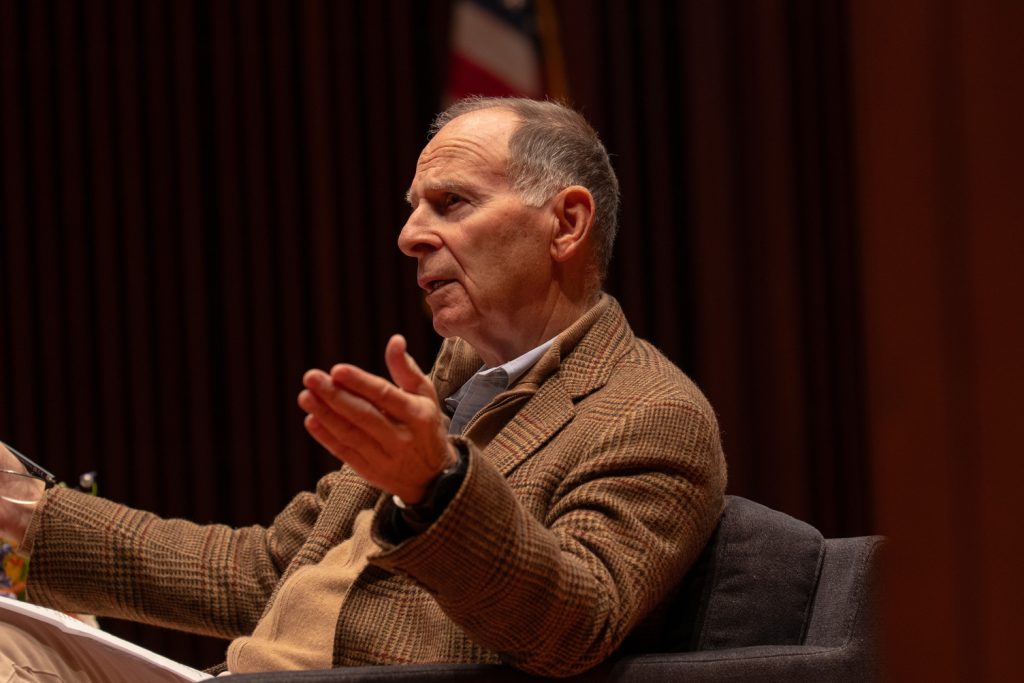
When discussing the balance of power between Congress and the president, Enyart argued Congress has gradually surrendered too much authority over war powers, while Klug defended the need for presidents to respond quickly during emergencies. Yet both ultimately agreed Congress should remain involved in prolonged military conflicts.
The exchange ended with a moment that drew laughter from the audience.
Enyart: “So you see we agree.”
Klug: “Yeah, we do.”
When asked by an audience member about how the larger political landscape could adopt the same attitude when faced with vastly differing opinions, both suggested that the problem is less disagreement itself than the growing tendency to treat disagreement as hostility. They encouraged people to engage and understand rather than listen to prepare a rebuttal.
4. America’s role abroad shapes life at home
Responding to questions about whether the United States should prioritize domestic challenges over international commitments, both argued that the distinction is often less clear than it appears.
Klug warned against retreating from the global stage: “I think it would be a mistake for the US to withdraw and become Fortress America.”
Enyart agreed that isolation carries long-term consequences. “We can’t ignore the world. We do that at our own peril,” he said.
Klug also echoed Enyart’s statement that policymakers must weigh economic, diplomatic, and moral consequences together, saying that domestic and international priorities cannot be separated as easily as public opinion polls sometimes suggest.
Whether discussing the US’s involvement in Ukraine, Iran, Bosnia, or Afghanistan, both speakers readily agreed that domestic and foreign policy are deeply interconnected. While they differed in emphasis, neither supported complete US withdrawal from international affairs, instead calling for careful evaluation of both the costs and the long-term consequences of intervention.
5. Democracy depends on conversations across differences
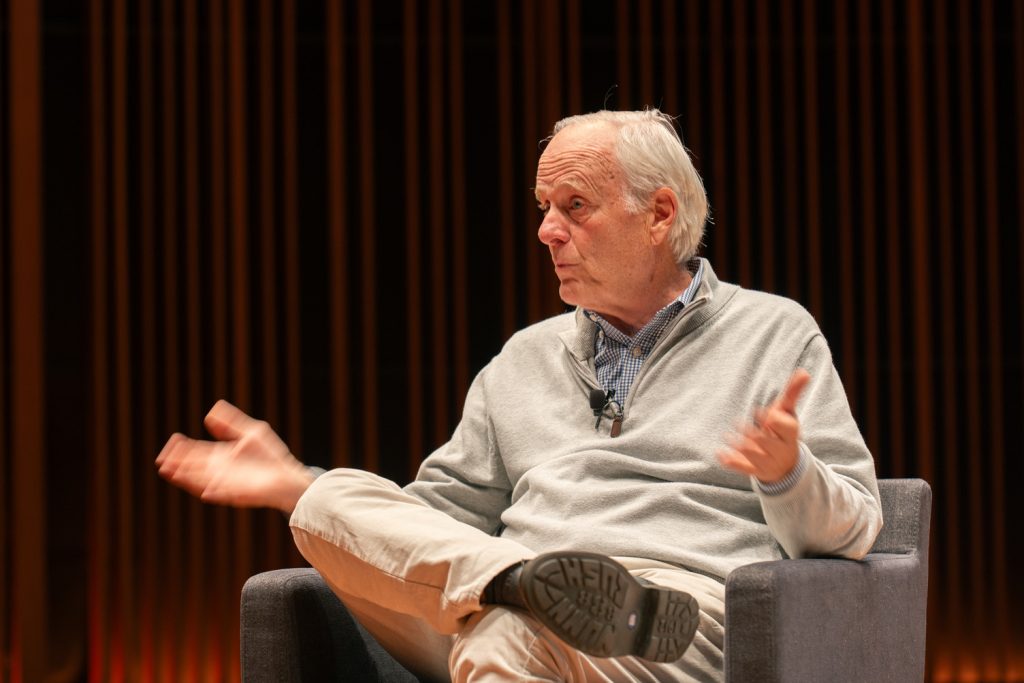
Perhaps the strongest consensus of the evening came not on foreign policy, but on democracy itself. Responding to a student question about polarization in today’s political climate, both former lawmakers acknowledged that respectful disagreement is more common than public debate often suggests.
Klug said much of what Americans see is political theater, while meaningful bipartisan conversations continue away from television cameras. “There’s more hope out there than you think there is.”
He pointed to organizations that intentionally bring individuals from all ideological backgrounds together, articulating that democracy depends on people who are willing to listen before trying to persuade.
Throughout the evening, Klug and Enyart demonstrated that disagreement need not become defensiveness, echoing the core values of both Congress to Campus and Macalester’s Dialogue Across Differences initiative. They challenged one another’s ideas, acknowledged areas of agreement, and encouraged folks to approach difficult conversations with curiosity rather than certainty.
Rather than leaving the audience with definitive answers, the discussion offered a reminder that democratic participation is strengthened when people are willing to ask hard questions and engage openly with those who see the world differently.