






By Joe Linstroth / Photos from Quechua Films
Film is about representation, and who controls the camera and the narrative matters. In his new Spanish-language course, “Cinemas of Abya Yala: Representation, Collaboration, and Production,” Dr. Daniel Coral Reyes and his students examined Indigenous representation in contemporary cinema from Latin America, or Abya Yala, which is a term that reclaims Indigenous identities and knowledge from the territories known as the Americas. Professor Coral Reyes is the inaugural postdoctoral fellow for the Macalester Native and Indigenous Initiative (MNI), a multi-faceted project dedicated to engagement with and scholarship around Indigenous people, culture, and history.
What does Abya Yala translate into in English and what is its history?
The term Abya Yala comes from the Guna people in Panama, and it roughly translates as “the land that has matured” or “the land that has been saved.” Today, it’s a term that reflects a shift in the politics of Indigenous people in Latin America. It’s a term that, in a way, opposes the European roots of the term “Latin America,” and that centers the political fights of Indigenous people across both Latin America and North America, so it has a transnational component. Abya Yala is a revindication of their existence in the territory that we call “the Americas.” It’s worth noting that it is a term that originally did not describe the entire continent—Indigenous people did not have a term that described it—but it’s a reappropriation that has had a newly acquired political resonance.
How would you describe the various ways Indigenous peoples in Abya Yala have engaged with filmmaking as an art form?
If we go back to the cinema of the first half of the twentieth century in South America, you see the emergence of the Indigenista movement. The Indigenista movement in cinema and literature meant a revindication of the Indigenous identity for national purposes. But it was done mainly by white and mestizo artists and intellectuals, so it was representation but not self-representation. Throughout the second half of the twentieth century, we see a push for greater self-representation in the New Latin American Cinema movement. This emerged within a political framework of liberation during the decolonization movement of the 1960s. Later, in the ’80s, ’90s, and especially in this century, we’ve seen a claim for greater access to technology and self-representation, framed as the right of Indigenous people to represent themselves.
In your syllabus, you reference the politics of representation in Latin American cinema. What are some of these forces at play and how do they manifest onscreen?
The question of self-representation is a political one, and many have framed it as an effort to decolonize cinema in Latin America. Alongside this push, we can also think about other political struggles, say, for land ownership or for greater political access. So the emergence of Indigenous cinema is not isolated from political movements, especially in territories like the Amazon.
In the course, we study movements like Video nas Aldeias, which translates as “video in the towns.” In this program, many Amazonian peoples learned how to use the camera to tell their own stories. Even though this started in the ’90s, today they are creating cinema to denounce illegal logging and mining, and that’s where you see this alignment between the camera and politics.
Your course was centered on feature films and documentaries made in the twenty-first century. By focusing on more recent films, what did you aim to show students?
I wanted to show them the continuation of certain conventions when it comes to representation, as well as certain ruptures. We watch films that, in a way, reproduce stereotypes that one might deem racist, as well as films that are written and directed by Indigenous filmmakers and reflect their cultural perspectives in ways that are not always legible to a Western audience.
What’s an example?

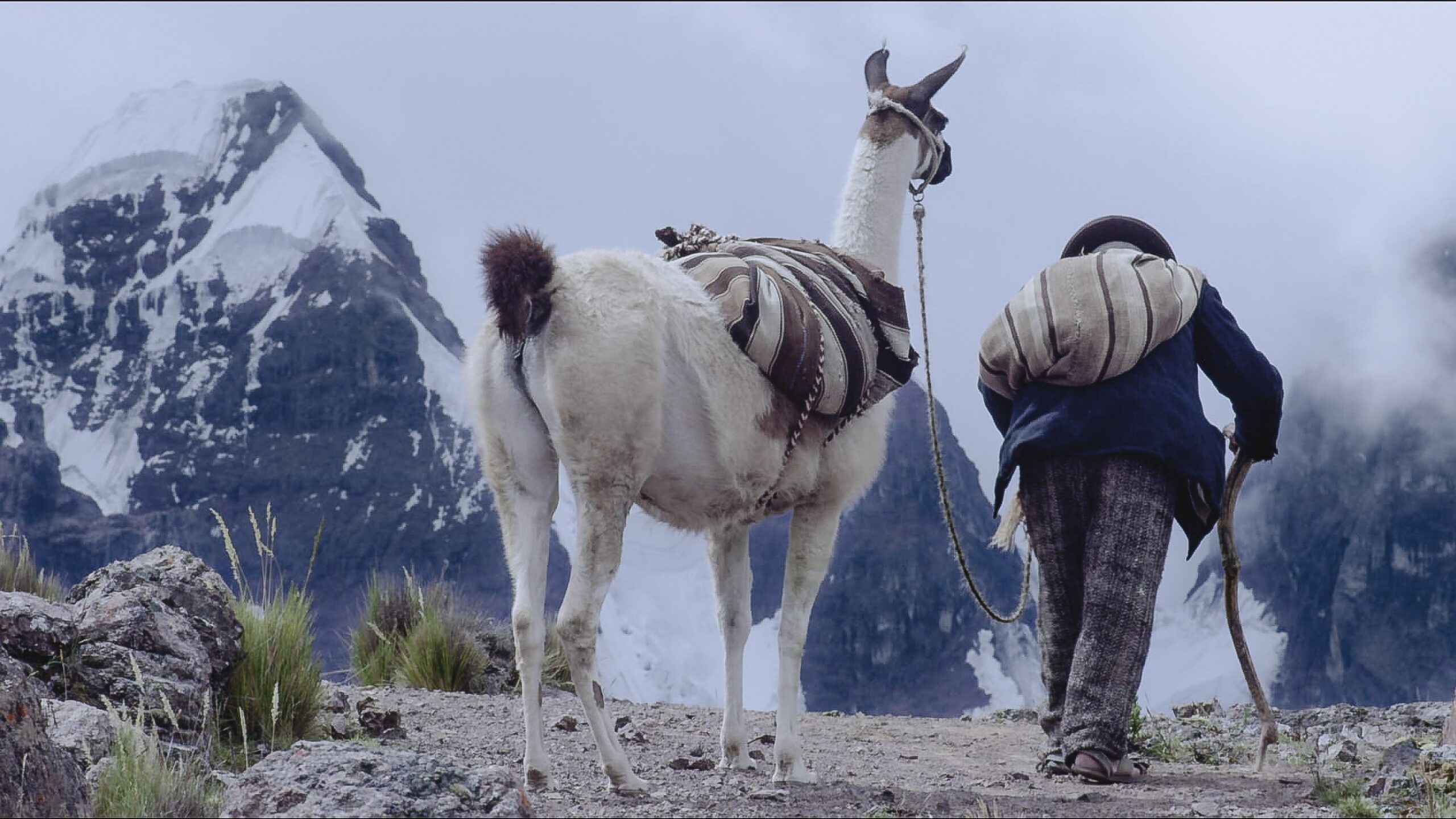
A classic final scene in many Latin American films is the disappearance of the Indigenous character, with only the mestizo or white character left in the frame. However, in a film titled Wiñaypacha (Eternity), the Indigenous character does seem to disappear, but when you watch the scene again, you can see that the protagonist is actually going back to the Andes to be in greater contact with the mountains (Achachilas), which are deities from the Aymara cultural perspective. So something that seems like a defeat is actually a victory from the filmmakers’ perspective.
For a Western audience, there are elements in Indigenous films that will be always inaccessible—elements of the culture that we won’t be able to fully understand, starting with the language. Most of these films are recorded in Indigenous languages, sometimes for the first time.
This is the first time you’ve taught this class. What do you hope students will take away most?
First, I’m fascinated by the fact that the students have shown a great interest in Indigenous cultures, political fights, and sovereignty. That has been a very pleasant surprise to me.
One takeaway that I want them to have is how self-representation in cinema should be seen as a right, and that it has great cultural and political implications for Indigenous peoples. The second takeaway is that filmmaking and ancestral cultures, especially oral cultures, can go hand-in-hand—they can enhance each other.