



“Acts of Memory” Screening and Filmmaker Q&A
By Rabi Michael-Crushshon ’26
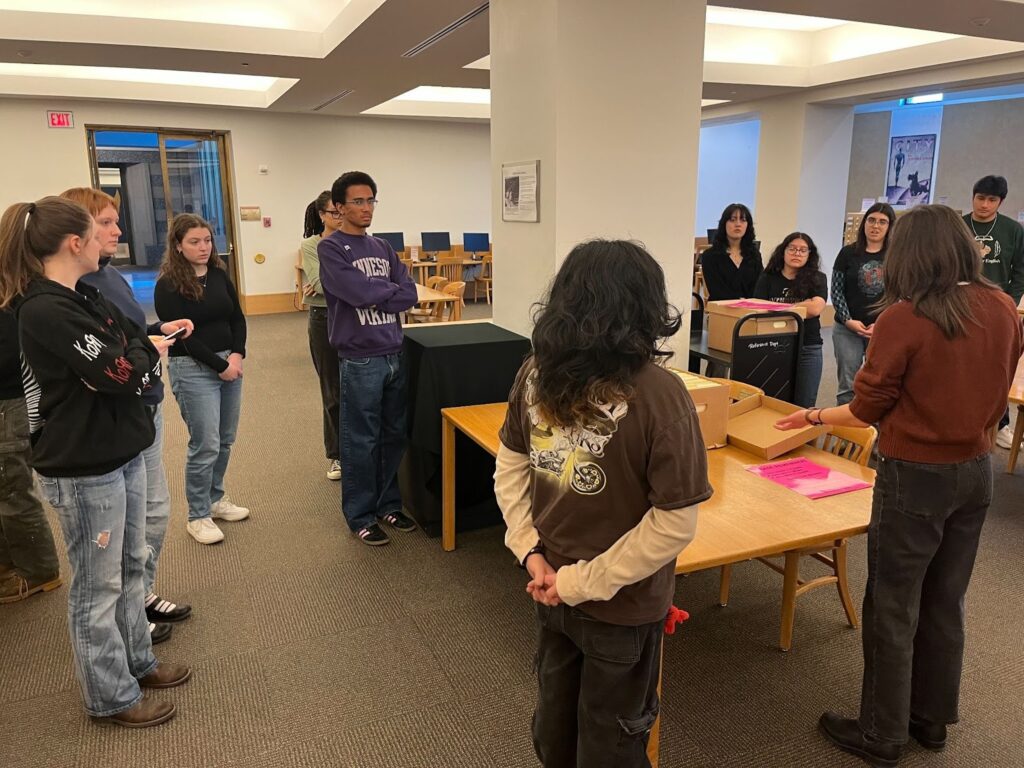
8, 7, 6, 5, 4, 3, 2… Macalester students and professors gathered in the Harmon room and watched the clock count down at the beginning of Mairéad McClean’s 28-minute film, Acts of Memory.
The event was organized by Professors Aisling Quigley and Ben Voigt for their class, Invisible Cities. Invisible Cities, which I’m excited to be taking this semester, is a research-based creative writing course, focused on engaging with and contributing to the collective memory of the Twin Cities.
In the first half of the semester, we read, watched, and interacted with various forms of memorials. We defined a memorial as a place for mourning and remembering something that was lost together with others. Litany for the Long Moment by Mary-Kim Arnold, Bluff by Danez Smith, and My Winnipeg by Guy Maddin were all key sources.
In this class, we have considered what a memorial is. What does it mean to write about or otherwise record something that has disappeared or is disappearing?
A large way that we have explored places disappearing is through the archives. On a class field trip, we visited the Minnesota Historical Society and were able to dive into some archive boxes. We looked at 1st Avenue’s ticket-tracking lists, Rondo neighborhood scrapbooks, and old Twin Cities maps, along with other archives.
Prof. Quigley was first introduced to Acts of Memory by happenstance; her friend and former colleague, Dr. Chelsea Gunn, was showing the film at the University of Pittsburgh.
“I was intrigued by the title of the film and also, on a personal level, by the film’s connection to my own family’s history. I was [also] interested in how the film is about what happens in the aftermath of destruction and loss, and how humans make meaning out of the meaninglessness of war,” Prof. Quigley said.
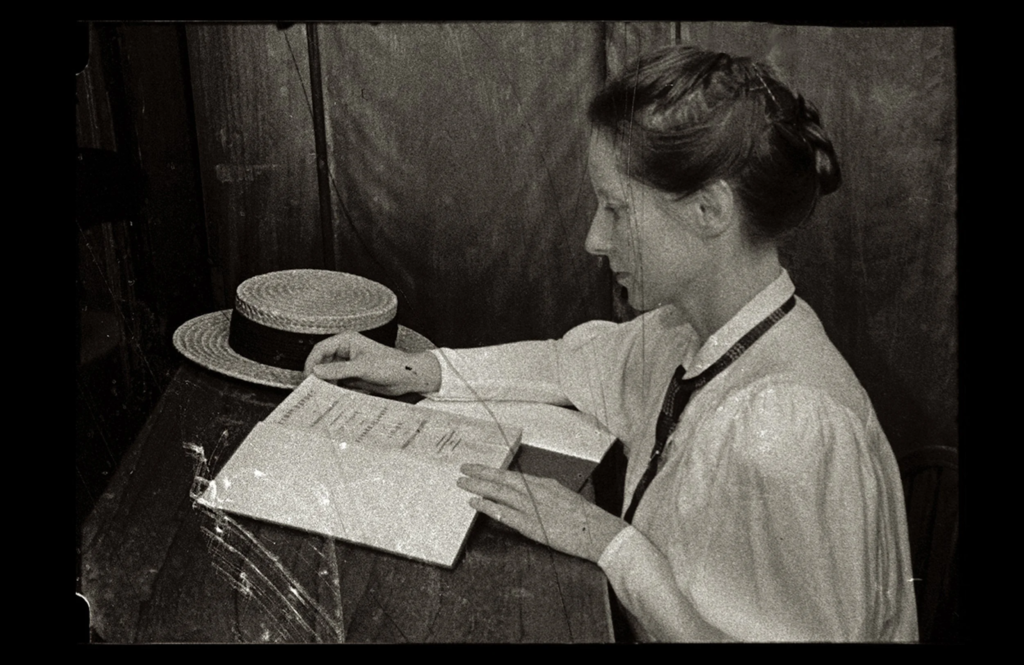
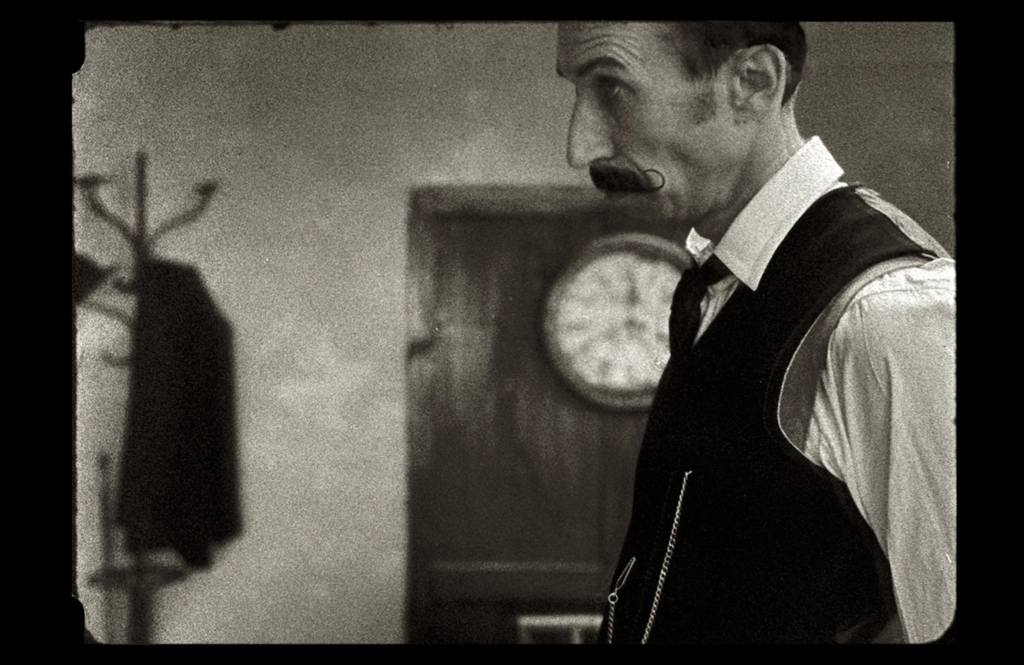
During the Battle of Dublin, from June 28 to July 5, 1922, marking the beginning of the Irish Civil War, the Irish Public Record Office in the western block of the Four Courts exploded. It remains unclear who was to blame or what exactly caused it. In addition to the many injured in the explosion, 700 years of historical archives were destroyed. Some archives were transcribed and are held in other archives and museums around the world, but many were lost forever. Shot on 16mm film, McClean’s Acts of Memory uses old archives that were saved, salvaged charred materials, and dramatic reenactments to fill the blanks of some of the lost archives.
McClean said, “Because so much of the archive was destroyed, the story is marked by absence. Reenactment allowed me to approach that gap indirectly, not to recreate the past exactly, but to stage a reflection on it. I was interested in how performance can make visible the act of remembering itself, and how the body can briefly stand in for what the archive can no longer show.”
Acts of Memory is narrated by an AI voice, which was an intentional choice to help reconstruct the lost history and also make commentary on rapidly advancing technology. There is much discourse around AI at Macalester, especially in the humanities and arts; Invisible Cities is no exception.
In class, when the Acts of Memory screening was introduced, there was an audible discomfort and frustration with McClean’s use of AI. Prof. Quigley asked us all to attend the screening with an open mind.
She said, “I was initially skeptical about the AI-generated voiceover, but it’s doing something really interesting here, and Mairéad really integrated the voice into the process in a compelling way.”
In the film, the narrator starts by describing the scenes, history, and the processes of filmmaking, but halfway through, gains sentience and ‘separates from the script.’ The voice begins to criticize and question its use in the film and its existence as a form of knowledge production.
“Bringing analogue film into dialogue with such a new technology intrigued me. What happens when they meet?” McClean said.
In the process of making Acts of Memory, McClean made a 16mm print, which required her to print out the AI voice “as an optical soundtrack along the edge of the film strip,” literally combining the AI with the video into one reel.
“If you hold the reel up to the light, you see not only the moving image but also the soundtrack as a visible waveform. To all intents and purposes, it looks like a human voice; the waveform is indistinguishable,” McClean said.
McClean continued to say that as the film ages and goes through projectors, it will begin to change, warp, and scratch. “In a strange way, once the AI voice is printed onto film, it begins to share the fate of the archive itself, becoming subject to time, damage, and gradual disappearance.”
While I’m not sure if all the Macalester students and faculty in the Harmon Room’s opinions on AI completely changed, McClean offered another perspective. As someone who is generally against AI, I found McClean’s use compelling, and it made me wonder how new technology can be used in other ways to memorialize the old and disappearing.
For the second half of Invisible Cities, students were asked to create their own memorial, which will be compiled on a website anthology. “The goal of this piece will be to memorialize some vanished, vanishing, or otherwise “invisible” part of the Twin Cities–a place, subculture, an experience, even a person.” Profs. Quigley and Voigt write in the project description.
The assignment is open-ended, giving us the freedom to create a memorial in any medium that we want as long as it can be held online. McClean said, “For me, that gap between what survives and what is lost leaves room for imagination and play.”