



New semester, new faces: Three professors join the English and Creative Writing department this spring
By Callisto Martinez ’26
Meet Professor Michael Kleber-Diggs:
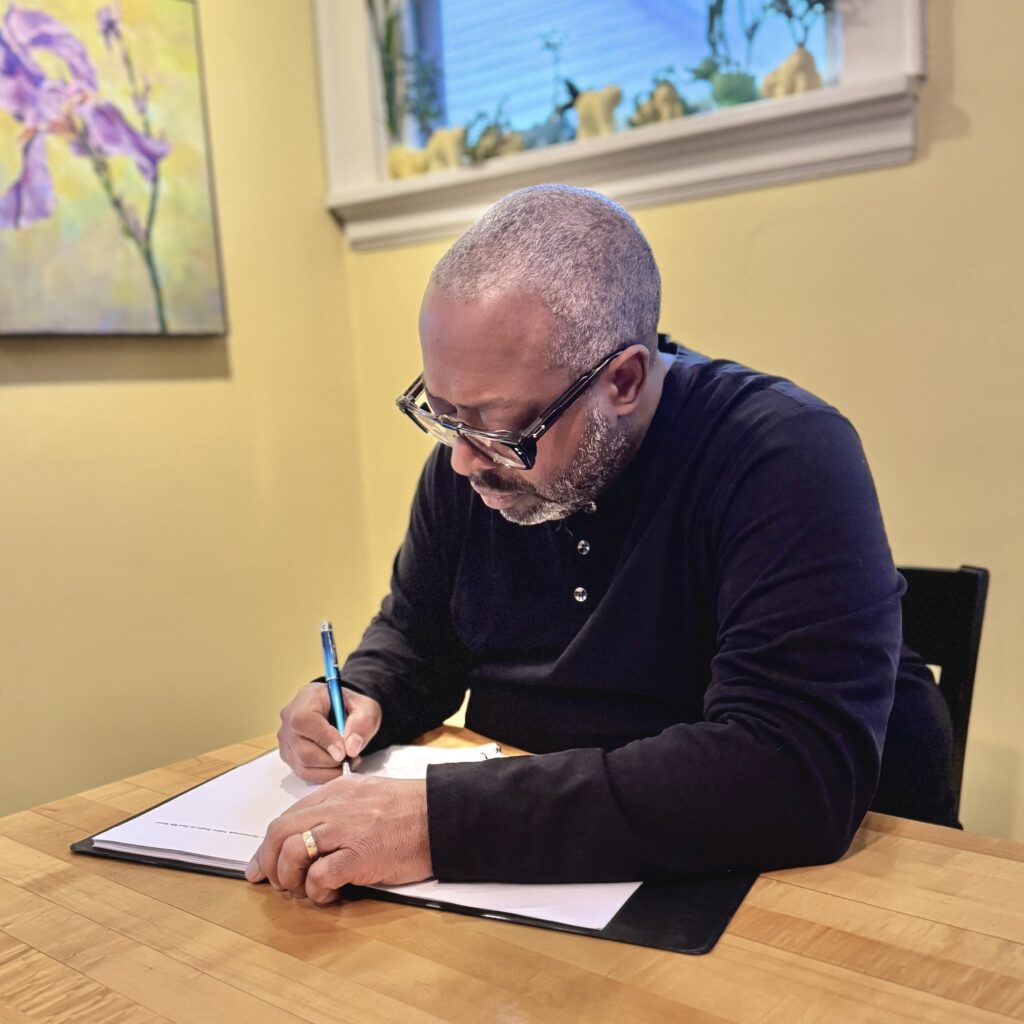
The Words sends a warm welcome to Michael, who is teaching his first course in the English and Creative Writing department, English-150: Introduction to Creative Writing, this semester. Author of the poetry collection Worldly Things, as well as numerous essays, Michael also has a memoir book titled My Weight in Water, which is slated for publication later this year! Read on to learn more about Michael.
How are you finding your first semester at Mac?
I enjoy it a lot. I mostly work as an Adjunct Professor, so I get a feel for the vibe at different universities in the Twin Cities. Every place is wonderful in its way (not just saying that). Macalester stands out though. Everyone I’ve met here is friendly and supportive. There is a clear sense of community on campus and in the English and Creative Writing Department. I enjoy all the colleagues I’ve met, and I’ve been blown away by the students and the things they’re making.
What originally piqued your interests in poetry, creative nonfiction, and literary criticism, and what do you enjoy most about creative writing now?
I’m fond of saying the first time I wrote something that was not assigned to me was in fourth grade. I’ve been writing consistently since then. Until I was 29, I mostly wrote short fiction. I think this is why my poems often take a narrative posture. When I was 29, I cultivated an interest in poetry, first as a reader, then as a writer. I took a class and spent years studying craft, theory, and canonical writers with a great teacher, Juliet Patterson. Spending time with Juliet helped me find my voice in poetry. Time with her also shapes a lot of how I teach creative writing.
Creative nonfiction often feels for me like a place to make appeals, arguments that can be quiet and subtle, or earnest and loud. I didn’t realize it until later, but I think going to law school and working as an attorney for a few years was an extension of my general interest in writing, an interest that has translated organically into work in creative nonfiction.
Literary criticism came about through an opportunity to write book reviews of the Minnesota Star Tribune. I did one and love it. It expanded to a few other publications. I enjoy engaging with work critically from time to time. Every once in a while I think about doing reviews on Tik Tok and becoming a big-time book influencer. LOL. What I enjoy most about creative writing right now is the chance to make work for this moment. I’ve been calling it “applied creative nonfiction,” that’s a bit limiting and narrow. At the same time, I do feel a heightened sense of purpose for my art at this time. I don’t apply that sense of purpose only to essays I’m writing about the federal occupation. I see clear value in all art right now, in art’s ability to inspire us and move us.
Tell us a bit about how you’re teaching Introduction to Creative Writing. What assignment, reading, or activity are you most excited about teaching?
We’re looking at creative nonfiction right now, and I always start with that, because it always helps me get to know my students. Getting to know everyone, as much as I can in one semester, is important to me. Next, we’ll study fiction which returns me to my roots but is also the genre where I learn the most in conversation with the other writers in the class. We end with poetry, which is my passion.
One of my favorite things about teaching is sharing essays, stories, and poems I love. I’m a new superfan of a Louise Erdrich short story called “Love of My Days,” and I’m excited to read it with my class.
What are some things that bring you joy outside of academics?
I love walking our dogs, Ziggy and Jasper. I like to swim and golf. I enjoy low-stakes poker games with a poker group called The Check-Raise Poker Group that I’ve been a part of for years. I love trying new restaurants and returning to favorite joints. I’m also a devoted reader. I’m currently enjoying “Clown Town” by Mick Herron.
Meet Professor Mike Householder:
Mike, author of Inventing Americans in the Age of Discovery: Narratives of Encounter and a member of Macalester’s Pipe Band, is teaching his first English and Creative Writing class, English-140: Once Upon a Crime, this spring. We’re elated to have Mike in the English and Creative Writing department community, and we hope you read on and extend a warm welcome to him.

How are you finding your first semester at Mac?
It’s not really my first semester at Mac, just my first course in English and Creative Writing. I taught a course in Philosophy in 2021 and again last year. I’m married to President Rivera, so I’ve been in the area since 2020. I had been teaching full time at St. Kate’s for a few years before deciding it made more sense to come over to Mac.
What originally piqued your interest in early American and Transatlantic literature; the intersections of law, bioethics, and literature; and happiness and stupidity? What do you enjoy most about these areas of study now?
Ooh, that’s a good question that deserves a long answer. But I’ll try to be brief. Basically, as a first-year undergraduate, I took a course on constitutional law (it wasn’t called that; it was one of those multi-disciplinary, intensive-writing, first-year foundations courses at my university) where we were reading about Jim Crow segregation and the idea of “separate but equal” when I suddenly realized that many of our most important ideas (e.g., Freedom, Family, Race, Justice, Truth) are really just stories humans tell one another. Those stories come from somewhere. They benefit someone (and often harm others). They can exercise enormous power over us, if we let them. Or we can learn how to demystify that power and tell the kinds of stories that promote goodness and human flourishing. That realization opened my eyes to the liberatory power of reading, writing, and teaching, and set me on my path to high school teaching and eventually grad school.
For my dissertation, I wanted to understand the origins of race as a concept in the ideology of European colonialism and Anglo-American style white supremacy. My interest in stupidity was sort of a side project that cropped up out of that work, as I discovered that a lot of early American literature features characters who are naive, out of their element, or overwhelmed by their circumstances. Think Rip Van Winkle falling asleep for twenty years and completely missing the American Revolution. Or Captain Amaso Delano in Melville’s “Benito Cereno” not realizing that he has stumbled into the middle of a revolt of enslaved Africans aboard a becalmed Spanish vessel. Once you see a few examples, you realize that American literature (and film, TV, etc.) are bursting with fools, dopes, dupes, bumpkins, ditzes, oafs, etc. I could probably teach eight different versions of that course and not repeat a single text. The interest in happiness comes out of a first-year writing course I taught for many years. Interestingly, one important idea in the course connects to what I was saying about the power of language and writing: our happiness (and unhappiness) can depend in large part on how we frame our experience of life. If we can manage some control over how we tell our own story, we can be happier.
Would you mind telling us a little bit about English-140: Once Upon A Crime, and what assignment, reading, or activity you’re most excited about teaching?
I’m filling in for Prof. Penelope Geng, who designed the course. It’s so cool—I wish I could take credit for it! I am putting my own spin on the topic though. Basically, we’re looking at a variety of texts and genres from myths and fairy tales, to true crime confessions and classic detective stories, to contemporary films and novels, including Macalester alum Tim O’Brien’s In the Lake of the Woods. I’m really looking forward to reading Nana Kwame Adjei-Brenyah’s staggeringly inventive and heartbreaking novel Chain-Gang All-Stars.
What are some things that bring you joy outside of academics?
I play bagpipes in the Macalester Pipe Band (I learned to play here at Mac!), I enjoy cheering on Mac students at their various athletic contests, arts performances, competitions, capstone presentations, etc. I like to travel and am fortunate to have the opportunity to do that. I love spending time with our kids, although they live in other cities so I don’t see them as much as I’d like. And I love soccer/futbol and go to as many MN United and Aurora games as I can.
Meet Professor Mercedes Sheldon:
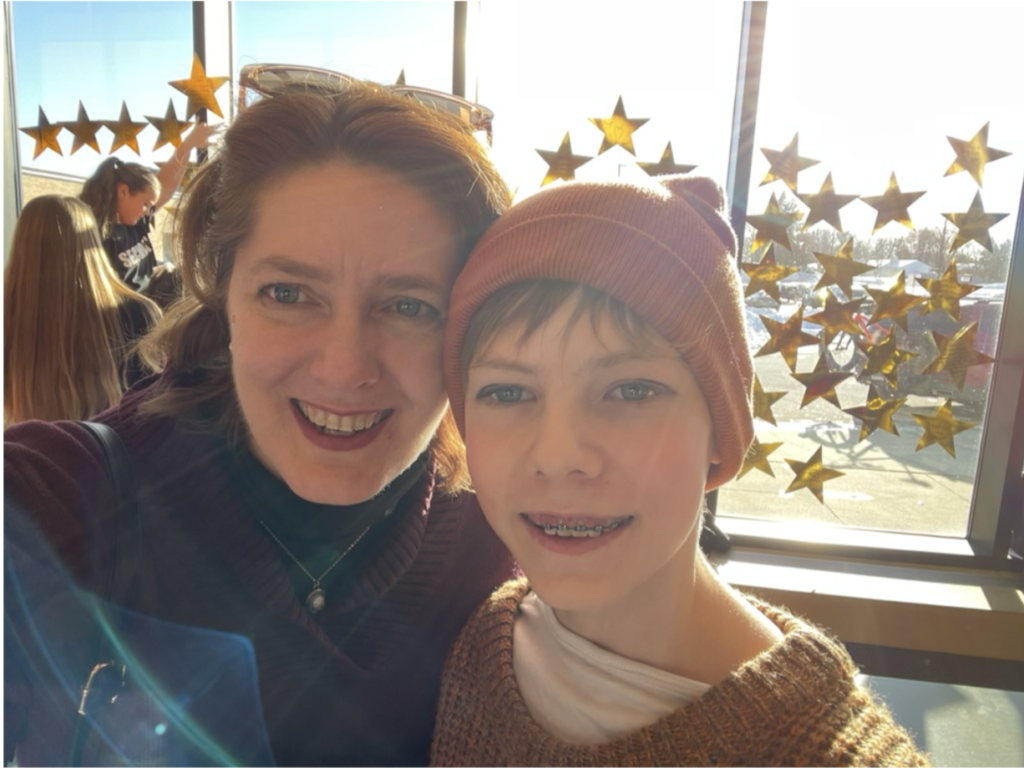
The English and Creative Writing department is excited to have Prof. Sheldon teaching in the department this spring! Currently teaching English-230: Media Mayhem: Nineteenth Century British Edition, Prof. Sheldon is also pursuing a PhD in English Literature at the University of Minnesota. Read on to learn more about Prof. Sheldon’s areas of expertise within Victorian literature and passions outside of her studies!
How are you finding your first semester at Mac?
Setting aside the chaos and fear of the world around us, I am really enjoying my semester here at Mac. My students are engaged and curious. There have been several instances when I have shared an aside about some odd bit of 19th century history, culture, etc. and then I notice a student jotting down a note to themselves to follow up on that idea. This is rather rare at the other places where I’ve taught and speaks to the fabulous intellectual curiosity of Mac students.
The faculty and staff have also been very warm and welcoming! It is lovely to connect in various ways with the people who make the English and Creative Writing Department a place where students can thrive as scholars and as individuals.
What originally piqued your interest in 19th century British literature, and what do you enjoy most about it now?
In seventh grade, we read an excerpt of Jane Eyre in Read Magazine during class. It was so amazing that I walked to my town’s library, checked it out, and inhaled the “triple decker” novel. Jane felt real in the same way that Little Women had when I read it the year before, despite the fact that one was realistic fiction and the other gothic. Across the decades, I keep coming back to that familiarity within 19th century texts, which I do not experience when reading literature from other eras. The pressing questions about gender, education, media, scientific exploration, social norms, etc. that I encounter in 19th century periodicals in particular continue to press upon us in ways that demand my attention.
During my master’s program, I was surprised to learn how often 19th century literature was illustrated. Did you know that the first edition of Jane Eyre included wood engraved images? (I have a shawl with the illustration from Chapter 1 printed on it.) People were very anxious about what it meant to consume images along with words, or even only images as technologies improved and allowed for such publications as the Illustrated London News. I am continually drawn to British literature as and about media, wherein the reader is an ever-present participant in an unfolding conversation about what and how to read.
Would you mind telling us a little bit about your class English-230: Media Mayhem: 19th Century British Edition, and what assignment, reading, or activity you’re most excited about teaching?
Media Mayhem as a course takes up this notion of literature as and about media, as well as the resonances between the 19th and 21st centuries as mass media moments. Students have begun their first essay, which invites them to explore how two texts from the first half of the century engage in cultural conversations around expanding media forms such as the novel, popular poetry written specifically for consumer-driven publications, and the review as a place of social discourse. I am really looking forward to how each student’s individual interests and observations open up the texts that we’ve read!
I hope to take my class to the special collections at the University of Minnesota, but I have hesitated to plan that given the active presence of ICE at the U. If this draw down is real, then we will head across the river in late March or early April to turn the physical pages of 19th century periodicals, including the aforementioned Illustrated London News. And trade periodicals with real wallpaper samples. And satirical illustrated weeklies. And the first short story featuring Sherlock Holmes… there is just so much!
What are some things that bring you joy outside of academics?
I’m delightfully surprised by how much I like parenting in the middle school years. I also love baking and have been failing a lot at eclairs; baking produces the most delicious failures on the long road to mastery!
The Words thanks Prof. Sheldon, Mike, and Michael for their lovely responses to our questions, and we hope you take part in welcoming them into the English and Creative Writing community here at Mac!