



Megan Ritchie ’09
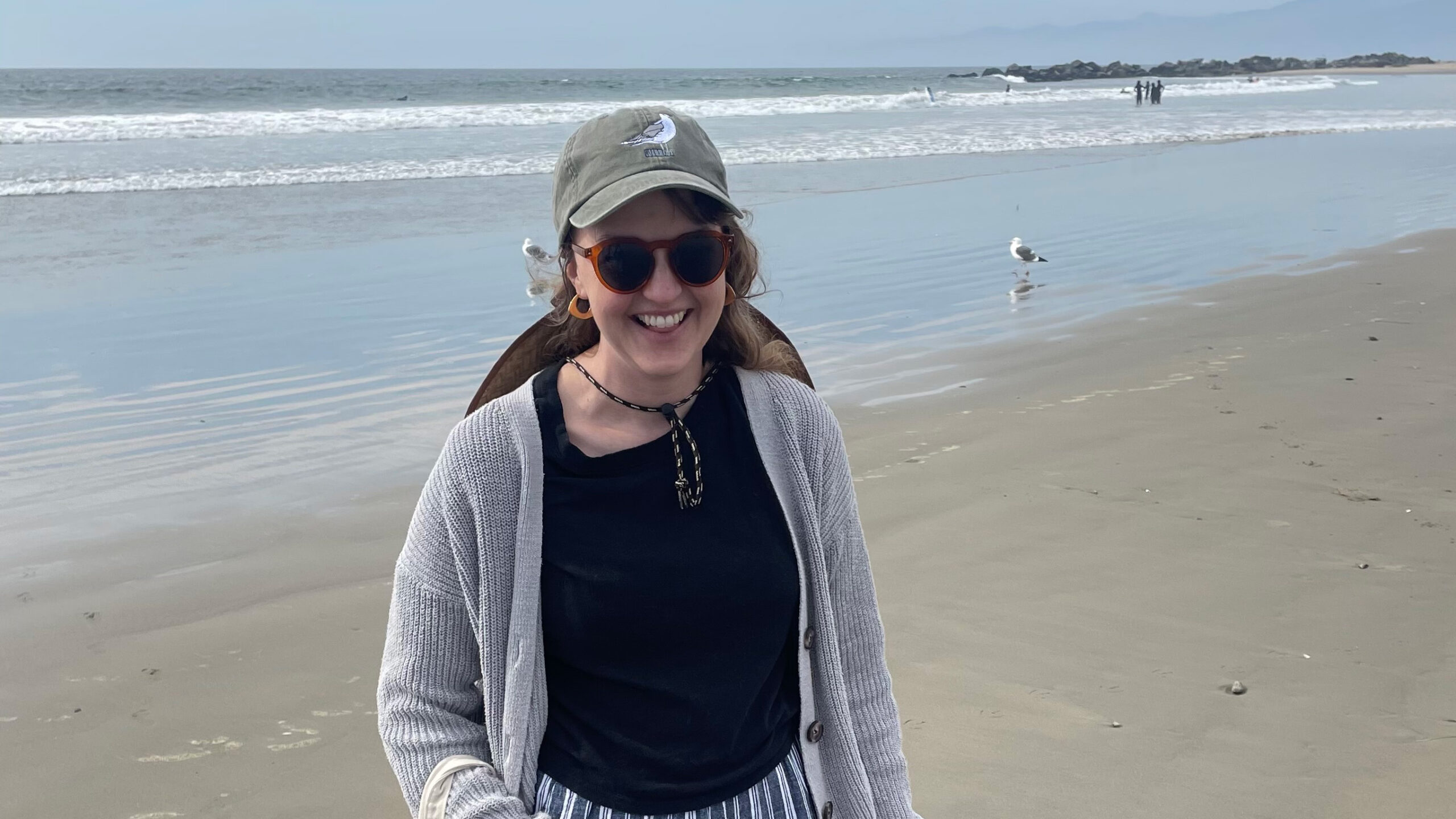
Working on my admissions essay, I wandered around Mac and was struck that everyone here loves learning, was hungry to learn anything and everything—something I valued and didn’t even know I was looking for until I found it.Megan Ritchie ’09

English and Creative Writing Major
Television writer on Severance and Sugar
Writing • Film & TV • Curiosity • Resident assistant (RA)
There isn’t a clear path in Hollywood to get to write. Although I was an English major and loved my screenwriting class, I thought, “this is not a job.” I did a year of AmeriCorps service, setting up a community clinic and doing grant-writing. Then I went to teach English in China. Coming back, I decided that if I could survive being lonely in a place where I didn’t speak the language, I could try L.A. I gave myself two years.
I started as an old intern (I was 24!) for a production company, and then worked for an agent at WME, which I’ve heard called Hollywood Business School. Between those two jobs, I learned the industry. I did lots of office work, but I also saw deals and scripts and got to read everything, which helped me understand what was selling. After WME, I did development at a production company, reading scripts and giving notes exactly like in a creative writing class. I was tracking books for adaptations, reviewing writing samples, trying to move projects into production, and I realized: I could continue down the development path to become a producer, or I could become a writer. I decided to go for the thing that scared me but that I loved more.
Now I spend a big part of my year in a writer’s room, working with a group to figure out a show’s season—from big to small story beats, the turns for each character and each episode. Writers take charge of different episodes, responding to producers’ notes, working on pacing and logic, writing several drafts of the script. For ten episodes, it’s at least twenty weeks. It used to be that a single show was a fulltime job, but now with streaming and shorter seasons, this has become a more uncertain, freelance job. So I am also always networking.
One of the things I love about working in Hollywood is that it’s so collaborative, learning how to problem-solve with other people and sometimes in spite of other people. I was an RA at Mac, which is a lot like being in a writer’s room—working with a cross-section of people and figuring out how to build things that they will care about.
I used to think it was a mistake that I didn’t go to film school. But although it might have taken me a little longer to get my foot in the door, the way that Mac cultivated curiosity in me in every class I took is absolutely what got me here.
Last updated: October 2025