



Zeena Fuleihan ’18
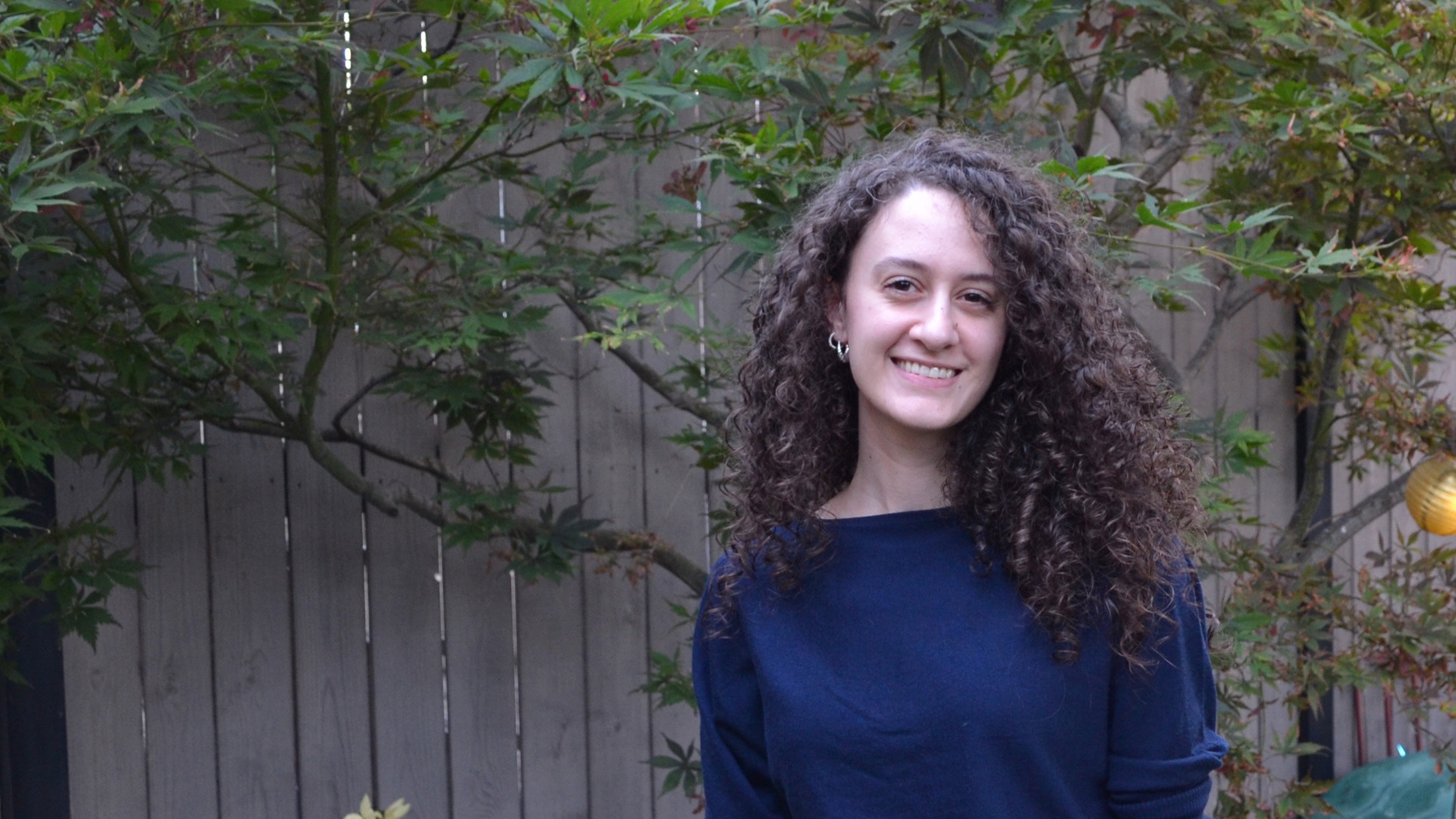
In a humanities classroom, we practice genuine engagement and thought, where there isn’t one right answer—and you learn to see the world differently by taking charge of your own learning.Zeena Fuleihan ’18

Creative Writing Major
PhD candidate in English at Duke University
Publishing • Teaching • Higher Ed • Internships
When I was at Mac, my plan was to work in publishing for a few years out of undergrad, and then turn full-time to creative writing. There were so many opportunities on campus and in the Twin Cities that helped me. Editing Chanter [Mac’s literary magazine] was pivotal, and so was working for Mizna—a Twin Cities arts org with a journal and an annual Arab/SWANA film festival. An internship at Coffee House Press led to me freelancing for them, beginning my senior year, and then picking up part-time work at The Loft Literary Center after graduation. Then Coffee House Press hired me full-time after graduation as a Marketing and Publicity Assistant.
In those years, I saw the backside of the publishing industry, which took some of the sheen off the literary life for me. This is not specific to a single press, but is an industry-wide problem of how much capitalism affects the production of art. I was still doing my own creative work and had landed a two-year contract writing monthly public essays for Ploughshares online. When I realized that this public writing—which was more critical commentary than creative—was the most satisfying thing I was doing, I found myself reevaluating my career path.
I started with an MA in Contemporary Literature, Culture, and Theory at King’s College London, as a more formal bridge between the creative and theoretical sides of literary studies. That convinced me that a PhD was right for me, as it unites the teaching I’d been doing with the scholarly side of writing that was so fulfilling My work as a preceptor and as an RA at Mac, as an editor of the English department newsletter, and even in the classroom, was direct training for what I do now. At large universities, those kinds of opportunities are exclusively for graduate students.
One of the things that feels valuable to me about working in higher ed is emphasizing the importance of being able to parse everything that comes our way—the world around us, the media and literature—not just for a grade but for better understanding. I have always been excited to help students learn and develop for themselves. Right now I’m holding onto that value.
Last updated: October 2025