



Michael Solemar ’12
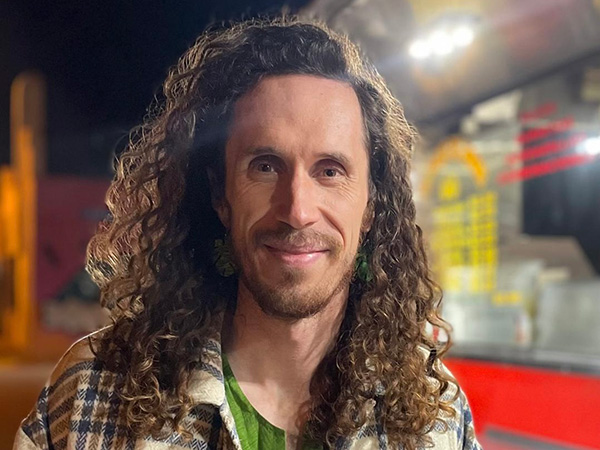
Being a starter on the football team for four years developed my confidence, leadership, sense of community, and ability to deal with adversity—all characteristics that helped me become the doctor I am today.Michael Solemar ’12

Biology Major
Family Medicine Physician, Planned Parenthood
Medicine • Activism • Study Away • Student Athlete • FYC
As careers go, mine was not a linear trajectory. I chose Macalester in part because I wanted to be able to play football, and coming in, I thought I would be a math major. But then my First-Year Course with a great biology professor changed everything. I am so grateful for the small classes, the liberal arts education, and the study abroad that influenced me. I chose a study abroad in Botswana, which serendipitously was focused on public health, and which brought together biological and the anthropological ways of thinking about disease risk patterns in university students. That, plus my now-lifelong mentors in the biology department, shaped my decision to go to med school.
I applied to MD/PhD programs because my anthropology minor had opened my eyes to the power dynamics in health care and the world writ large. When I found that the PhD was very theoretical, and I wanted to do more applied work, I took a year off and moved to Tanzania to research socioeconomic barriers to healthcare. I learned a lot about how current global health practices operate with the same power imbalances of colonial eras. And I realized that it didn’t feel appropriate to be a white American protesting in Tanzania, so I came back to the US to get involved in grassroots work here. I initially thought I would be a researcher, but becoming a gender-affirming provider and advocate seemed more important, and so I pivoted to a clinical focus in family medicine, which is the medical specialty most interested in social justice and speaking truth to power.
I did my residency at a county hospital, taking care of people who were otherwise excluded or marginalized, and saw firsthand that even within healthcare there are imbalances in terms of patient access and research. I have done primary care at a predominantly Latinx clinic in Oakland, CA; traveled monthly (pre-Dobbs) to volunteer time at a Texas abortion clinic; and now am the program director for gender-affirming hormone therapy at a Planned Parenthood office in Santa Barbara. I see patients every day for issues ranging from birth control to mastectomy treatments to hormone therapy, and our clinic provides care to everyone who comes in regardless of ability to pay or insurance.
I feel fortunate to be at Planned Parenthood, where our high volume and specialized focus means we have deeper expertise and thus a better bedside manner for explaining to patients what is going on with them. At the same time, I can see myself moving into research or policy at some point. When you rescue people out of a river for a long time, eventually you want to go upstream and figure out why they’re falling in.
Last Updated: October 2025