



Franki Gillis ’20
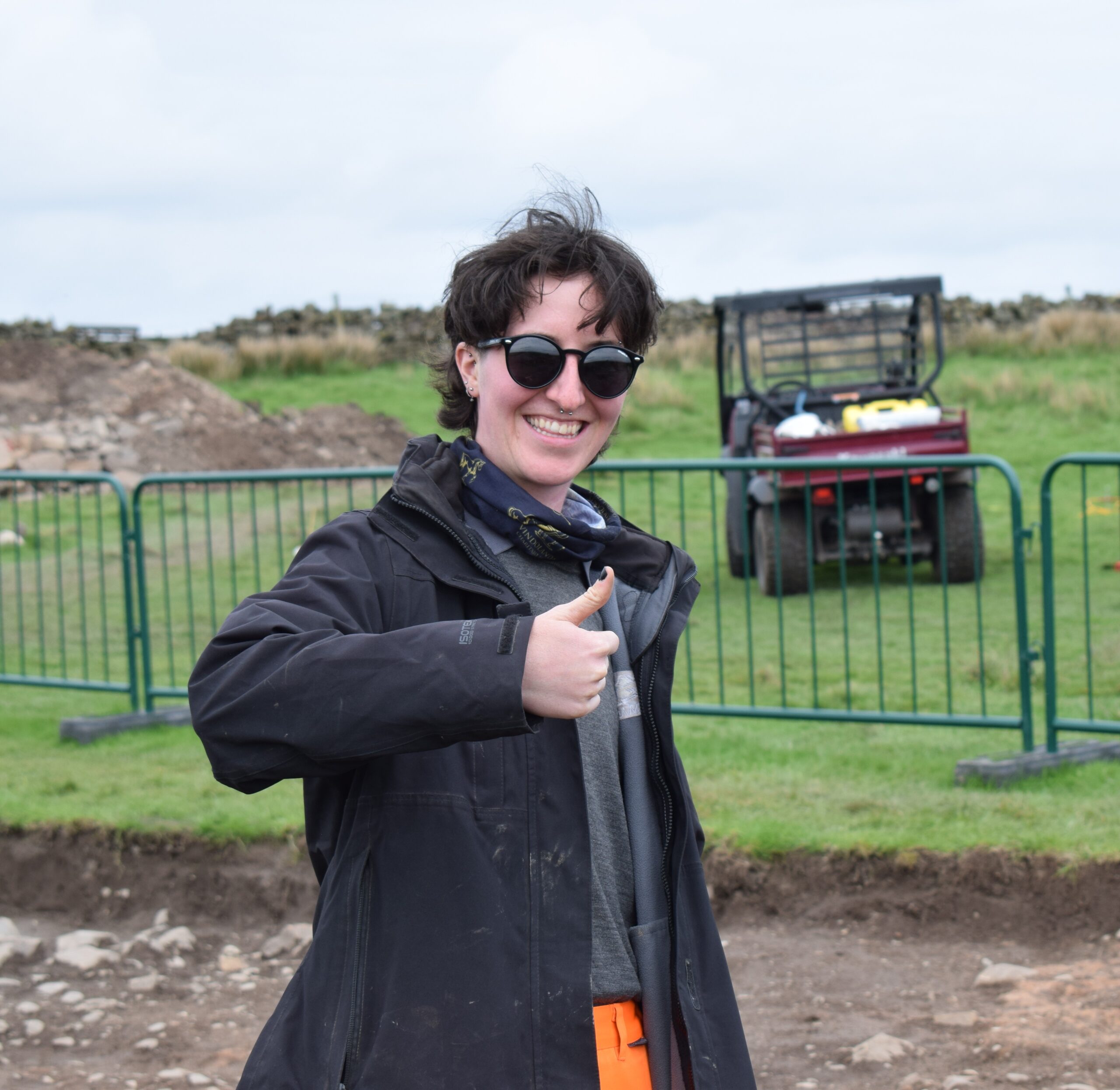
Study Away and being able to do field schools abroad, which my mentors turned me onto, helped me get my first jobs.Franki Gillis ’20

Classics Major
Geoarcheologist, Vindolanda Trust
First job • Humanities & STEM • Research • Study Away
Geoarchaeologists do a lot of soil science, looking at the elemental makeup of soil samples and how it measures human habitation. I am part of a five-year archeological project looking at how climate change is impacting organic material remains. The work includes summer excavations at two Roman forts on Hadrian’s wall and winter research into the artifacts with a team of specialists in everything from chemistry to pottery. We also write up our findings for academic contexts as well as for general readerships.
I did the archeology track in the Classics department and a minor in geology. My study away in Florence, through the Lorenzo De Medici School, meant I got to take classes related to Roman archeology in Italy, which got me excited about field work. I participated in three field schools that summer—short-term volunteer positions on archeological digs—in Scotland, Romania, and Montenegro. My advisor had connected me to the Archeological Institute of America, which has affordable field schools that take students and even offer grants. In the US, it’s mostly professors who do archelogy, so I thought I would go into academia and made plans to do an MSc in Classics at the University of Edinburgh, starting the fall after graduation.
I spent the summer doing cultural resource management work for the 106 Group in Minnesota. After my master’s degree, I stayed in Britain and worked briefly in commercial archeology—which is basically about helping companies make sure they aren’t about to knock down or build over anything important. When I saw this job posting, I had to apply: these forts were originally built about 85 CE and were occupied until between the 4th and 8th centuries, even after they were abandoned by the military.
The work I am doing now has a pretty direct relation to my degrees and coursework. Compared to my UK coworkers, who have narrow plans of study from the moment they enter university, the variety of classes at Mac has made so many things possible for me. Even classes I didn’t think I was good at have turned out to be important. I took a logic course I never thought I’d use that again, but now I do a lot of coding in R, which is based in logic.
People should know that you can find your way into archeology from lots of different place—classics, analytical chemistry, GIS specializations. And you can end up working for national parks, on excavations of ancient sites, or even find yourself choosing to work on a project you oppose—like [Enbridge oil pipeline] Line 3, for example—because it’s important to have an ethical archaeologist pushing a company to do the right things in indigenous lands.
Last updated: October 2025