



Jaye Gardiner ’11
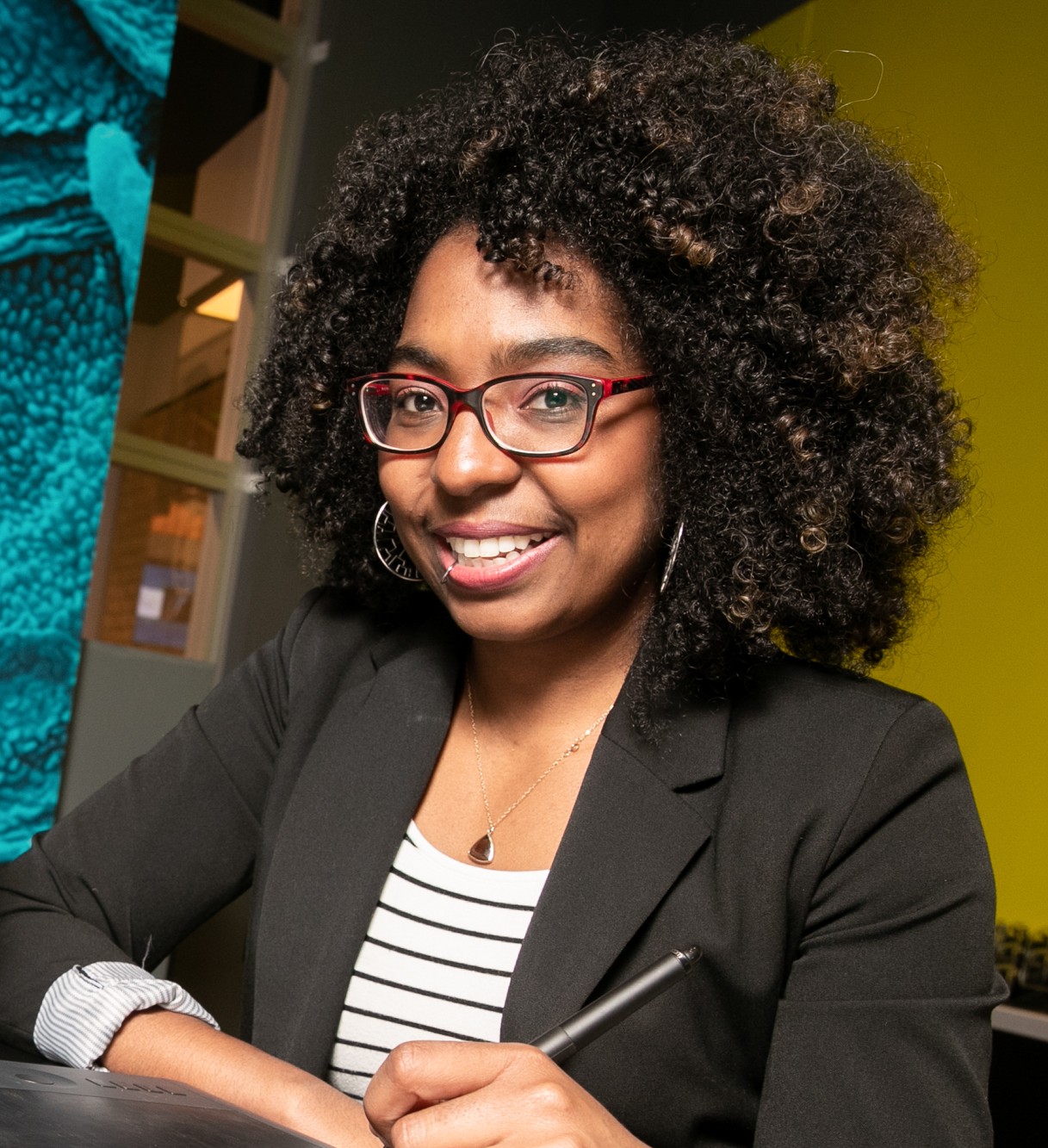
Many people think science is linear and calculated, but having a well-rounded perspective makes the science much more successful.Jaye Gardiner ’11

Biology Major
Cancer researcher and illustrator
Medical research • Art • Science education • Storytelling
Looking at live cells under a microscope is captivating and dynamic and beautiful in ways people don’t often get to appreciate. Although I have a PhD in cancer biology, I once thought I would go to college for illustration. Through my postdoctoral research on pancreatic cancer, and now as professor at Tufts University, I attribute a lot of my success in science to my Mac biology teachers who prepared me so well, and to my advisors who wisely told me to do something besides science too. Now I have a research career that also satisfies my desire for artistic expression, through my secondary specialty in science communication.
I’ve always been interested in the question of how to explain research to other people, and have admired teachers who could make hard subjects undeniably fun. While helping a friend edit a grant proposal to write a science education book for kids, I realized how much I cared about these broader impact issues. Eventually, I launched and led a project called Gaining STEAM, in which seven artists were paired with seven scientists for workshops in communicating research. The idea was to focus on storytelling, to get the science from behind the paywalls, and to turn the jargon into something accessible.
Now, I publish science comics, which I think of as a great way to make the invisible visible. I create my comics using the same program I use for graphs and poster presentations aimed at other scientists. There’s something fitting in this connection of the art, graphic design, and science worlds.
I am delighted to have landed at Tufts, a university with high-end research capacity that also has a special five-year program specifically for students who want to bring together a science major with a major in the School of the Museum of Fine Arts. I teach a mini-course in science communication to all of my students. We focus on how to create clear, simple messages; to communicate projects through visual representations; to work in groups and give and receive criticism. With my students, and in my own work, I emphasize that storytelling is vital to make science applicable.
Last updated: October 2025