



EnviroThursday Fall 2025
Presentations take place at 12 noon, Olin-Rice Room 250
September 11, 2025
No EnviroThursday – Ice cream social for ES majors and minors
September 18, 2025
“Shifting Shrubs and Scaling Spectra: Researching Plants and Climate Change Above the Arctic Circle”
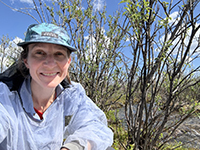
Speaker: Mary Heskel, Macalester Biology Assistant Professor
Mary Heskel will take you on a tour of two large team-based projects in Arctic Alaska and Scandinavia. Learn about how climate change, plant physiology, biodiversity, and ecosystem ecology intersect in the rapidly changing arctic tundra, and what it’s like to do research in remote settings without trees or darkness!
This EnviroThursday is co-sponsored by the Environmental Studies and Biology Departments.
September 25, 2025
“How Far We Have Come, Where Are We Going, and How Do We Get There: An Update on Macalester’s Campus Zero Waste and Decarbonization Goals”
Speaker: Megan Butler, Macalester Sustainability Director
Come and hear a presentation about local action and environmental leadership from representatives in the Macalester Sustainability Office. We will talk about Macalester’s two sustainability commitments: Zero Waste and Decarbonization, what the campus is doing to achieve our ambitious sustainability goals, and how you can get involved!
October 2, 2025
“Building Coalitions for Climate Action and Ecosystem Restoration”
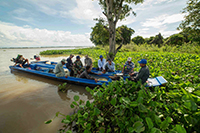
Speaker: Blake Ratner, Executive Director, Collaborating for Resilience and Research Fellow Madhusudan Singh
Blake Ratner and Madhusudan Singh will address the importance of community-led landscape regeneration efforts to climate resilience. Explore coalitions linking civil society, government and private sector actors in India, Guatemala and Cambodia. Connect to opportunities to partner with our Minnesota-based and international teams.
Blake Ratner is founder and Executive Director of Collaborating for Resilience, and member of the Scientific and Technical Advisory Panel of the Global Environment Facility, where he provides guidance on the design of GEF strategy in the areas of international waters, environmental security and resilience. He is the immediate past Director General of WorldFish, which works to strengthen food and nutrition security for millions of small-scale producers, processors, traders and poor consumers in South and Southeast Asia, Africa, and the Pacific. An environmental sociologist with a Ph.D. from Cornell University, Blake’s research addresses social equity, ethics, resource conflict and the role of multi-stakeholder dialogue in environmental governance.
Madhusudan Singh supports analysis, exchange of lessons and capacity strengthening among practitioners focused on multi-actor platforms and coalitions, both in India and cross-regionally. His role at CoRe is supported by the prestigious Atlas Corps fellowship co-sponsored by the American India Foundation. Madhusudan is a climate resilience and disaster risk reduction practitioner working at the intersection of indigenous knowledge, environmental governance, and community-led adaptation. With over a decade of experience, he has contributed to research and field programs with organizations including the European Commission, UNDP, NDRF India, the Global Heritage Fund, and the University of Porto, Portugal. Madhusudan is a graduate of the Tata Institute of Social Sciences (TISS), Mumbai, and an alumnus of the Smithsonian-ICCROM First Aid to Cultural Heritage in Times of Crisis (FAC) program.
October 9, 2025
“Collective Re-Worlding through Feminine and Indigenous Power: A Path to Thriving Biodiverse Ecosystems”
Speaker: María José “Chochi” Iturralde, Pachaysana Foundation
This presentation explores how Indigenous women in the Amazon are leading a transformative movement of ecosystem restoration and community revival. Through the lens of feminine and Indigenous wisdom, Chochi shares how women are reimagining their roles and reshaping their world. The session concludes with a conversation on how we can all be part of this collective re-worlding.
This event is co-sponsored by the Environmental Studies and Latin American Studies Departments and the Kofi Annan Institute for Global Citizenship (IGC)
October 16, 2025
No EnviroThursday – Fall Break
October 23, 2025
No EnviroThursday – Check out the International Round Table
October 30, 2025
No EnviroThursday – ES Majors and Minors lunch
November 6, 2025
“The Costs of Climate”
Speaker: Minnesota State Representative Athena Hollins
This presentation, “The Cost of Climate Change,” explores the growing economic, social, and environmental toll of a warming planet. The effects of climate change– from extreme weather to infrastructure damage—carry real financial consequences for communities, businesses, and governments. The presentation highlights how investing in climate action and generating dedicated revenue can reduce long-term costs, strengthen communities, and create a more resilient, sustainable future.
Minnesota State Representative Athena Hollins represents District 66B in Saint Paul. In her tenure at the legislature, Athena has been a champion for climate and environmental justice, focusing on energy storage policy and investment, zero waste initiatives and electronics recycling reform. Athena believes that effective, inclusive lawmaking can make Minnesota better for all of us.
November 13, 2025
“Tudors and Timberwolves: Vermin Eradication Campaigns from 16th Century England to 20th Century Minnesota”
Speaker: Will Cavert, University of St Thomas
In the 20th century Minnesotans’ understandings of wolves transformed, as they came to see them as a keystone species, necessary for preserving wild ecosystems. This understanding, which remains contested, ended the government-funded bounties which was older even than Minnesota’s statehood. Such bounties existed not only for wolves in Minnesota but in many states and for a huge range of the predators, birds, and snakes which were considered “vermin.” They are American legacies of colonial laws, which were in turn derived from procedures brought by colonists from England in the 16th and 17th centuries. This talk will explore how attempts to eradicate vermin – from England in 1566 to Minnesota four centuries later – have connected central governments with local concerns in ways that provided both strength and fragility in their attempts to remake ecologies.
November 20, 2025
No EnviroThursday – Joint Environmental Studies and Biology study away session
December 4, 2025
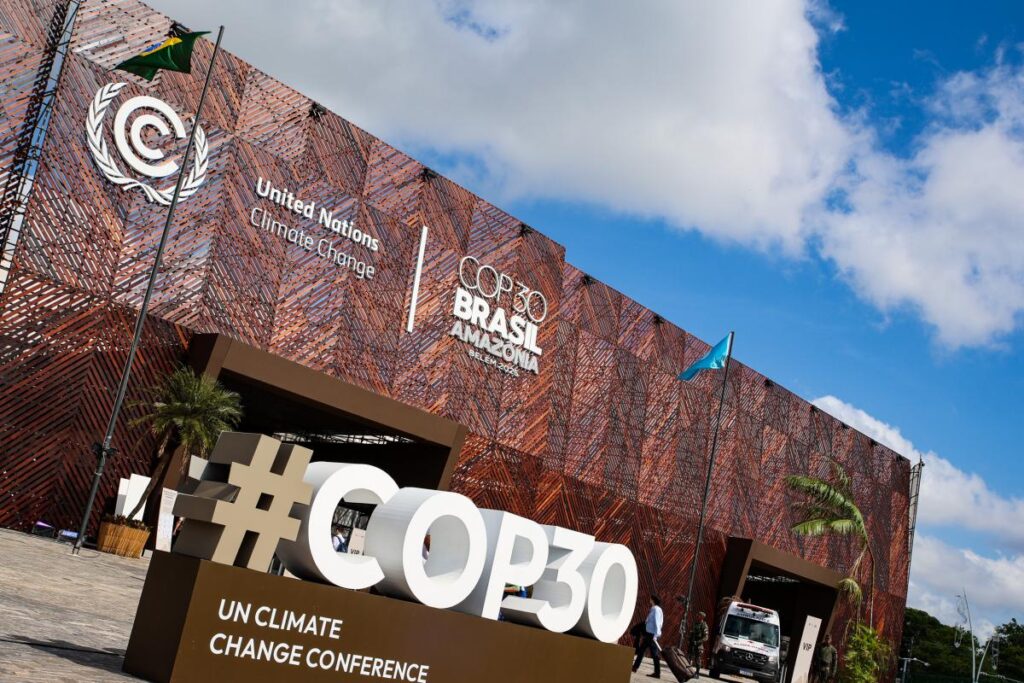
“COP30: Key Outcomes and the Path Forward”
Speaker: Roopali Phadke, Macalester Environmental Studies Professor
This year’s UN Climate Summit (COP30) in Brazil marked the ten-year anniversary of the Paris Agreement. Professor Roopali Phadke just returned from COP30 and will share her perspective on the progress achieved and the continued shortfalls in global climate action.