








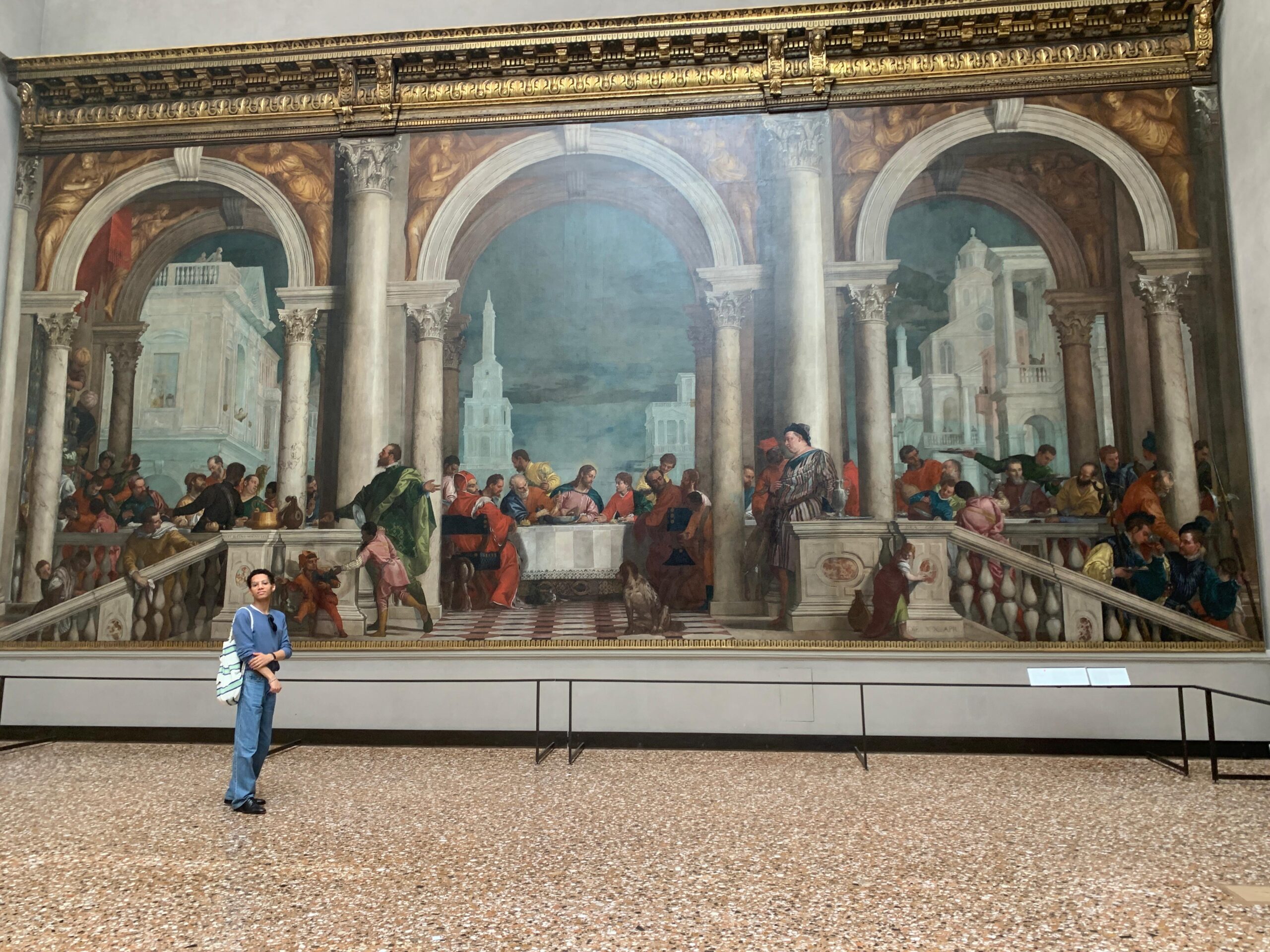
Each year, a group of Macalester seniors immerse themselves in original research as part of a senior honors project. Guided by faculty advisors, these projects provide students with the opportunity to contribute scholarly work within their field of choice. This past academic year, seniors analyzed Renaissance tapestries in Florence, collected data on plants in the Arctic, and investigated how our bodies react to horror films, among many other projects. We asked five seniors to share what they discovered and what the process taught them.
Ruth Dunlap ’26
Biology
“The Highs and Lows of Life in a Valley: Topographic Controls on Tundra Vegetation in a Warming Arctic”
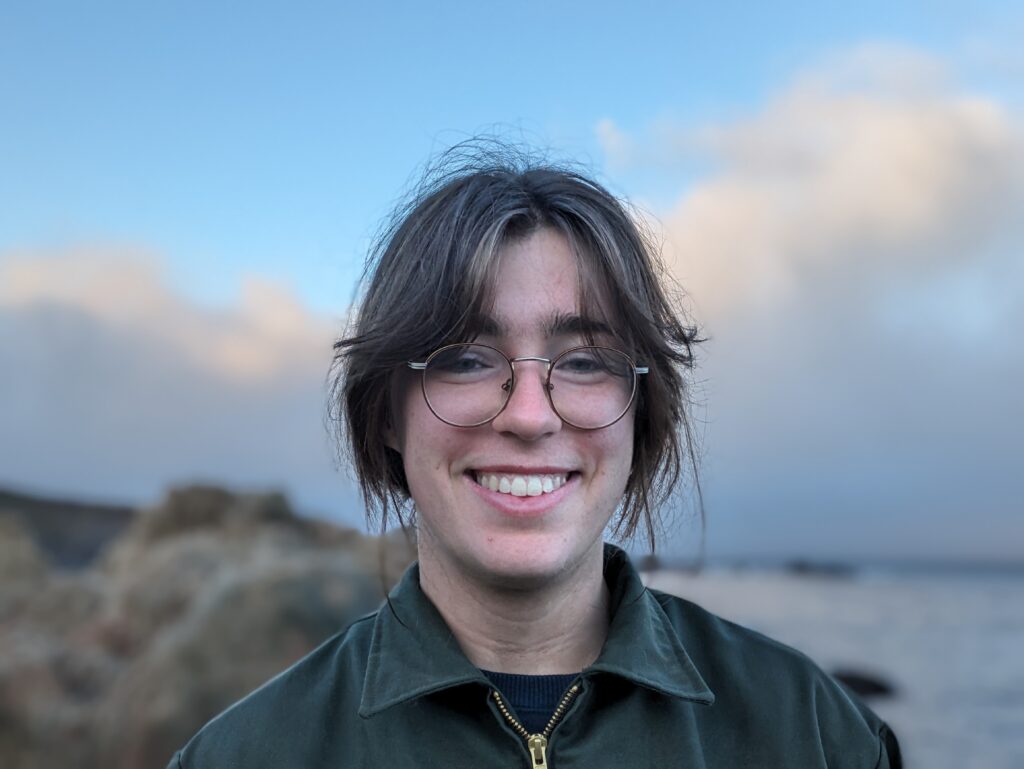
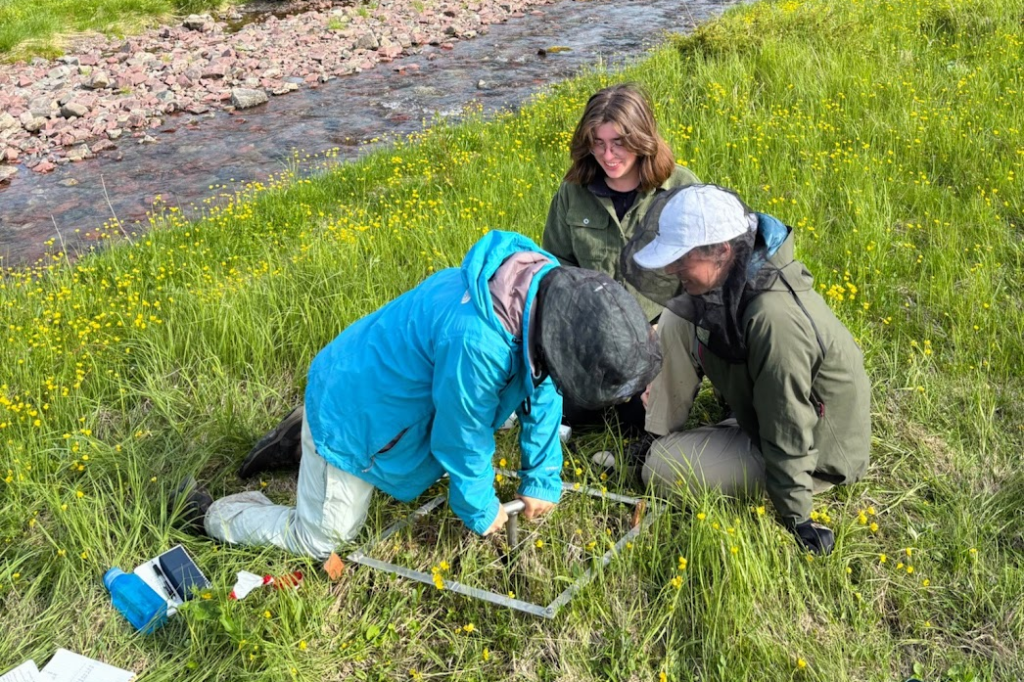
Ruth Dunlap traveled to Finland and Norway to answer the question: does the shape of the land matter for how Arctic plants survive our changing planet? From hills to valleys, Dunlap examined how even the smallest differences in topography can impact plant diversity, function, and survival. The majority of their fieldwork was conducted at a research station in Varanger, Norway, one of the locations visited by a team of interdisciplinary Mac researchers focused on the future of the Arctic and led by biology professor Dr. Mary Heskel.
What was the most surprising or unexpected thing you discovered?
“Topography can create biodiversity hotspots in the Arctic, even within a short distance. These areas of diversity are important for ecosystem multi-functionality, herbivore and pollinator persistence, carbon storage, and climate resilience. Another really interesting finding from my work (found in other studies as well) is how different species respond differently to topographic heterogeneity. For example, some species may be more plastic (greater capacity to change) in their responses to different microenvironmental conditions.”
What was the hardest part of the project or biggest challenge to overcome?
“Field work always comes with challenges: long days, technical issues, and poor weather. All of this requires rethinking data collection and the potential projects that follow. Working with many incredible field scientists, we were able to work around issues to collect data.”
Gregory Forsberg ’26
Mathematics, Statistics, and Computer Science
“Understanding Delays in Emergency Department Care: A National Analysis of Wait Times”
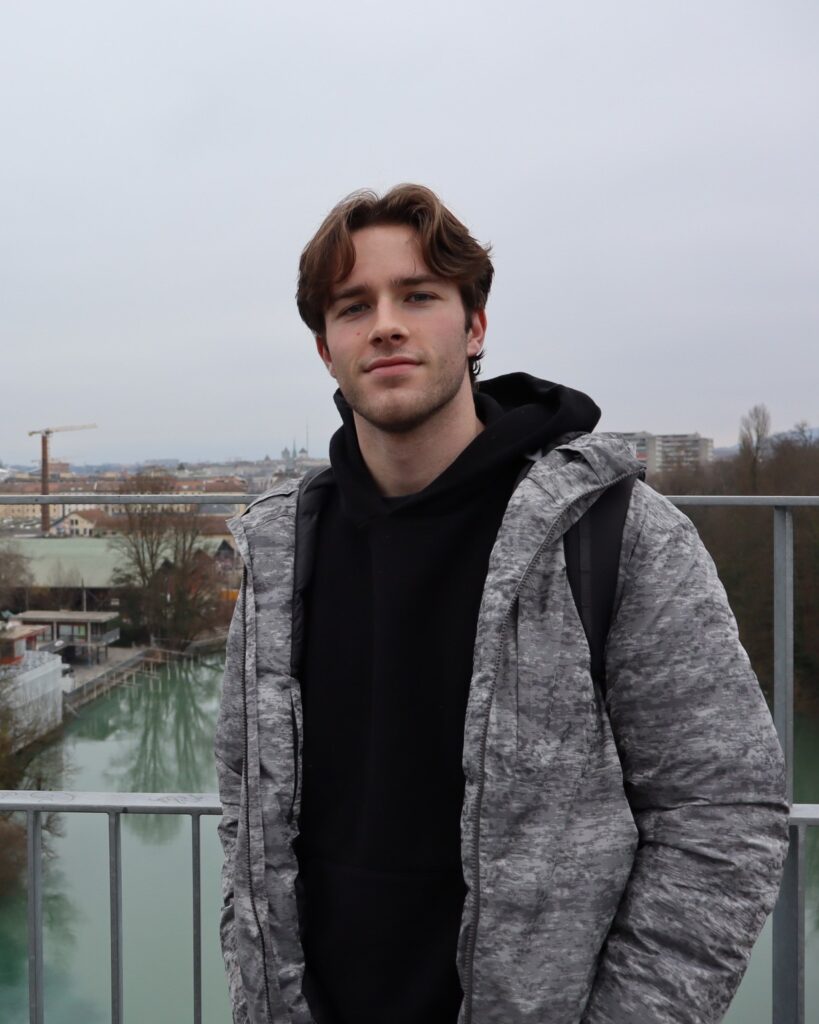
Gregory Forsberg’s honors project takes a data-driven look at a matter of life or death: delays in emergency rooms. Using survey data from emergency department visits from across the US, Forsberg analyzed which operational factors have the strongest relationships with wait times. The senior’s work required learning about survey statistics, including the methods needed to analyze data from a complex multistage probability sampling design.
What drew you to this topic?
“I was drawn to this topic because I wanted a project at the intersection of data science and medicine. As a data science major hoping to attend medical school after Macalester, this project felt like a great fit. I have often heard people complain about long hospital or emergency department wait times without fully understanding why those delays happen. Given my background in data science and statistics, I saw this as an interesting problem to investigate.”
How has your project impacted how you think about your field or the world?
“This project showed me how powerful and important data science can be for answering questions in healthcare and beyond. As technology advances, data science provides important tools for understanding complex systems and identifying patterns that may not be obvious at first.”
Zhijun He ’26
International Studies
“After the Catastrophe: Rwanda’s Transformation”
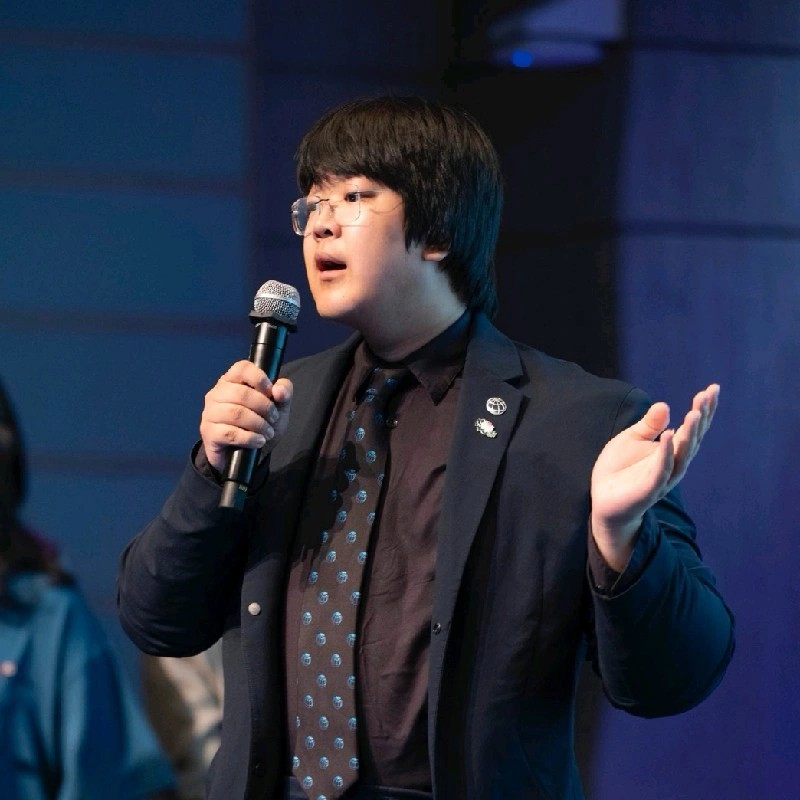
In 1994, Rwanda emerged from a genocide with little government infrastructure and virtually no financial resources. In their honors project, Zhijun He investigates how the country rebuilt itself and at what cost. They look at four institutions that Rwanda constructed in the aftermath of devastation: community courts, communal labor programs, performance contracts, and civic education camps. As He argues, some were successful, but all came at some cost to society.
What drew you to this topic?
“By the time I got to Macalester and Professor Ahmed Samatar’s classroom, a question I had been circling for years finally had a name: how does a state simultaneously take from people and give to them, and what happens when both sides of that relationship come under strain at once? Rwanda turned out to be the place where that question is asked in its sharpest form.”
How has your project impacted how you think about your field or the world?
“I came in thinking development was something you optimize. I am leaving thinking it is something a society negotiates, under conditions it usually didn’t choose, with tools that are usually inherited rather than designed. That changes what it means to study a place. It also raises a question I’ll be living with for a while: what does it mean to theorize from outside about institutions whose logic might not be capturable from outside?”
Emily Hueser ’26
Media and Cultural Studies
“Being Scared in a Secondary Universe: Experiencing the Self Through The Horror Film”
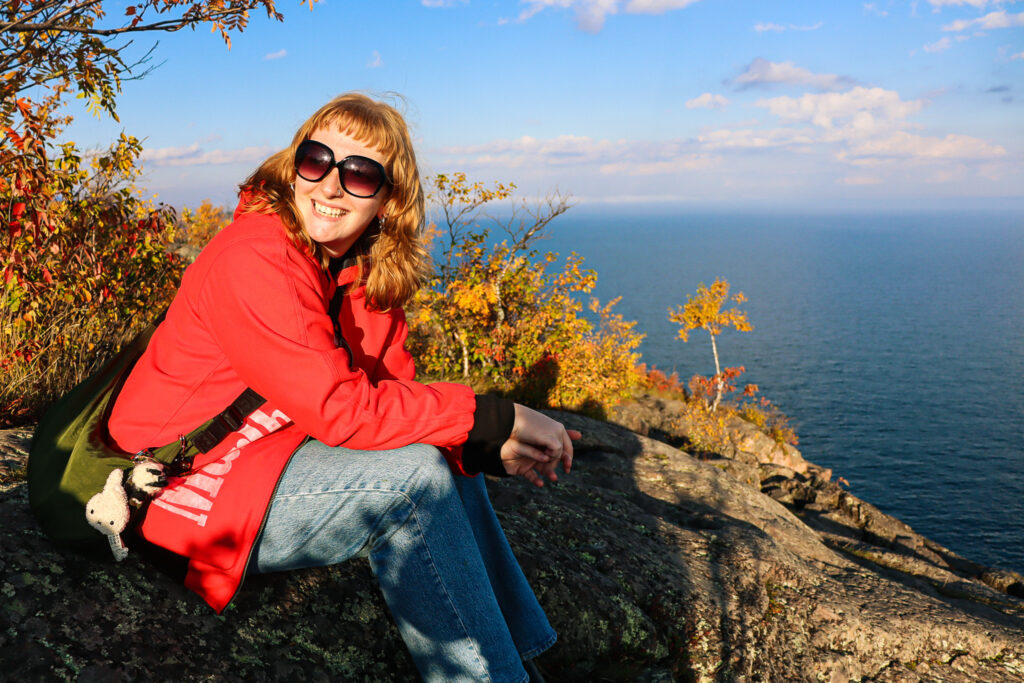
Horror is often dismissed as cheap entertainment, but Emily Hueser’s project investigated the genre as a place of complex identity formation. The senior’s thesis examines how the physical experience of watching horror—everything from flinching, screaming, and covering your eyes—is actually part of how we construct our sense of self. Through four films—Get Out, Videodrome, The Fly, and The Substance—Hueser also tackles how horror engages questions of race, disability, and collective identity.
What drew you to this topic?
“I’m actually not a huge horror fan myself. What drew me to the genre was the difference in how I watch it—it’s the only movie I refuse to watch alone. I HAVE to watch with friends or family because I’m too much of a chicken. I felt like there was lots of potential in this required, communal nature for me. It’s also always felt like the most ‘experienced’ genre, one that brings with it an expectation of jumping in your seat, of covering your eyes with your hands. With no other genre do I assume that I will be physically engaging my body while I watch.”
How has your project impacted how you think about your field or the world?
“It’s made me think of my own personal practices of spectatorship and the nature of ‘watching.’ It’s allowed me to consider the cinema and moviegoing as a political practice, one that brings me closer to my community. It’s also made me spend way too much money at The Main Cinema and The Grandview.”
Ruben Verità ’26
Art and Art History
“Weaving Ideology: Textiles in Florentine and Venetian Painting of the Cinquecento”
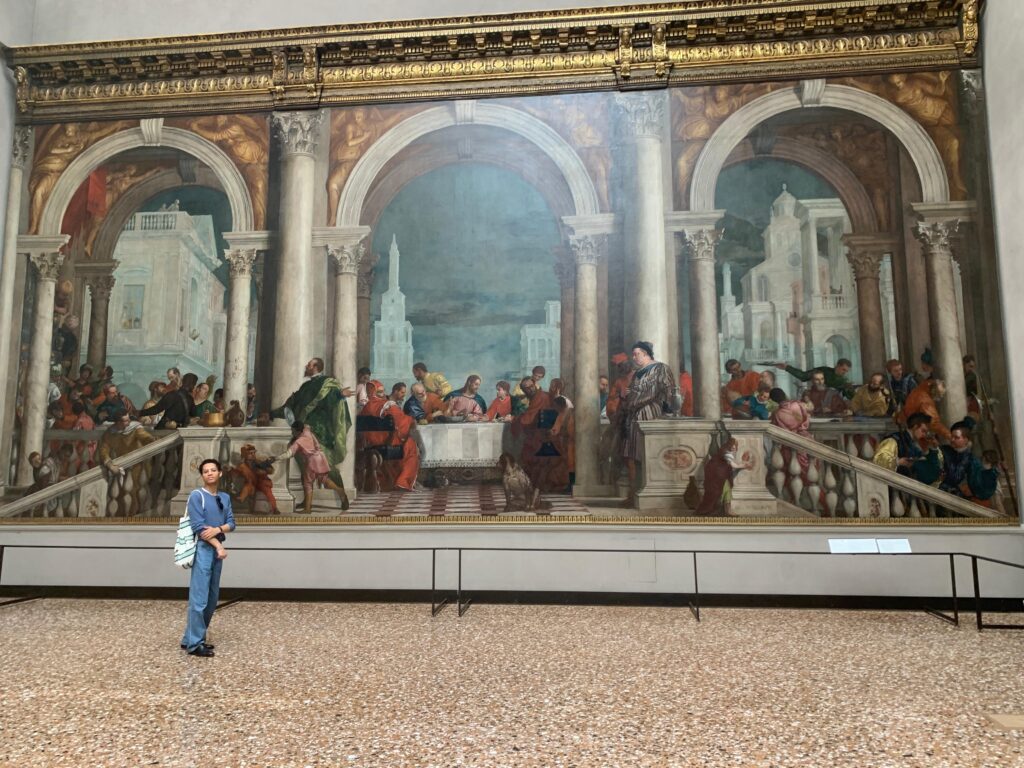
When it comes to the art of the Renaissance, famous paintings and sculptures often come to mind. But Ruben Verità argues fabric is just as interesting and perhaps even more revealing of the time period. Comparing works from Florence and Venice, Verità shows how the creation and design of fabric works of art differ across political systems. Drawing on sources beyond the paintings themselves, the senior looked to Italian literature, economic history, and the early silk industry to provide deeper context.
What drew you to this topic?
“My family fostered a love and appreciation for the arts since I was a child. My father has prints of Renaissance paintings hanging in his office, and my family would go to museums together whenever we had the opportunity. During my adolescence I developed a passion for fashion, which I pursued at Macalester through my work study position in the costume shop of the Theater and Dance Department. Thus, I wanted my thesis to be about textiles in some way. Then, through discussions with my professors, particularly my advisor, Dr. Jacob Eisensmith, during my junior year, I was able to combine my interest in textiles and clothing with my passion for Renaissance art.”
How has your project impacted how you think about your field or the world?
“I think the research I conducted made me especially aware of the details you can glean from the broader social, political, and historical context of an artist’s output and a painting’s creation, to provide a more thorough analysis of an artwork. Artworks are not static objects that can be wholly understood by examining their formal aspects. Rather, the broader situation surrounding their creation must also be considered.”