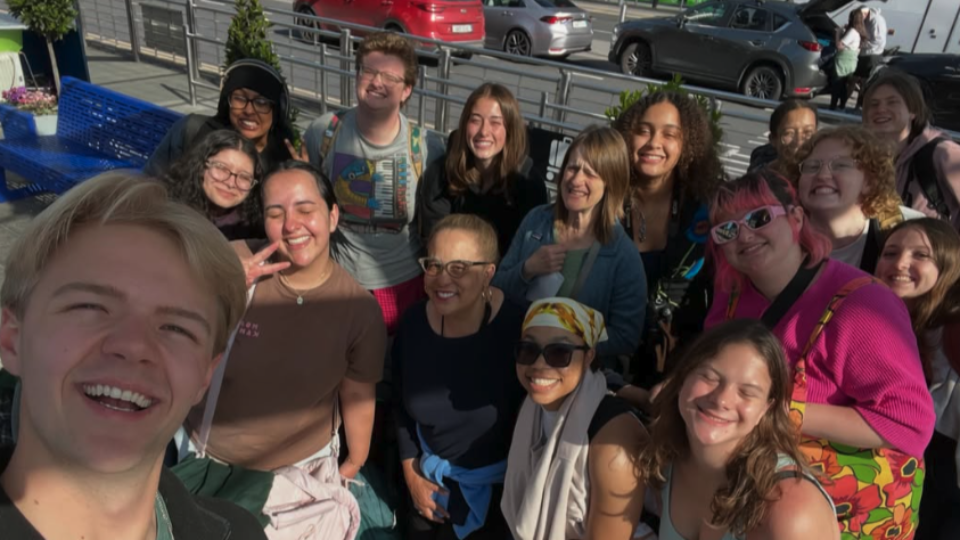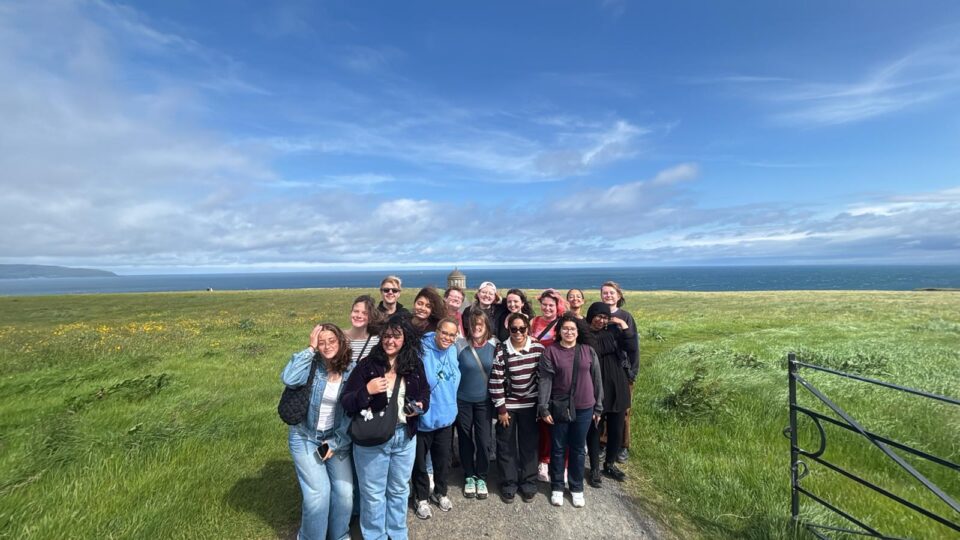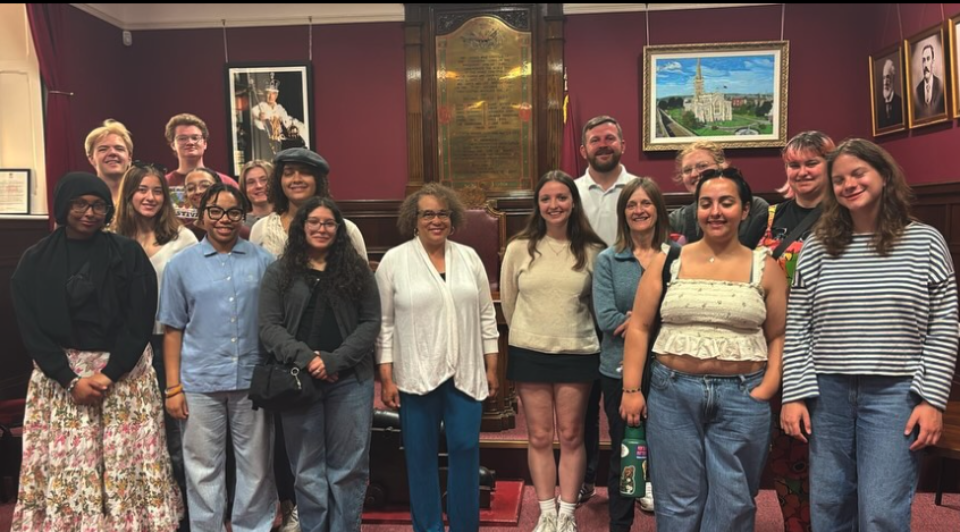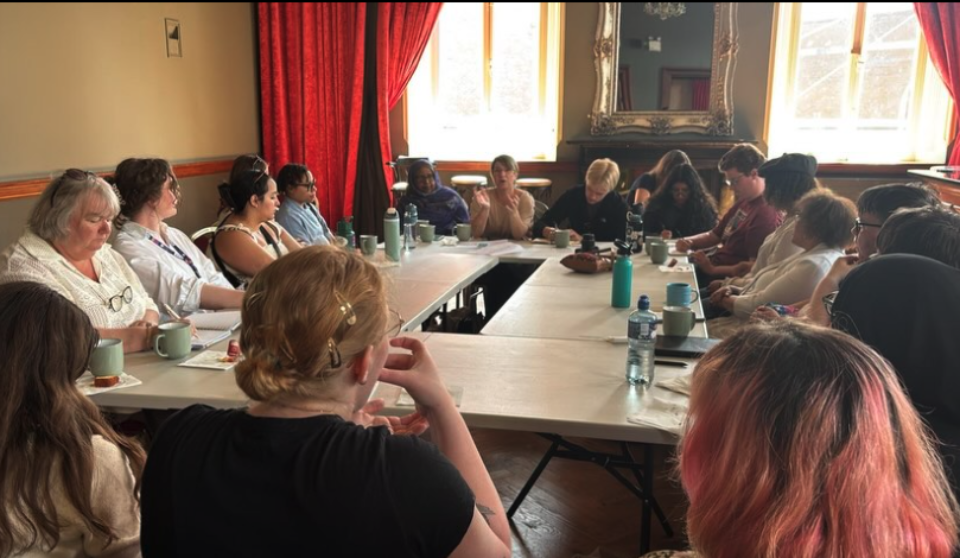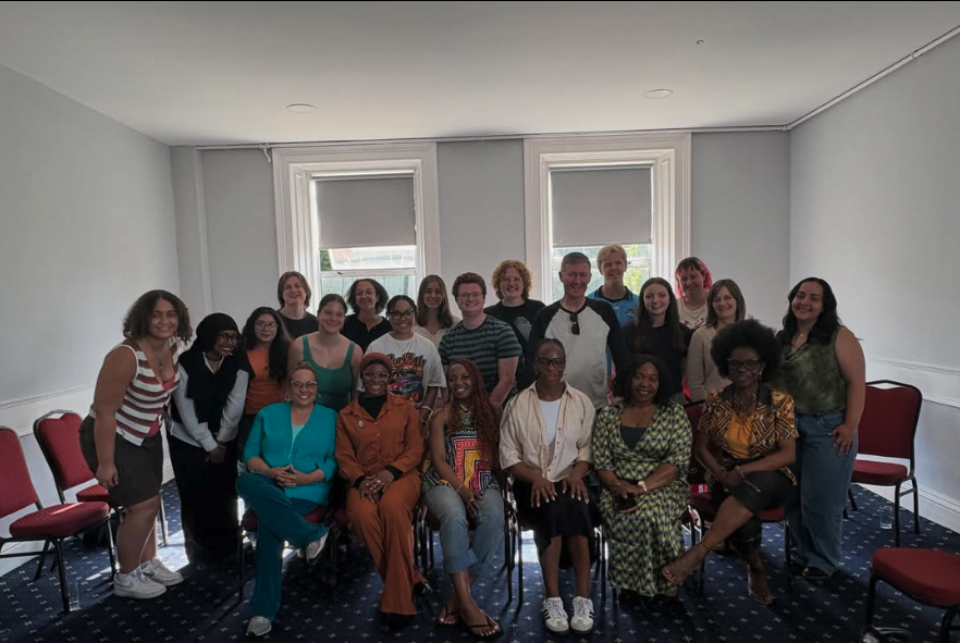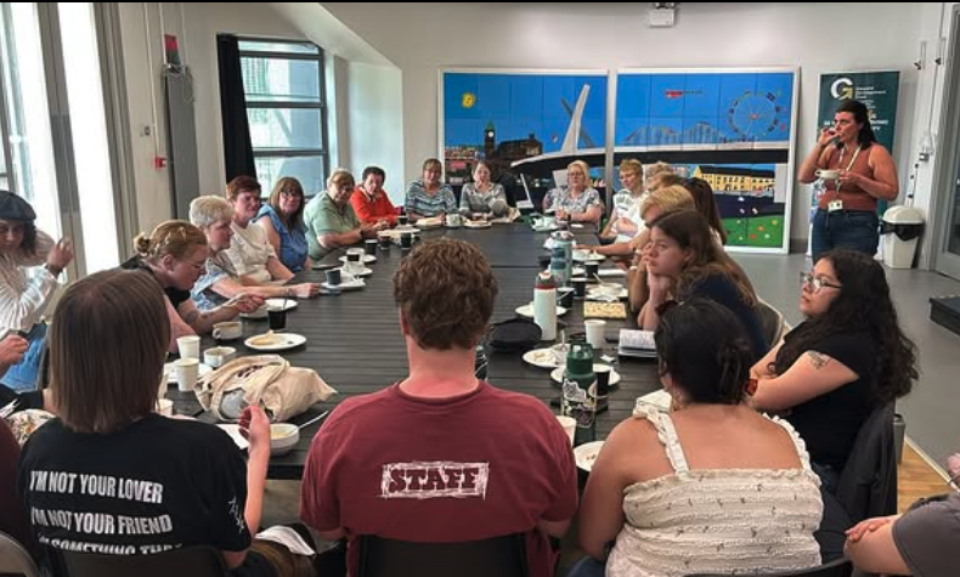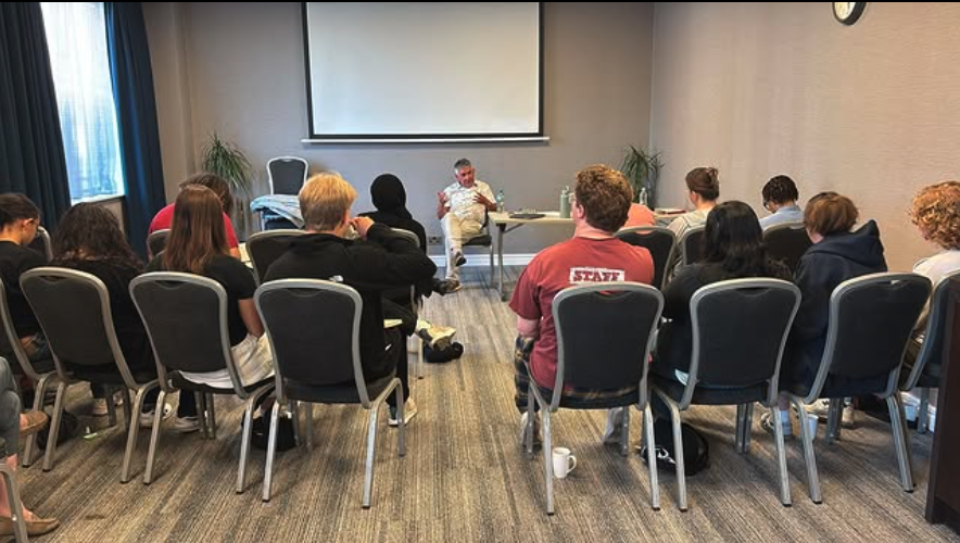







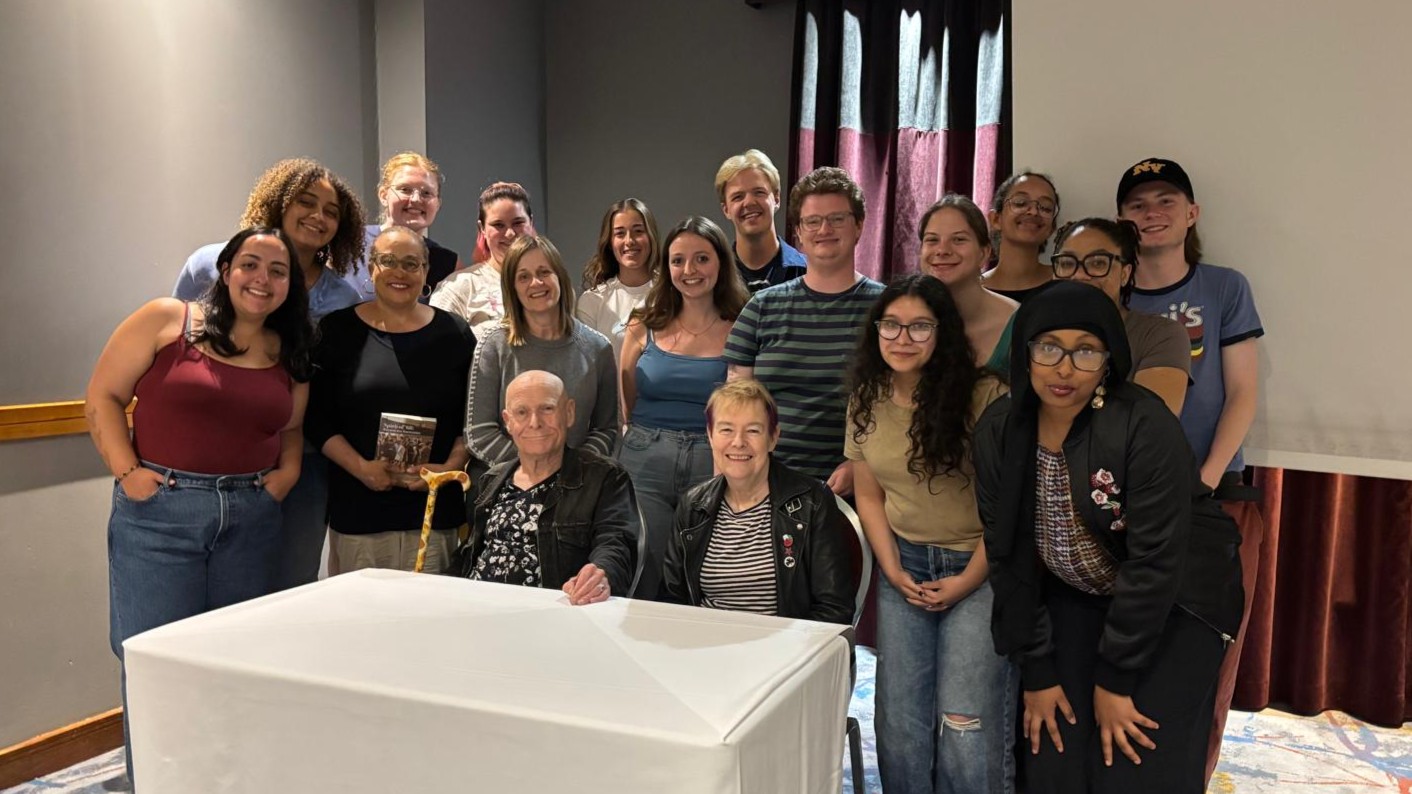
In May, political science professor Julie Dolan and American studies professor Duchess Harris led fourteen students on a trip to Northern Ireland as the culmination of their crosslisted short-term study away course, Gender and Transnational Politics: A Comparison of Northern Ireland and the Southern United States.
From May 22 through May 31, the group visited Dublin, Belfast, and Londonderry to explore the civil rights struggle in the United Kingdom and its striking parallels to the civil rights movement in the southern United States.
“Our course examines the intersections between the US Civil Rights Movement and the Troubles in Northern Ireland, exploring themes of power, marginalization, and the fight for justice,” says Dolan. “The primary objectives are to expose students to the parallels between Black Americans’ and Irish Catholics’ ongoing struggles for civil rights and social equity, with particular emphasis on women’s roles in both movements.”
The trip featured guest speakers, documentaries, walking tours, community meetings, and site visits in a structured experience that allowed students to examine historical and political connections firsthand.
They spent their first two days in Dublin, where they watched the documentary Echoes of 2004, produced by Dr. Ebun Joseph, which examines the long-term impact of Ireland’s 2004 Citizenship Referendum. Dr. Joseph, who helped establish Black Studies at University College Dublin in 2018, also serves as the Irish Government’s Special Rapporteur on Racial Equality and Racism.
Later, the group met with Irish journalist Miriam O’Callaghan, who led the production of the documentary 1968: The Long March, Northern Ireland Civil Rights. The film details how Martin Luther King, Jr. inspired a parallel civil rights movement in Northern Ireland.
As the students have learned in the classroom this spring semester, Northern Ireland remains segregated.
“Social struggles do not emerge in isolation; they are fundamentally transnational phenomena,” says Harris. “The civil rights movements of Northern Ireland and the American South were in active dialogue with one another—bound together by striking parallels in their marches, their strategies of nonviolent resistance, and their shared determination to work within existing legal and political frameworks to secure full citizenship: for Catholics in Northern Ireland, and for Black Americans in the United States.”
Even today, peace walls remain in place to separate communities, and only 8 percent of students in Northern Ireland attend integrated schools.
Much of the country remains divided along Catholic and Protestant lines. However, younger generations are beginning to move past the animosity and trauma of the Troubles, a period of conflict that ended with the Good Friday Agreement.
A major point of ongoing disagreement is constitutional status: many Catholics in Northern Ireland support reunification with Ireland. In contrast, many Protestants prefer that Northern Ireland remain part of the United Kingdom.
As this conflict continues, Macalester hopes to secure funding in future years to reduce financial barriers and expand opportunities for more students to participate in globally-minded learning experiences like these.