








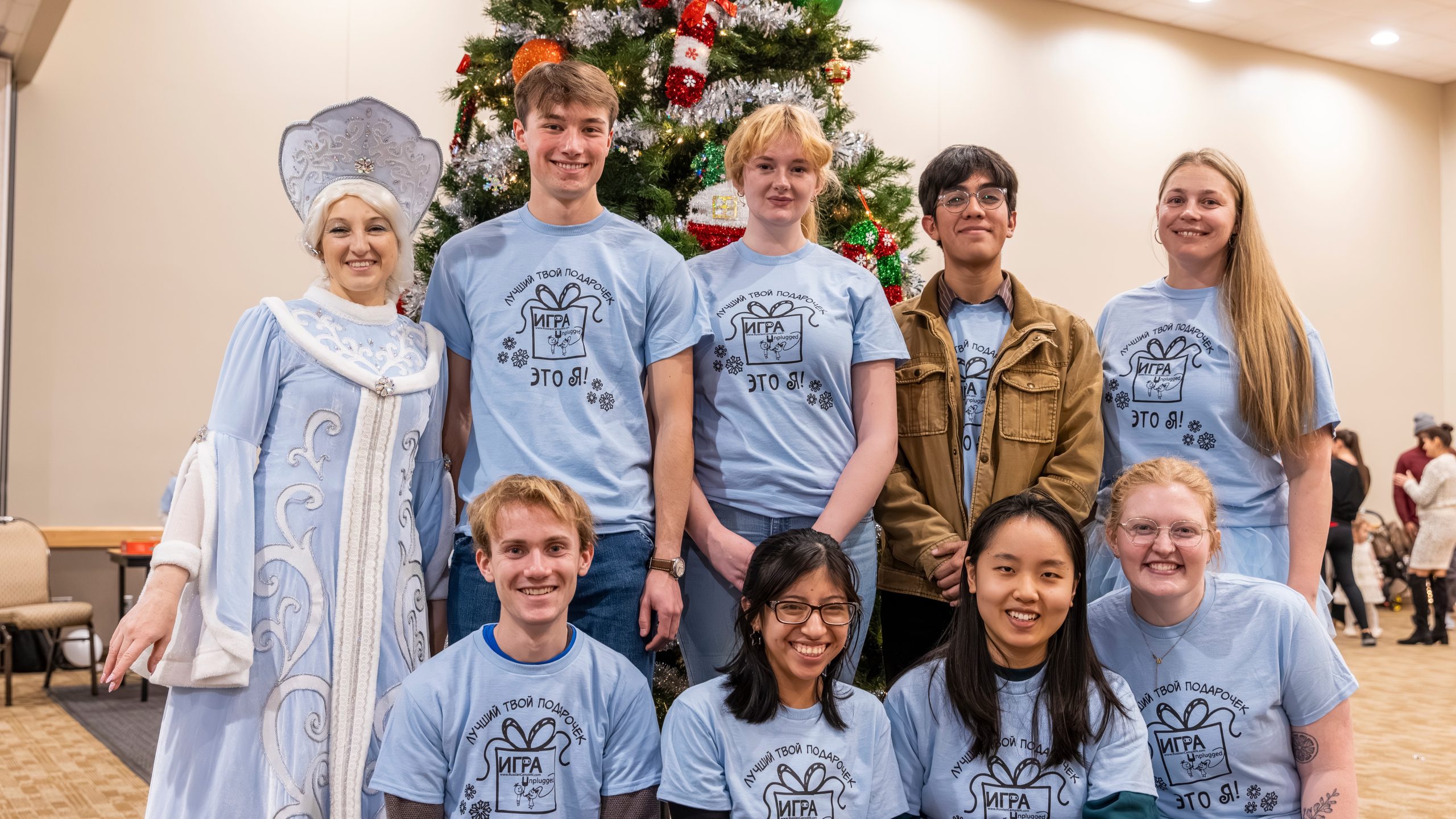
Can a small class of seven students make an impact on a community of 8,000 people? In her community-engagement and project-based course Community, Identity, and Engagement, instructor Tamara von Schmidt-Pauli and her students set out to prove they could—with everything from cookies to crafts to cookbooks.
Cross-listed between Russian studies and educational studies, the course centered the Russian-speaking community in the Twin Cities through a critical partnership with the American Russian Center. The Center serves a diverse population of Russian-speakers from a variety of countries.
(von Schmidt-Pauli explains that the community has been understudied, so it is hard to estimate the exact number of community members. Her estimate originates from a Facebook group for Russian-speakers in Minnesota with roughly 8,000 members.)
“The course asks students to put everything they know in theory into practice,” von Schmidt-Pauli explains. “It’s about learning about yourself—how can I apply my talents best to serve my community? How do I understand their needs and help them, and create something from ground zero, implement it, and run it?”
Grappling with the cultural nuances of a diverse, multiethnic, and multilingual community—one also experiencing war-related trauma from the ongoing conflict between Ukraine and Russia—is something von Schmidt-Pauli asked her students to embrace as an opportunity to center the community and their needs. “Working with a community like this really opens students’ eyes,” she says. “We need to understand what the community is about and what barriers they face.”
With generous support from the American Russian Center, three teams of students set out to create interactive, culturally-responsive projects that addressed real community needs. Every stage was theirs—researching the topics, designing the materials, adapting the content, and then bringing it into the community.
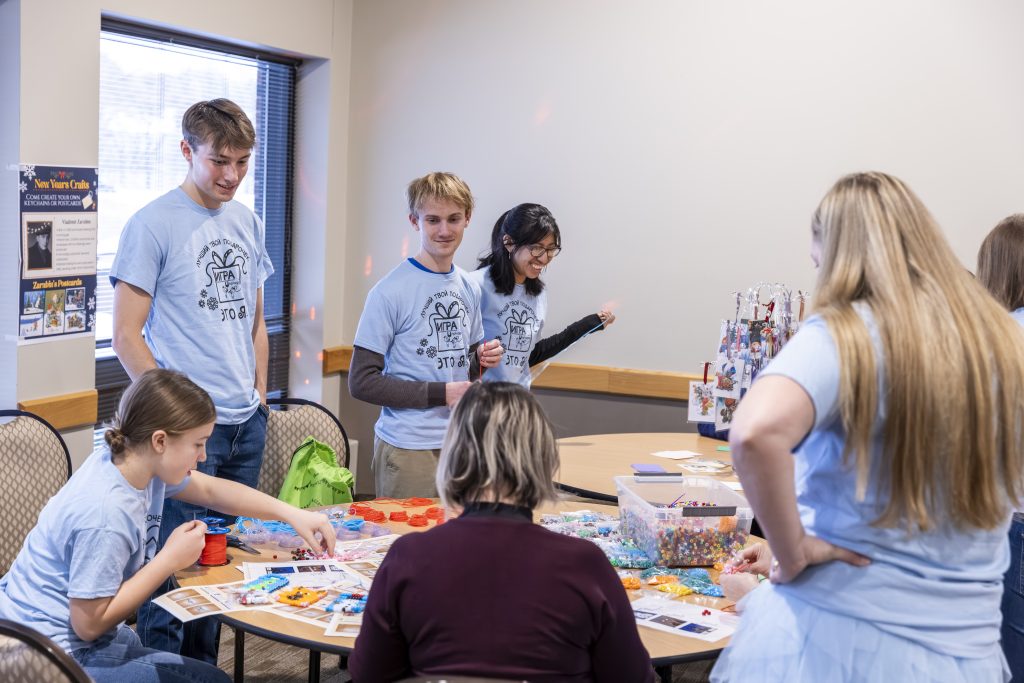
The work culminated in a public community event at the Center, where the teams launched their projects through activities, lessons, and meaningful time spent with over 250 community members across generations. Projects ranged from bilingual educational materials on substance addiction; a “pathway to citizenship” board game; a community cookbook initiative featuring culturally resonant recipes in accessible formats, with a companion website; and an interactive art and storytelling station inspired by Soviet animator and artist Vladimir Zarubin, where participants created bead crafts and shared stories across generations.
“I feel like I gained real experience,” says Kristen Wang ʼ29, who worked on the community cookbook initiative and cooking contest project, “not just about cross-cultural engagement and teaching, but also about planning, teamwork, and being part of a community.”
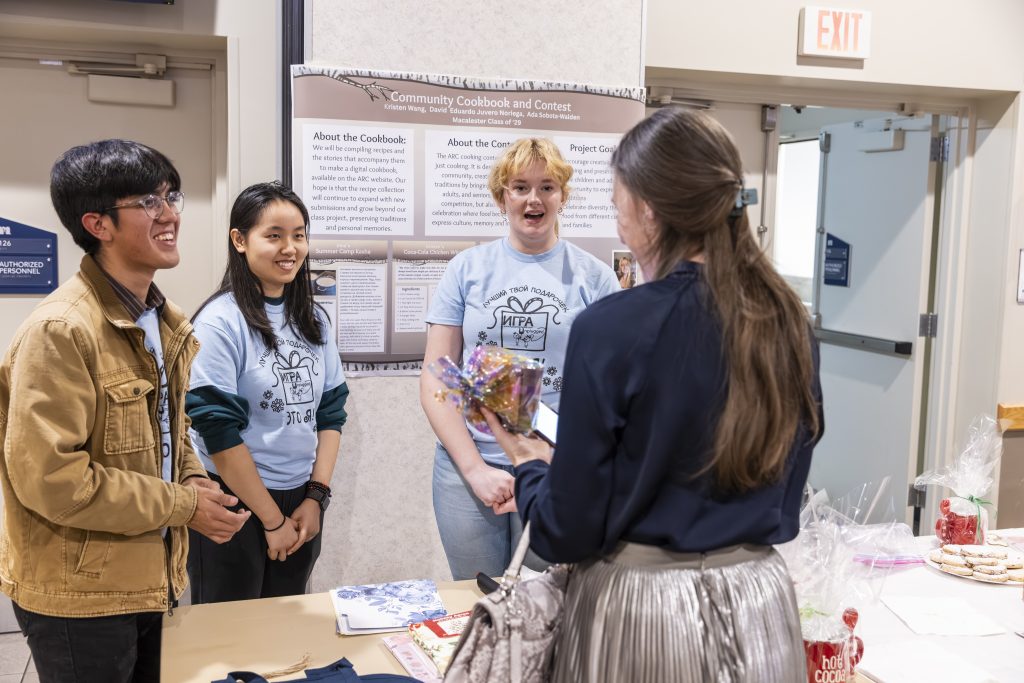
von Schmidt-Pauli says the feedback students received was “terrific,” with community members expressing encouragement and continuous support.
“Some of the students were very anxious going in because of the number of people, and because it was a public-facing event—that was another skill they really had to work on,” von Schmidt-Pauli says. “I think we get to work on that less and less because of our increasingly digital world—but so much of this is about communicating in real time with real people, then adjusting on the spot.”
The impact was multifold. While the projects allowed students to develop skills like teamwork, communication, project design, relationship building, and thoughtful community engagement, von Schmidt-Pauli also emphasizes the importance of the work beyond personal and academic growth. She points to Liv Whitmore ʼ26 who, inspired by a class on addiction, researched and compiled resources for people with substance use disorder to create a brochure that she translated into Russian.
“This resource did not exist in Russian at all before this,” von Schmidt-Pauli says. “Liv went into the community to understand the stigmas that exist there, discussed it with them, and got their feedback. Now it is newly updated and will serve the Russian-speaking community for years to come.”
The community cookbook initiative, launched with a cooking contest during the event, proved so popular that von Schmidt-Pauli says “It’s going to become a tradition”—next year’s New Year’s gathering will feature a second one.
“This class taught me that coordinating a community is a real skill,” says Daniel Wiltse ʼ27, who worked on the interactive art and storytelling station project. “Community programming relies on creating something that is both enjoyable and meaningful.”
Given the success of the course for both students and community, von Schmidt-Pauli is looking forward to teaching it again this upcoming semester, with hopes for an even larger class. “I hope we can do even more this semester to have an even deeper impact on the community,” she says.
Still, the small class size was uniquely meaningful for von Schmidt-Pauli—it gave students the chance to form their own tight-knit group.
“It was really special to build a community like this inside Macalester—students across class years supporting each other, getting to know one another, and working on these projects together,” she says.
This course was inspired by the spring 2025 Strengths in Action course, taught by associate director of career advising Marcos Cruz and associate director of academic internships Jinna Johnson, Career Exploration, and was developed with their support.