



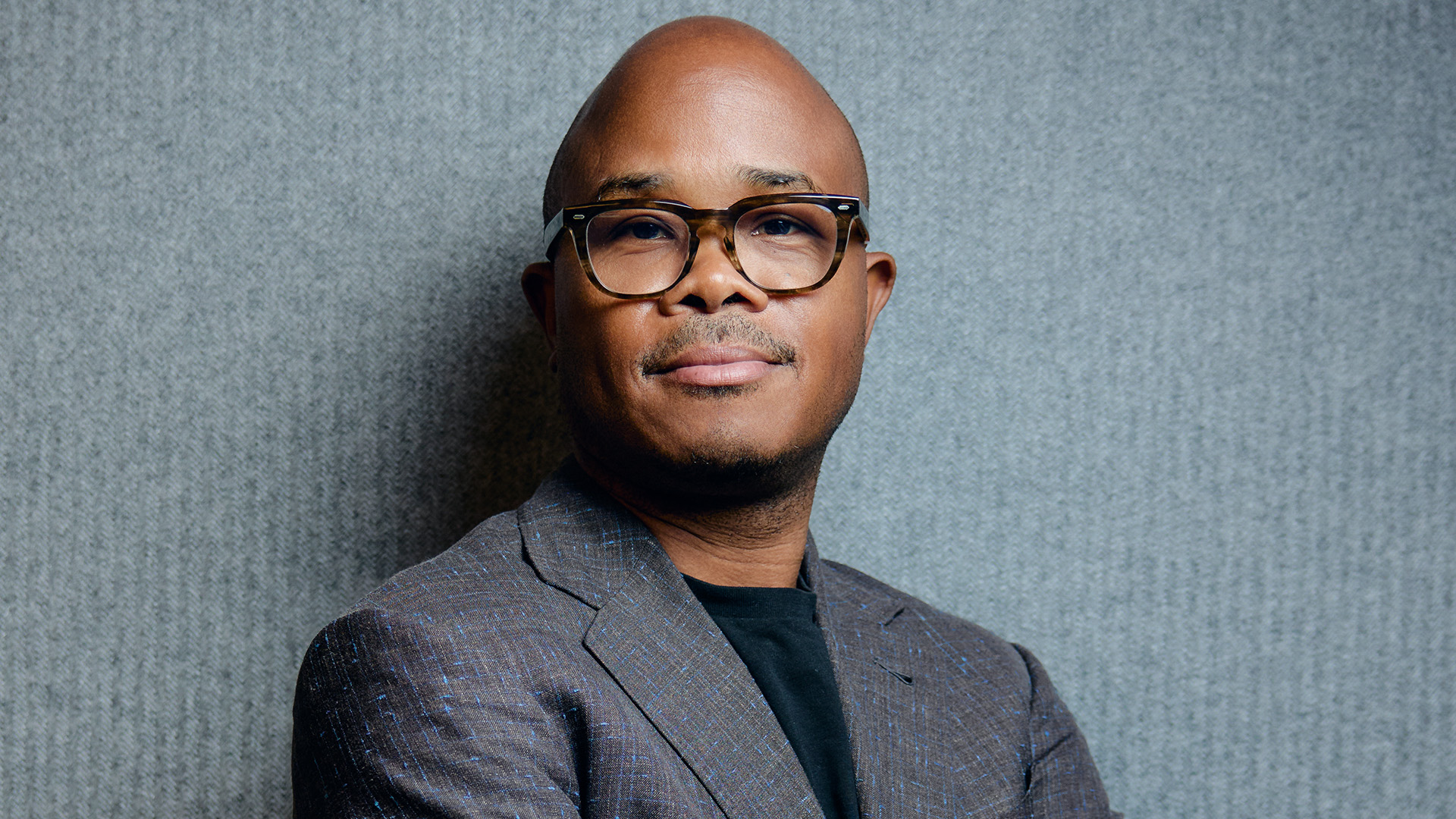
By Abraham Swee (Portrait of Fred Swaniker by Andres Hernandez)
When an EF3 tornado touched down in St. Louis in 2025, it left behind a sobering reality: five lives lost, dozens injured, and thousands of buildings damaged. In the hours and days that followed, city leaders worked to determine where to deploy limited resources. To speed things up, they got help from an emerging tool: physical artificial intelligence, a branch of AI that connects digital intelligence to physical systems.
In just two days, a new AI operating system called Symmetri mapped out 170,000 buildings, estimated nearly $1 billion in reconstruction costs, and highlighted which families and property owners were hit the hardest. The physical AI, created by Sand Technologies, did its work by tapping into satellite imagery, property data, and social vulnerability information, transforming its findings into intelligence tips—telling city staff where to send first responders, distribute food, and prioritize emergency repairs.
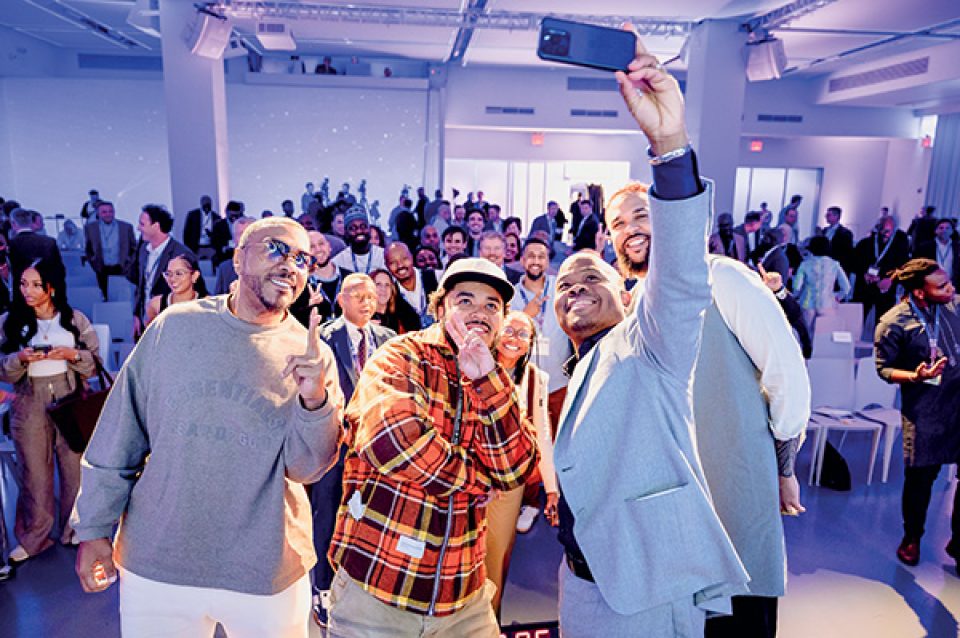
For Sand Technologies founder and CEO Fred Swaniker ’99, it was a powerful case study of how physical AI can close the gap between data and lives saved. “AI is privileged,” Swaniker says. “It’s sucking up a lot of the world’s resources, a lot of energy, a lot of financial resources—it’s threatening people’s jobs,” Swaniker says. “And so if it’s going to be so privileged, it had better solve society’s biggest problems.”
A serial entrepreneur and digital innovator who grew up in Ghana, the Gambia, Botswana, and Zimbabwe, Swaniker has—at just forty-nine years old—launched eight companies, raising more than $1.7 billion in capital, creating almost four hundred thousand jobs for young people and earning some extraordinary accolades along the way, including being named one of Time magazine’s 100 most influential people of 2019. But his current work at Sand has perhaps grabbed the most headlines as he puts artificial intelligence to work in the real world.
Physical AI creates practical ways to use data from energy grids, water systems, telecommunications, and other critical infrastructure. According to Swaniker, unlike large language models built on the 6 percent of the world’s data that lives on the internet, Sand’s physical AI relies on the other 94 percent, hidden inside cameras and sensors in the physical world. “There’s a big transition happening right now, where intelligence is moving from the digital world to the physical world.”
For instance, Sand’s physical AI models are helping the city of London monitor and improve water quality on the Thames River while making smarter decisions about the city’s aging infrastructure. And in Africa, where the patient-to-doctor ratio can run eight thousand to one compared to the United States’ two hundred to one, the company is using AI to fill the gaps, from creating geospatial maps to help health ministries deliver care, to providing diagnostic support to front-line nurses, creating jobs rather than killing them. “We are focused on AI systems that don’t eliminate humans but empower humans to do more,” he says.
A self-described “AI optimist,” Swaniker has built a “digital twin” of himself so that students or staff have access to his help, anytime and anywhere. “It’s about codifying what’s in your head so that others can replicate it,” he says. “I’ve always been driven by building things that will live long beyond me.” And while he acknowledges the disruption AI has introduced into the economy, especially for college grads searching for entry-level jobs, he finds comfort in history. “This is not new at all,” he says. “What has always determined your success in life has been your ability to learn on the job and to reinvent yourself as the world changes.’’
An inspiring public speaker whose TED Talk about Africa’s future has been viewed more than two million times, Swaniker often challenges his listeners to become agents of change. “Those of us who are privileged enough to be healthy, to be alive, to be educated—we shouldn’t be doing easy things and solving small problems,” he says. “We need to be doing hard things and solving the big problems.”
Swaniker can’t help but smile when he recalls the thoroughly analog approach he took to finding a college, mailing more than two hundred letters to US colleges that fit his family’s tight tuition budget of $2,400 a year. “Four weeks later, I’m getting a package back, and it would say, ‘Oh, the $2,400 you saw, that’s for in-state American students,’” he remembers. “‘For international students, it’s $45,000. And we don’t give scholarships.’”
He eventually earned acceptance letters from several selective schools committed to paying his way, including one reminding him how fortunate he was to be admitted to the alma mater of so many Nobel Prize winners. “But then Macalester sent me a note saying how lucky they felt that I had applied, and I thought, ‘If I’m going to go halfway across the world, I should go to a place where I’m going to be welcomed and where I really feel like it’ll be home.’” It didn’t hurt that Macalester was the alma mater of fellow Ghanaian Kofi Annan ’61 and that his own mother had gone to graduate school at the University of Minnesota, showing him pictures of herself in the snow as proof of the winters that awaited him.
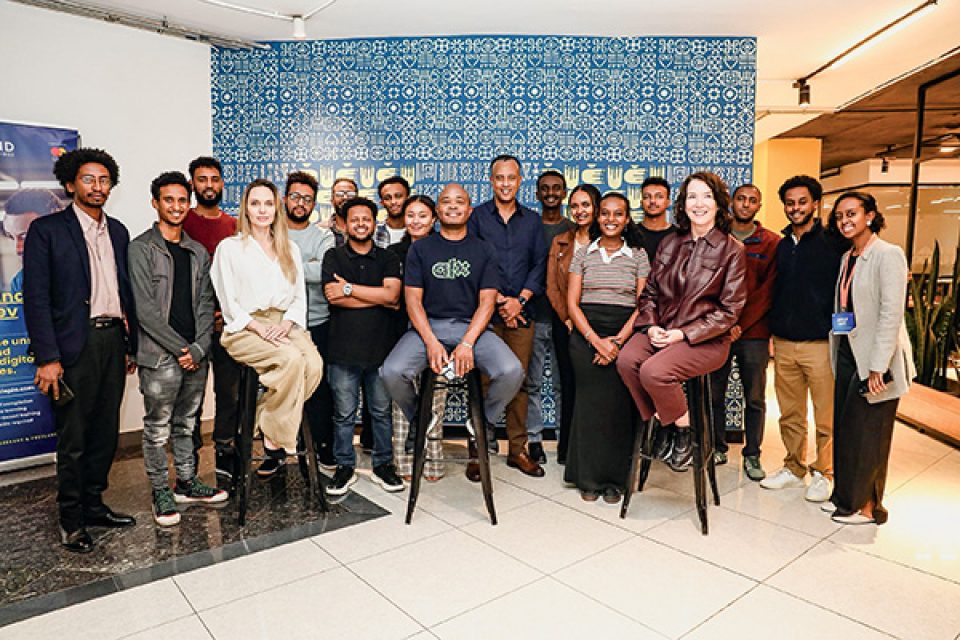
Nearly thirty years later, that warm welcome has come full circle with the arrival of Macalester’s first cohort of Swaniker Scholars, a select group of top students from Africa who will receive full scholarships at Macalester and eight other colleges, including the University of Chicago, Bates College, and Tufts University. Made possible by the African Leadership Group, which Swaniker founded to catalyze a new generation of ethical leaders across the continent, the scholarship program also reflects its founder’s strong feelings about the problem-solving skills he developed while studying economics on Grand Avenue.
“I wanted them to have the kind of college experience I had,” he says. “A liberal arts experience at Macalester gives you the analytical skills, the critical thinking, and the questioning of the status quo to take you in lots of directions.”
Additional reporting by Laura Billings Coleman
Macalester Welcomes the Swaniker Scholars
A bank teller’s desk in Nairobi, Kenya. A United Nations negotiating room in Cairo, Egypt. A refugee camp in Kakuma, Kenya. These were the places where three future Macalester students would start asking how they could best serve their communities.
In fall 2025, all three arrived at Mac as the college’s first cohort of Swaniker Scholars—a global scholarship program from the ALX Foundation working to invest in Africa’s most promising young leaders.
Meet the founding cohort.
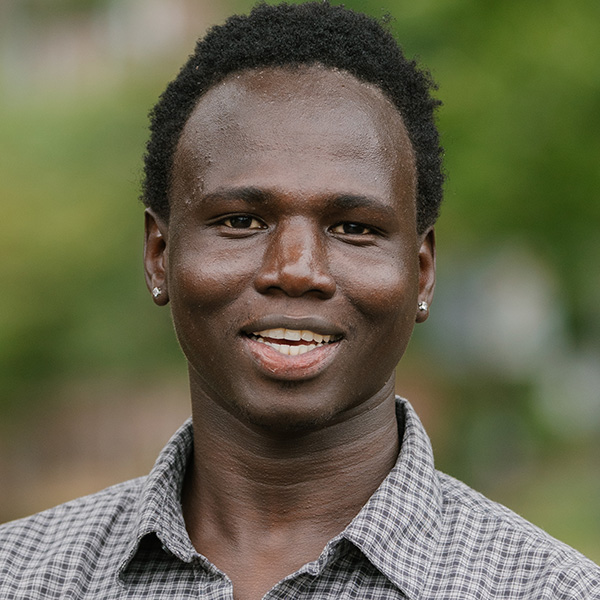
Ojullu Joshua ’29
Gambella, Ethiopia
Mac-tivities: Club soccer
Forced to flee his home country as a child due to armed conflict, Ojullu Joshua spent his teen years in the United Nations Kakuma refugee camp in Kenya. As he grew older and searched for a way to attend college, he taught math and science to younger kids. Eventually, he met two Macalester students visiting the camp to teach a course on computer literacy, and from that moment, Mac became a dream. “Coming to Macalester felt like something I was destined for,” Joshua says. “Sometimes with hope and patience, good things eventually find people who never lose hope and chase the things they’re destined for.”
The economics and statistics double major plans to one day return to his native Gambella, Ethiopia, to more equitably turn the region’s natural resources into jobs and opportunity for others.
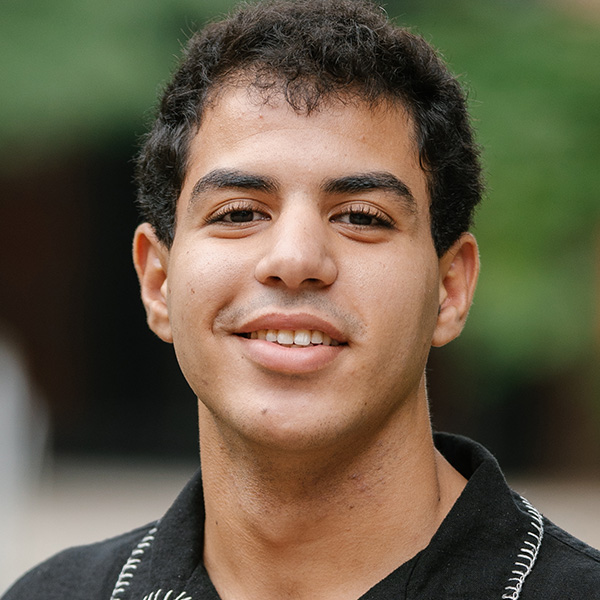
Ismail AboElMagd ’29
Cairo, Egypt
Mac-tivities: Club tennis, student dispatcher for Public Safety
At sixteen, Ismail AboElMagd was appointed the United Nations’ youth and children climate champion for Africa—where he advocated for his home continent in climate negotiations. Now at Mac, the international studies major is preparing for a career in conflict mediation. He just wrapped up a summer internship at the Cairo International Center for Conflict Resolution, Peacekeeping, and Peacebuilding. Before graduation, he hopes to start a Macalester peace forum, one inspired by his hero, Kofi Annan ’61.
“This opportunity to become a Swaniker Scholar comes with a big deal of responsibility and a big deal of empowerment,” AboElMagd says. “There’s much support and sponsorship, but you also want to live up to that responsibility in everything you do around the world and here at Macalester.”
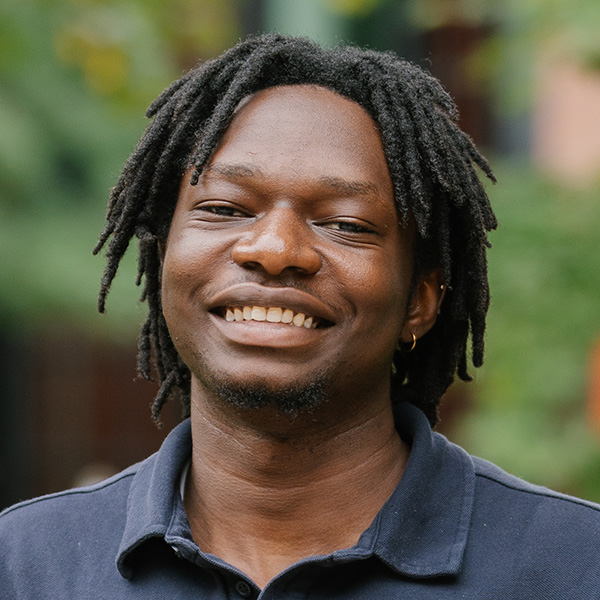
Innocent Wambua ’29
Nairobi, Kenya
Mac-tivities: African Music Ensemble
Before college, Innocent Wambua spent six months in a leadership training program as a bank teller in the same Nairobi, Kenya, neighborhood where he grew up. The experience reshaped how he saw his community and how he wants to serve it. Many of his neighbors had never opened a bank account, often because no one had told them about the advantages of doing so. Now an economics and statistics major at Mac, he’s working toward a career where he can help build a better financial system that serves everyone.
“I came to realize how much financial exclusion plays a role in low-income communities,” Wambua says. “That’s what has inspired my passion to create more financial opportunities for those around me.”