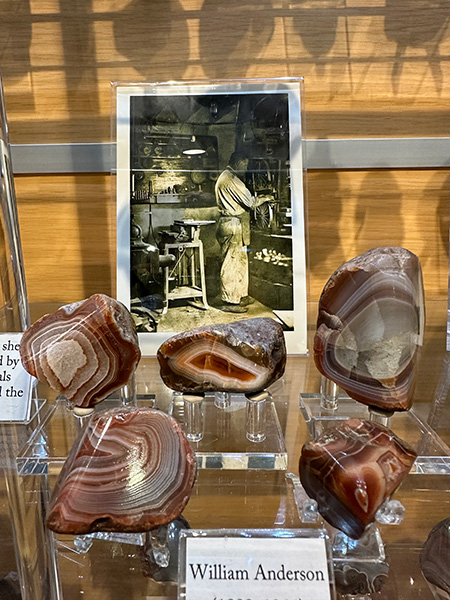




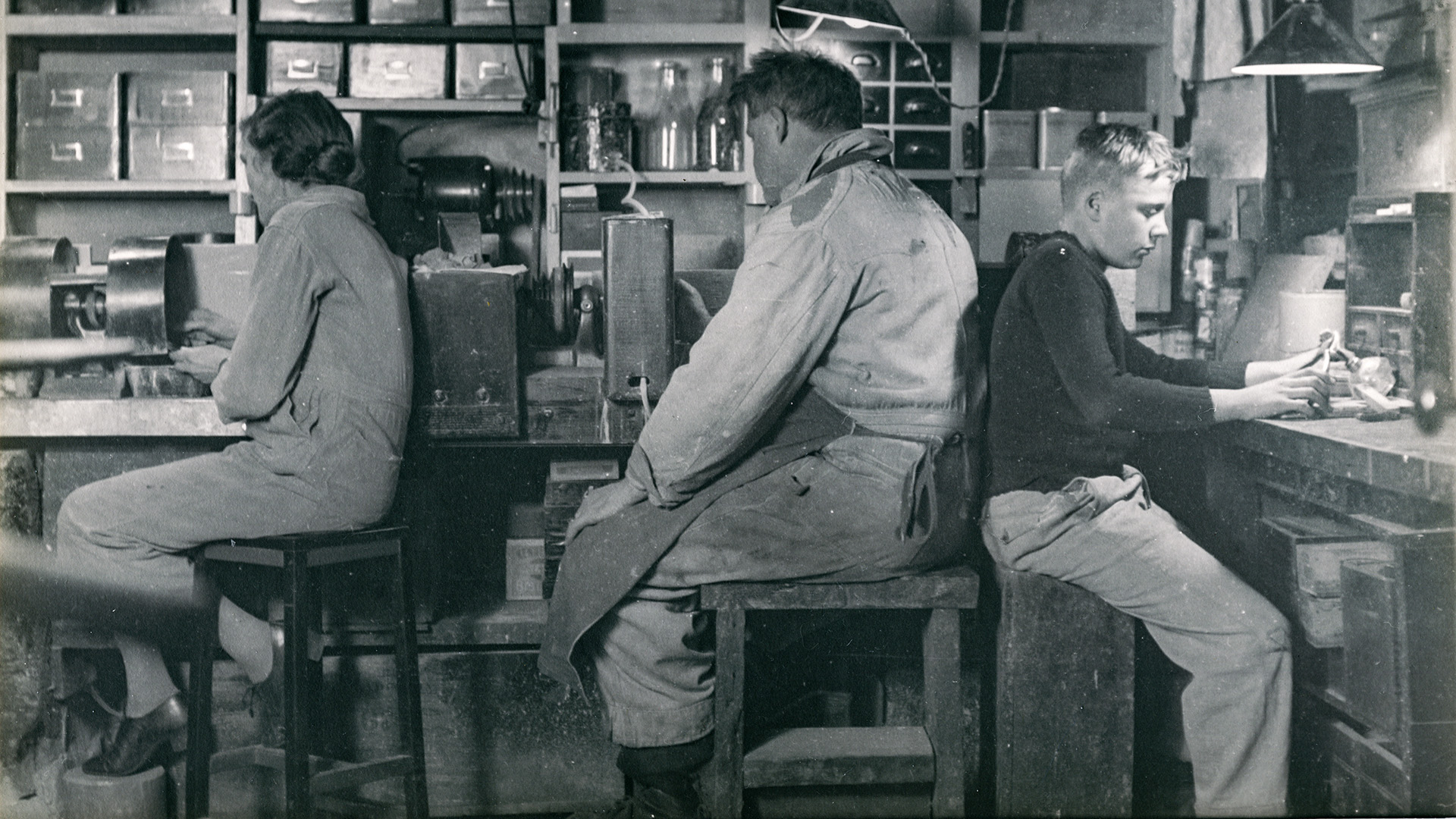
In a black-and-white photograph from the early 1930s, the Anderson family sits at polishing wheels in the basement of their St. Paul home. Side by side, Geneste, her husband William Sr., and their twelve-year-old son, Bill, are hard at work, preparing Lake Superior agates for their glassy closeup.
It was the middle of the Great Depression, and the family had found something that kept them hopeful about the world: rocks and minerals, with a particular fondness for agates. Traveling around the state of Minnesota and beyond, they would collect thousands of specimens.
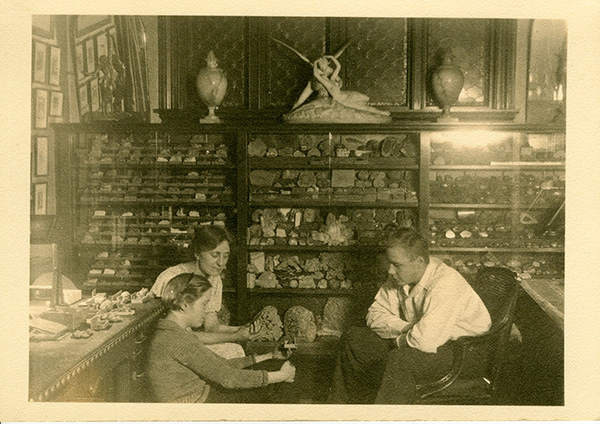
Looking for a place to display their finds, the family converted their library into a mini “Geology Museum.” For years, it was their pride and joy. One evening in 1933, Geneste wrote to her husband, “For long I sat before the agate case—meditating on the beauty of the whole—seeing you in them.”
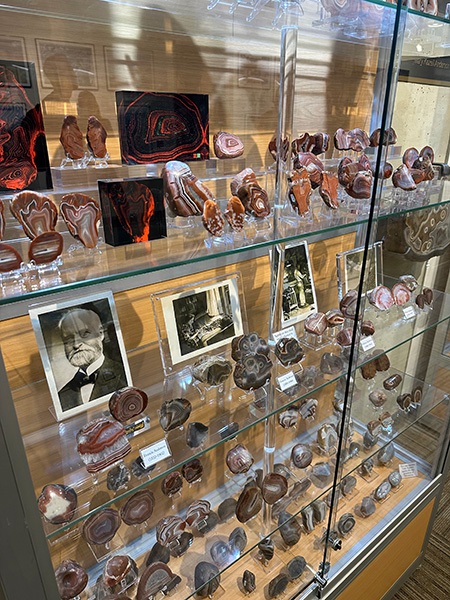
Nearly a century later, the family’s collection has found a new home at Macalester College. Donated to the Geology Department in 2019 by Bill’s wife, Mary Kazeil Anderson, the Anderson Collection includes agates, minerals, rocks, and fossils, many still bearing the family’s handwritten labels.
Gem of a gift
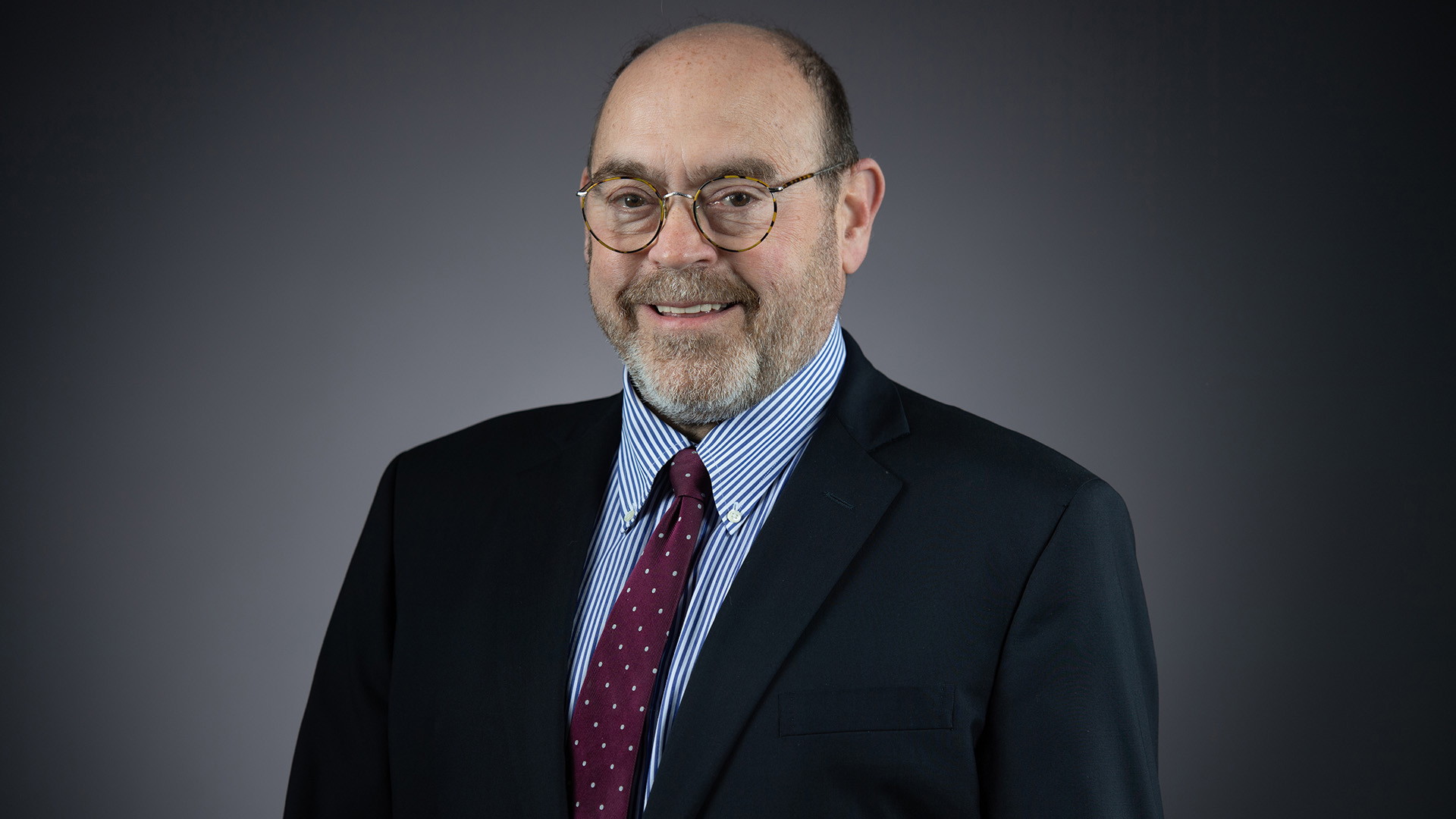
Jeff Thole, the Geology Department’s long-time laboratory supervisor, has fielded plenty of calls from people looking to donate rock collections. But no call has ever yielded something as meaningful as the one he answered in 2018. A financial advisor was calling on the behalf of Mary Kazeil Anderson, a longtime neighbor on Marshall Avenue with limited ties to the college.
“Usually people want to know if their grandpa’s meteorite can be verified,” Thole says. “Unfortunately, it doesn’t often work out.”
It took a bit of effort to convince Thole that this call was something special. But skepticism evaporated when he stepped inside the family home at 1969 Marshall Ave. The “Geology Museum” was still very much there, still shining brightly and largely untouched since the 1930s. “This was the real deal,” Thole says. “And it’s about more than the rocks themselves. Once we start diving into the history of it, it’s just so much richer.”
A family love story
That history begins with Francis Whitmore Anderson, William Sr.’s grandfather. A self-made banker who moved to St. Paul in 1884, he kept a small mineral collection of his own. But the collection truly flourished between 1932 and 1939 when William Sr., Geneste and their children searched the railway beds, quarries, and beaches of Minnesota—finding agates and other specimens all the way from Grand Marais to Winona. Many specimens carry a tiny label with a date, a location, and the collector’s initials: W1 for William Sr., W2 for Bill, and GM for Geneste.
“This is the data that doesn’t typically exist with a collection,” Thole says. “It’s very unusual to have that kind of information.”
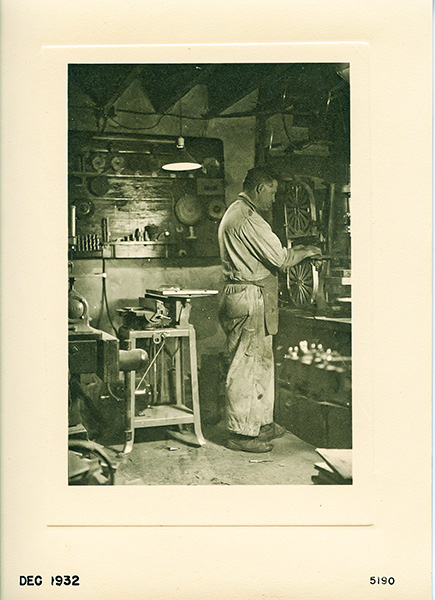
William Sr., in addition to loving rocks, was an avid photographer with a love for charts. And so, alongside the prized agates, the collection compliments an unusual family photo album (still in family hands and consisting of more than 11,000 images). Many of the images show the family on the hunt, and, thanks to outstanding record-keeping, can be matched directly to agates in the collection.
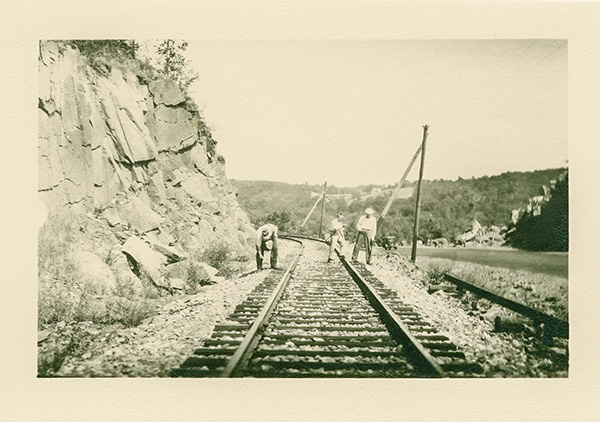
Lu Harper, Mary’s niece, has pieced together much of the family’s story. A longtime librarian and archivist at the University of Rochester in New York, she traveled to campus in September to share more about the collection at a thank-you reception held in Mary’s honor. “When you put the rocks and the photos together, we know even more than when you look at either one of them without the other,” Harper says.
To Harper and the rest of the family, the collection also reflects a very real love story. William Sr. and Geneste met at Carleton College, where he worked as registrar and she was a student on a valedictorian’s scholarship. “This collection grew out of that bond, out of that love, and really enveloped the whole family,” Harper says.
In a letter on December 10, 1934, Geneste wrote to William Sr., that their rocks “extend the horizons of our Souls and Minds.” And in a lighthearted moment, she writes in a birthday letter to William, “I did want to go out and find a stone for your birthday, but I didn’t quite make it.”
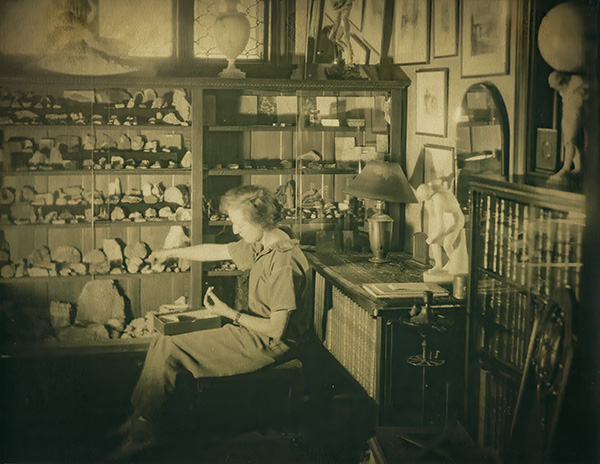
New home for the ‘Geology Museum’
The family’s sense of wonder now lives on at Mac. Using the department’s micro-XRF scanner, Thole and students have mapped the trace elements that give each agate its signature bands. Often that’s iron, but in some rarer instances, it’s copper.
The collection also includes minerals that the family bought from Ward’s Natural Science Establishment, some of which are hard to come by today. Meanwhile, Mary Anderson’s generosity has reached beyond the collection. Her sustained financial support over the last decade has helped the Geology Department fund special research trips, including a recent study away opportunity for sixteen students and five faculty and staff in Argentina.
“We couldn’t be more grateful for Mary’s generosity and trust in us,” Thole says. “And, we’re excited to let Mary’s story and her family story live through this collection and Mac geology students for many years to come.”