



The Words, December 2015
Cumberbatch, Hinds, Hille dazzle all the way from London
Josh Weiner ’16
Forget Black Friday crowds. When tickets went on sale last year for a Barbican Theatre production of Hamlet, fans waited in a virtual line 35,000 people long to get a coveted seat. They didn’t, of course; the play sold out in only minutes. The production, directed by Lyndsey Turner and starring Sherlock principal and all-around heartthrob Benedict Cumberbatch as Hamlet, generated significant buzz from both critics and the theater-going public. One news source called it the “fastest-selling show in London theatre history.”
Turner’s Hamlet was a ‘big-ticket’ production, and it showed. The set was elaborate, almost to a fault, and big-name set designer Es Devlin joined Cumberbatch and Game of Thrones actor Ciarán Hinds (King Claudius) to round out a strong cast and creative team. Additionally, the Barbican partnered with National Theatre Live, a public initiative which broadcasts stage productions from the United Kingdom to movie theaters worldwide. More than 150 U.S. theaters showed the production of Hamlet, including the St. Anthony Main Theater in Minneapolis.
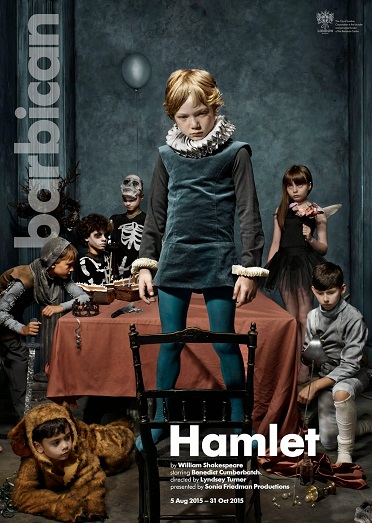
The play largely lived up to the hype. Cumberbatch was equal parts hilarious and heartbreaking. Cumberbatch delivered Hamlet’s most famous soliloquies (including “O, that this too too solid flesh would melt” and the immortal “To be or not to be”) with gusto and real tears. The staging of the soliloquies was excellent; as Cumberbatch spoke, the other characters around him continued their movements in slow-motion amidst swirling blue lights and downtempo music. The resulting interiority granted to the speeches was a welcome relief from the played-out soliloquy delivered out on the wings
Cumberbatch’s performance was rivaled by that of Ciarán Hinds, who played Hamlet’s fratricidal uncle Claudius. Hinds is a prolific stage and film actor probably best known to American audiences as the ‘barbarian’ king Mance Rayder in HBO’s Game of Thrones. Hinds was commanding on stage, and his portrayal of Claudius as a confident, competent, and imposing King was a significant departure from Claudiuses past, and arguably, from the play’s text. In Kenneth Branagh´s 1996 film version of Hamlet, for example, Derek Jacobi, faced with death, turns on his heels and runs away squealing. Hinds´character was at every turn dignified. His wife, the wayward queen Gertrude, was played expertly by Anastasia Hille. Kept in the dark by her murderous husband and maligned by her son, Gertrude’s story (like that of the other female lead, Ophelia) is tragic. Hille wore the queen’s blissful blinders so well that she demanded the audience’s – and Hamlet’s – frustrations.of a dark stage, under a single spotlight. Cumberbatch and Turner also staged scenes of Hamlet’s “madness” artfully; his anguished revenger is balanced with a childish portrait of a silly, cheeky prince who wears punk rock t-shirts and plays with toy soldiers. Before the film began, the theater showed a brief interview with Cumberbatch, in which Cumberbatch and the interviewer agree that in some sense, every English stage actor must play Hamlet “at some point” in his career, with Cumberbatch questioning only if he was“ready” to take the role. Clearly, he was.
The staging of Ophelia was one of the show’s weaker elements. While Sian Brooke portrayed Ophelia’s anguish well, I thought her madness was somewhat overdone by the director and staff. Appearing on stage barefoot and with clumps of hair missing, Brooke was forced to rely on her character’s pitiful appearance (Katrina Lindsay’s costume design shone here) instead of her skillful acting for the last few scenes.
Several significant departures from the play’s original text weakened the production. While audiences likely appreciated the shortening of the show (a bearable three hours without the intermission, as opposed to a full 4+), some of the most enjoyable and engaging parts of the show were cut, including the very first scene and my personal favorite line (Polonius’ “We are oft to blame in this,– / ‘Tis too much proved–that with devotion’s visage / And pious action we do sugar o’er / The devil himself”). At the play’s close, the dramatic staging seemed to suggest that Gertrude drinks from the poisoned chalice after learning of its contents — an apparent suicide. This seemed an ignoble treatment of the hapless queen, who clearly drinks the goblet accidentally in the original text.
Still, the play’s strong lead performances and outstanding theatrics certainly overpowered. Only more uplifting than the excellent quality of this production is that so many people were able to see it, thanks to National Theatre Live. Thousands of screenings were shown nation-wide, and tickets for the show at St. Anthony Main Theater ran between $10 and $20, while prices for resold tickets to the Barbican hit over $1000. With such accessibility and powerful castings, the Barbican and National Theatre Live can claim the distinction of putting on not only an enjoyable show, but a show that was actually enjoyed.