Cookies, Ghosts, and the Afterlife: Literary Death Panel
By Peyton Williamson ’27
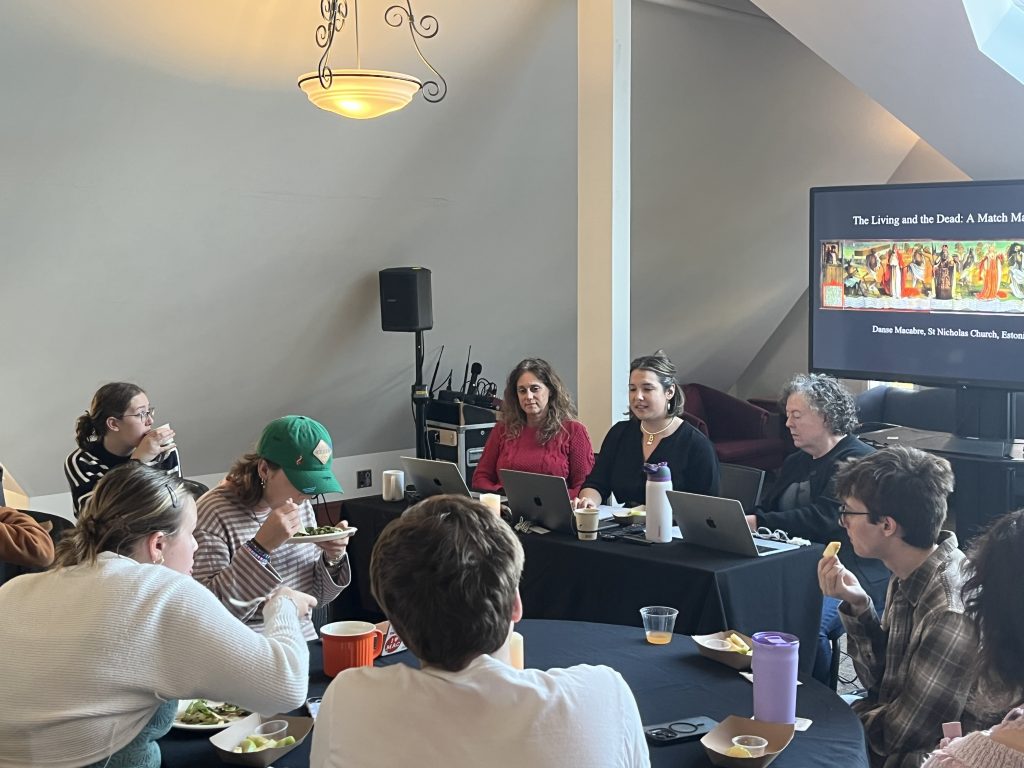
If you weren’t able to attend the English and Creative Writing department coffeehouse at the beginning of October, you might be wondering: what do mourning cookies, medieval vampires, and Victorian ghost photographs have in common? More than you might think! They all made an appearance at the ENCW Department’s literary death panel, devoted to the many ways people have understood, represented, and wrestled with death throughout history.
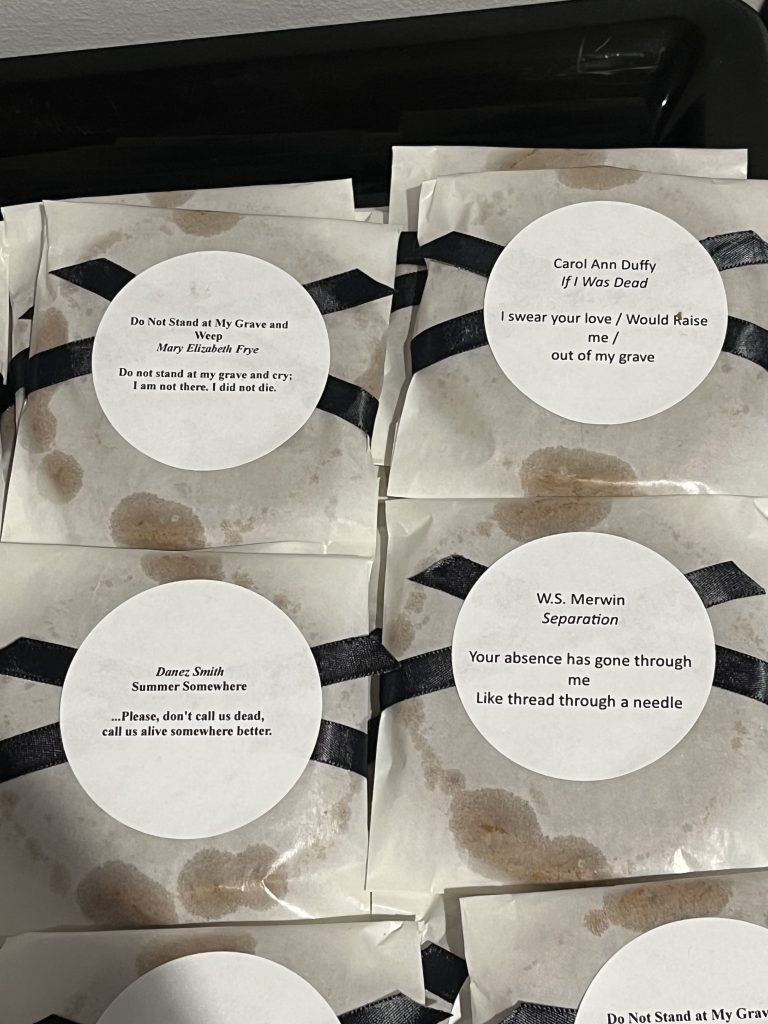
The event brought together three fascinating presentations from three wonderful professors spanning medieval Europe and nineteenth-century literature and culture. Along the way, attendees encountered haunted photographs, debated the possibilities of the afterlife, and learned that even funeral cookies have a history worth talking about. Student worker Lucy Flack ’27 kicked things off with an introduction to the snacks of the event: mourning cookies, an idea from Professor Coral Lumbley inspired by an eighteenth- and nineteenth-century British and North American tradition of distributing cookies at funerals and wakes. The cookies varied according to social class, proving that even in death, apparently not everyone got the same snacks.
“The Living and the Dead: A Match Made in Heaven”
For the first presentation of the event, Professor Coral Lumbley explored medieval European attitudes toward death, from religious traditions and the relationship between body and soul to stories of the undead. The big takeaway? “Death is the great equalizer.” No matter how important, wealthy, or powerful someone might be in life, death eventually comes for everyone—and medieval people had plenty of creative ways of reminding one another of that fact.
One of these was a “book of hours,” private prayer books owned by the wealthy to remind them of their own mortality. A common legend found in these was The Three Living and the Three Dead, a story in which living people encounter the dead and are reminded to make the most of their time on earth. Stories like these also had a social message: earthly hierarchies won’t last forever, and even the upper classes must face their own mortality and loss of wealth in the end.
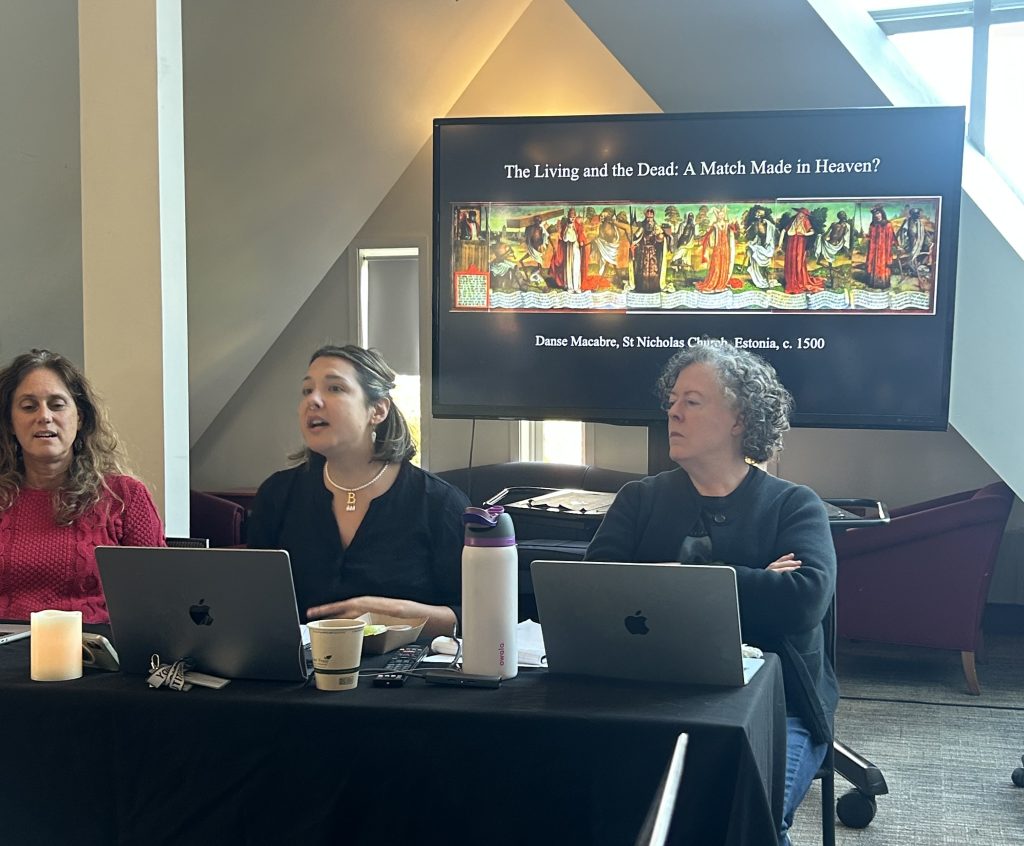
The presentation also delved into the complicated relationship between body and soul in the Middle Ages. Medieval Christians had plenty to say about the tension between the physical body and the spiritual self, including some rather dramatic literary expressions of that conflict. In The Old English Soul and Body, a poem from around the 8th century, the soul reviles the body as a “flesh-hoard.” Not exactly a glowing review!
But the medieval fascination with death wasn’t all solemn reflection and religious devotion. Professor Lumbley also introduced an early vampire-like story featuring a twelfth-century knight, Sir William, who battles a Welshman described as having lived an “evil life” and died an “unchristian death.” Unfortunately for the townspeople, the man doesn’t stay dead—and starts killing people after his return, resulting in the earliest vampire story we know of!
“‘Tender Memories’: An Agential Afterlife in Harriet Jacobs’s Incidents in the Life of a Slave Girl (1861)”
From medieval undead to the power of the afterlife, Professor English’s presentation took the conversation in a different direction. The talk explored how belief in an afterlife can offer more than comfort: it can also provide a source of power, hope, and agency in the present.
Professor English set the mood by playing Mahalia Jackson’s “Trouble of the World,” a sorrow song that brought the presentation’s themes of faith, suffering, and hope into focus. As she put it, “The Lord and God and Mother are all mixed up together” in the song—a reminder of how spirituality, family, and love can intertwine in the way people imagine what comes after death.
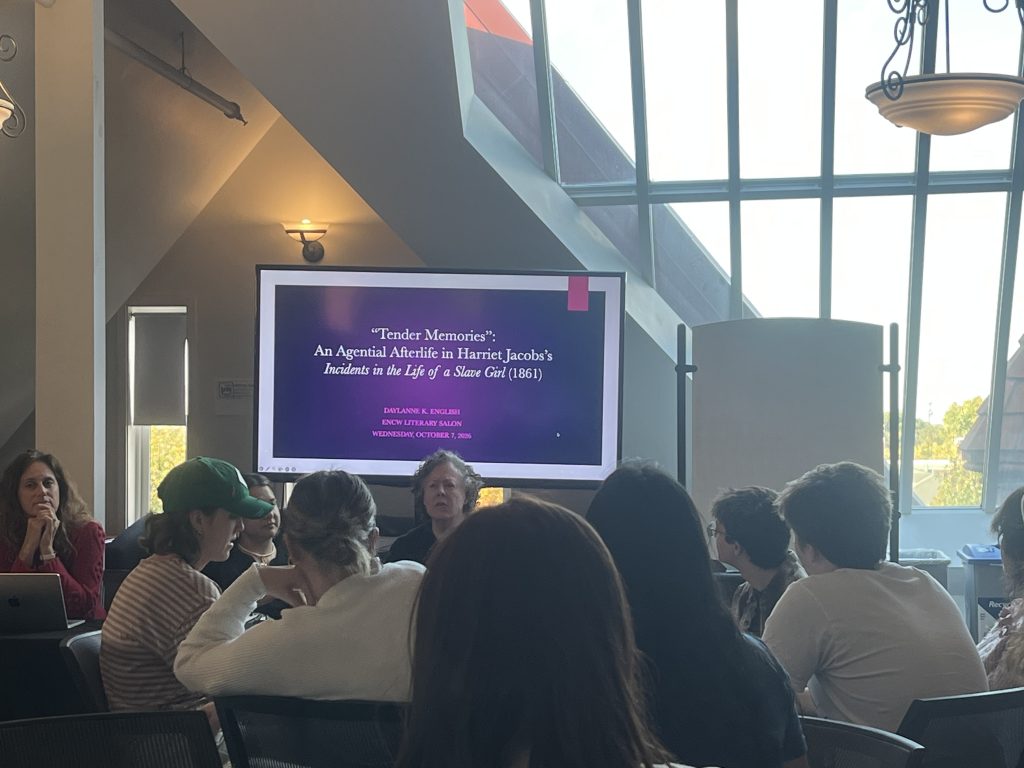
A central idea of the talk was the “agential afterlife”: the afterlife as a place of potentiality and power, rather than simply a destination awaiting us at the end of life. In the context of Jacobs’s narrative, this perspective invites readers to consider how the promise of a better place can sustain people through suffering and help them imagine possibilities beyond their current circumstances.
Importantly, hope for a better life after death doesn’t have to mean giving up on making this life better. Quite the opposite, Professor English argues. The belief that a better world is possible can help inspire people to work toward one here and now. As she explained, “We need to take the afterlife seriously to reveal its power.”
The presentation also touched on how we read and categorize narratives by formerly enslaved people. Jacobs’s work is deliberately shaped to read almost like a novel, recounting experiences that might seem “almost unbelievable” to readers. Professor English noted that works traditionally called “slave narratives” are increasingly described using terms such as “life narratives by formerly enslaved persons,” reflecting a more thoughtful approach to how these texts are understood.
Perhaps the most intriguing idea was that “we are coeval with the dead.” Coeval is a formal word meaning that people or things exist during the same period of time. Applied to the dead, the concept challenges the idea that the past is neatly sealed off from the present. Through memory, storytelling, and the continuing influence of those who came before us, the dead remain part of our world. In other words, the past isn’t quite as past as we might think.
“Accidental Ghosts and the Solace in Being Haunted”
To wrap up the panel, Professor Kaston-Tange brought the panel into the world of Victorian photography, where the latest technology was being used to explore one very old question: Can we see the dead?
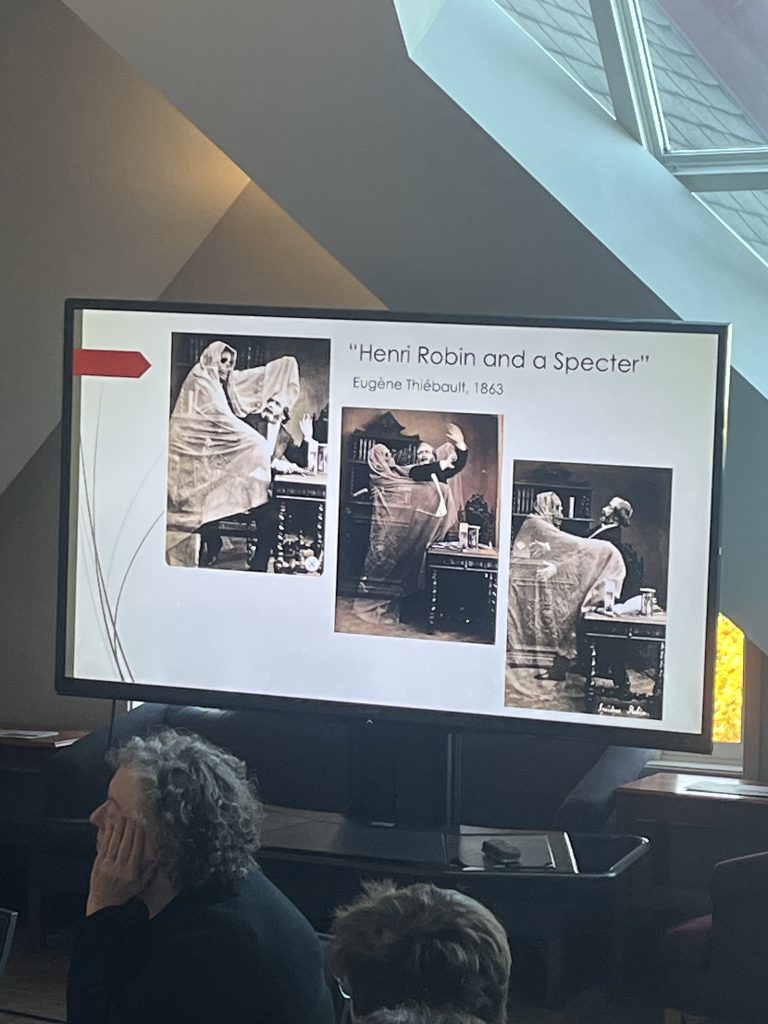
In the nineteenth century, new technologies such as microscopes and telescopes were revealing things that were invisible to the human eye. If technology could uncover hidden worlds, who was to say it couldn’t reveal ghosts, too? As photography developed, people began experimenting with images that appeared to show spirits. Professor Kaston-Tange discussed The Orphan’s Dream (1857), Henri Robin and a Specter (1863), and the work of William Mumler, whose photographs famously appeared to capture ghosts alongside living subjects. What began partly as a novelty or amusement became increasingly connected to spiritualism and the desire to communicate with deceased loved ones.

But the most interesting question wasn’t necessarily whether these photographs were real. Professor Kaston-Tange emphasized that their emotional significance went beyond whether viewers believed they were seeing actual spirits. In an era when families often had very few photographs of their loved ones, an image that seemed to bring someone back—even just for a moment—could be incredibly meaningful.
Whether the photographs were accepted as supernatural evidence or dismissed as clever tricks, they spoke to something deeply human: the desire to maintain a connection with someone who has died. The images gave grief a visual form, offering people a way to remember, to mourn, and perhaps to feel a little less alone. In that sense, even an accidental ghost could provide genuine solace.
Who Knew Death Could Be So Lively?
Across each presentation, we learned that the dead have a way of sticking around, and studying death is also a way of studying the living: our fears, our beliefs, our relationships, and our desire to make sense of loss. From medieval reliquaries to spirit photography, people have always looked for ways to make the invisible visible and to keep meaningful connections alive.
And, of course, the mourning cookies offered a reminder that even the rituals surrounding death can bring people together. Thanks to Professors Lumbley, English, and Kaston-Tange, as well as the English Department’s student workers, for such a fun event, and for making room for serious scholarship, spooky stories, and a little sweetness!