Lost Souls of Saint Paul: A Ghost Tour of the Wabasha Street Caves
By Peyton Williamson ’27
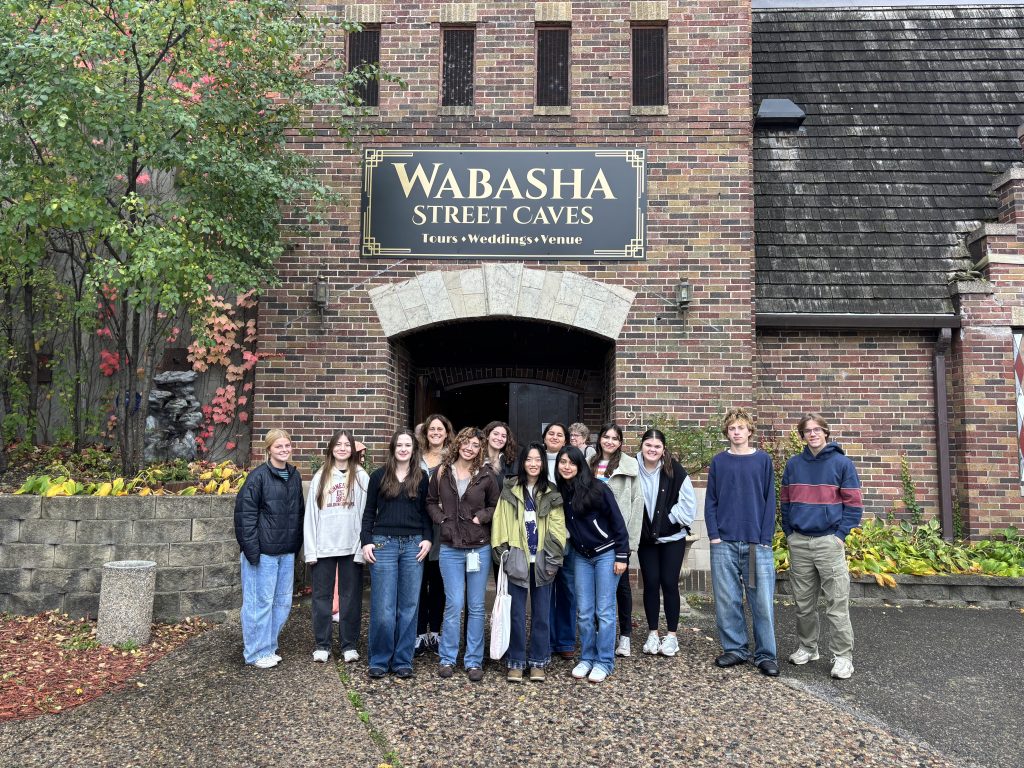
What better place to study ghost stories than underground, surrounded by sandstone tunnels and local legends? Recently, I joined English and Creative Writing (ENCW) professor Andrea Kaston-Tange and students from her first-year course, “Ghost Stories,” for the Lost Souls tour at Saint Paul’s Wabasha Street Caves, where the history of the city meets tales of the supernatural.
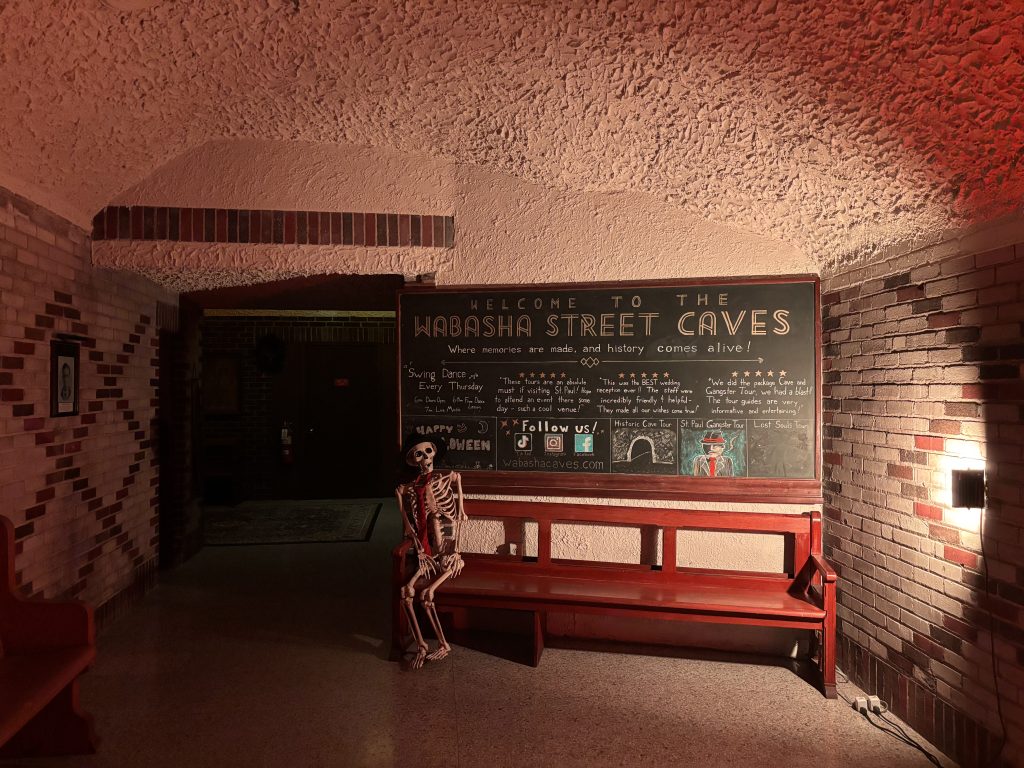
Our guide, Rosie the Riveted, led us through the caves, sharing stories that made the underground passageways feel a little less ordinary. One particularly memorable detail came when she mentioned that two gangsters were supposedly buried beneath one of the tunnels we walked through…whether fact, rumor, or something in between, the story gave us a new reason to look down as we made our way through the caves.
Ghost stories are rarely just about ghosts. They are also about what societies remember and what they try to forget, whose experiences become part of the historical record, and what happens when the past refuses to stay in the past. A haunting can represent grief, guilt, injustice, or the persistence of unresolved histories. Even when a ghost remains unseen, its presence can change how we understand the world around us.
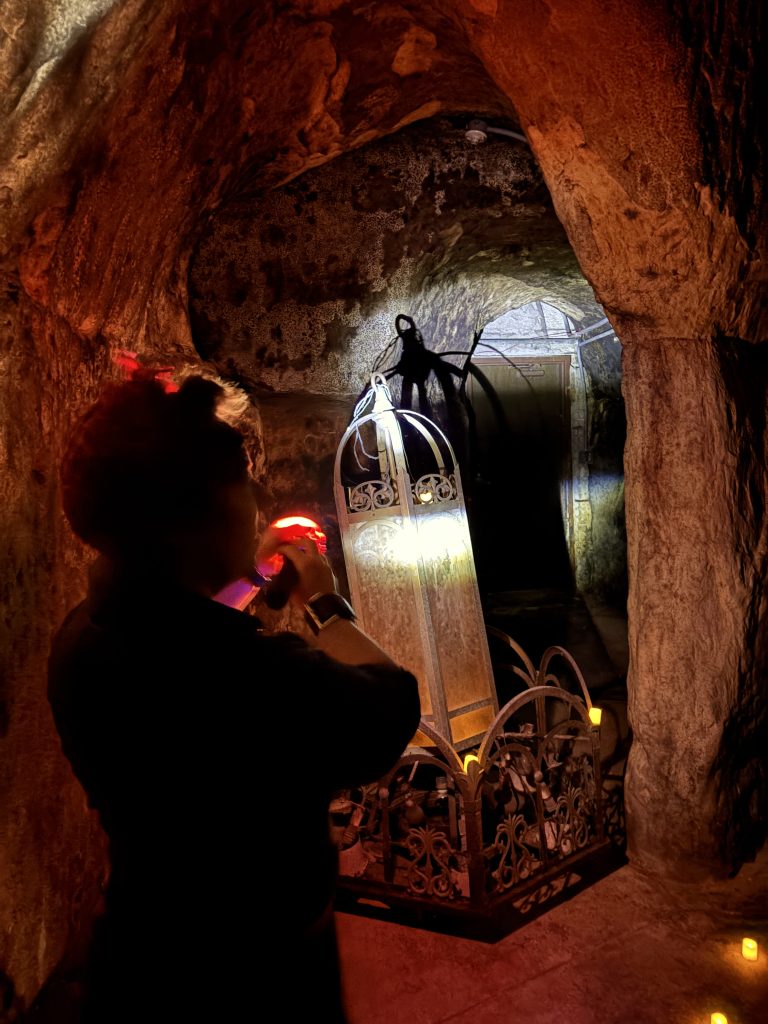
The caves provided a particularly evocative setting for considering these ideas. Every story asks its audience to consider not only what happened, but also who is telling the story—and why it has survived.
The tour offered a different way to think about the ghost stories students may encounter in the classroom. Rather than reading about haunted places from a distance, we were standing inside one, listening to stories tied to its history and imagining what might linger beneath the surface. The experience raised a familiar question for anyone drawn to ghost stories: how much of a haunting comes from what we know, and how much comes from what we can only imagine?
At the end of the tour, Rosie presented a slideshow of potential ghost photographs submitted by previous tour participants. The images offered a final dose of mystery, inviting us to decide for ourselves what we were seeing. Shadows, strange shapes, and ambiguous figures took on new significance after an afternoon spent hearing about the caves’ eerie history.
For Professor Kaston-Tange’s Ghost Stories students, the Lost Souls tour brought the supernatural out of the pages of literature and into the physical world. Walking through the tunnels, hearing local legends, and examining photographs submitted by fellow visitors made for an experience that was as much about storytelling as it was about ghosts.
After all, a good ghost story does not necessarily require proof of the supernatural. Sometimes, all it takes is a dark tunnel, a story about two buried gangsters, and just enough uncertainty to make you wonder what might be lurking beneath your feet.