



The Words, October 2014
Marlon James’ A Brief History of Seven Killings
By Zoya Haroon ‘15
In Kingston, Jamaica, on December 3, 1976, days before the influential Smile Jamaica Concert, unknown gunmen burst into Bob Marley’s home with machine guns and shot at Marley, his wife, and his manager. Marley suffered only minor injuries, and went on to perform at the Smile Jamaica Concert on December 5 as scheduled. However, Marley left Jamaica the following day, going into self-imposed exile for the next two years.
Marlon James’ third novel, A Brief History of Seven Killings, deals with the legacy of violence spawned by that day in 1976. Over seven hundred pages long, the novel spans three decades and includes a cast of over eighty-nine named characters. Equal parts detective novel, political thriller, and oral biography, James’ novel is set to be released on October 2 and is already hailed as “required reading” by Publishers Weekly.
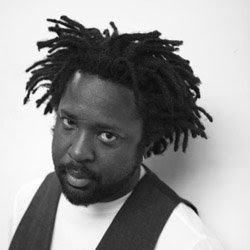
Born in Kingston, Jamaica and an award-winning author of two acclaimed novels, James teaches creative writing here at Mac. He’s very stylish and somewhat intimidating, but I recently cornered him in the English department and managed to ask him a few questions about the process of writing A Brief History of Seven Killings.
The novel, which took four years to write, was inspired by a feature in a 1991 issue of Spin Magazine. Timothy White, who wrote Bob Marley’s biography Catch a Fire, included a postscript in the issue that detailed the fate of Marley’s would-be assassins. The article intrigued Professor James. He saved the issue of Spin and kept the postscript in the back of his mind even as he published his first two novels, Jim Crow’s Devil, in 2005, and The Book of Night Women, in 2012.
James’ considers A Brief History of Seven Killings a departure from his last two novels; it is far less structured, often written in stream of consciousness, with dead ends and disappearing characters. The novel is both hectic and relaxed; it doesn’t have an ending – it just stops. James describes his new book as being lighter than his previous work, less concerned with its own intellectual legacy. According to James, “you just sort of cut that crap and just write.”
However, A Brief History of Seven Killings is also a massive, ambitious undertaking. The novel is huge and densely populated by different voices. After writing each page, James asked himself, “Is this better than what I’ve written before?” Writing the novel was not a linear, solitary process. James began writing from what is now page four hundred forty-seven in the published text, and a team of five Macalester students (now alumni) helped him conduct research.
What began as an attempt to chronicle the lives of Marley’s almost-assassins expanded and grew until the novel included a diverse host of narrators and dialects, including journalists, drug dealers, and even ghosts. James takes the reader from the 1970s through to the drug wars of the ’80s and into the early ’90s. In doing so, the reader experiences the turbulence that shook Jamaica throughout the propaganda of the Cold War and the huge role US foreign politics played in shaping day to day contemporary Jamaican life.
Of course, with so much packed into one novel, I had to ask Professor James: what story does the novel really tell? Is the novel even trying to tell a story? In the end, A Brief History of Seven Killings tells the story of the consequences of violence. As Professor James points out, “Nothing is ever really over.”