



MFA Acceptances to Celebrate in the English and Creative Writing Department
by Jizelle Villegas ’26
The Words has some very exciting news about some of our English and Creative Writing alums that have recently been accepted into fully-funded MFA programs across the country. We are highlighting Miriam Ruiz ’24, Chloë Moore ’24, Charley Eatchel ’23 and Colleen Apostle ’23 with their amazing accomplishments.
Professor Michael Prior relayed the news to our department about these acceptances. He writes: The MFA in creative writing is a terminal fine arts degree, which involves the creation of a novel, short story collection, or poetry manuscript under the supervision of well-regarded and widely published faculty. While there are hundreds of MFA in creative writing programs in America, only a few dozen are truly “fully-funded:” at these programs, accepted students are given tuition remission and provided with living stipends in partial exchange for teaching, editing, and other work for their department. The dedication, passion, and talent required for a student to be accepted into an MFA program is remarkable: the top-ranked, fully-funded programs–which include those admitting Macalester students this year–have acceptance rates in the single digit percentages, making many of them as selective as Harvard’s Law School or even Columbia’s Medical School.
Professor Prior asked these three questions of our alums: 1) What made you decide to do an MFA? When did you know it was the next step in your journey as a creative writer? 2) What manuscript do you plan on writing during your time in the MFA Program? 3) What was the application process like? What advice would you offer to Mac English Majors who are considering pursuing creative writing at the graduate level? What support did the English Department offer you during this process?
Miriam will be attending the University of Florida-Gainesville’s fully-funded MFA program in Fiction.
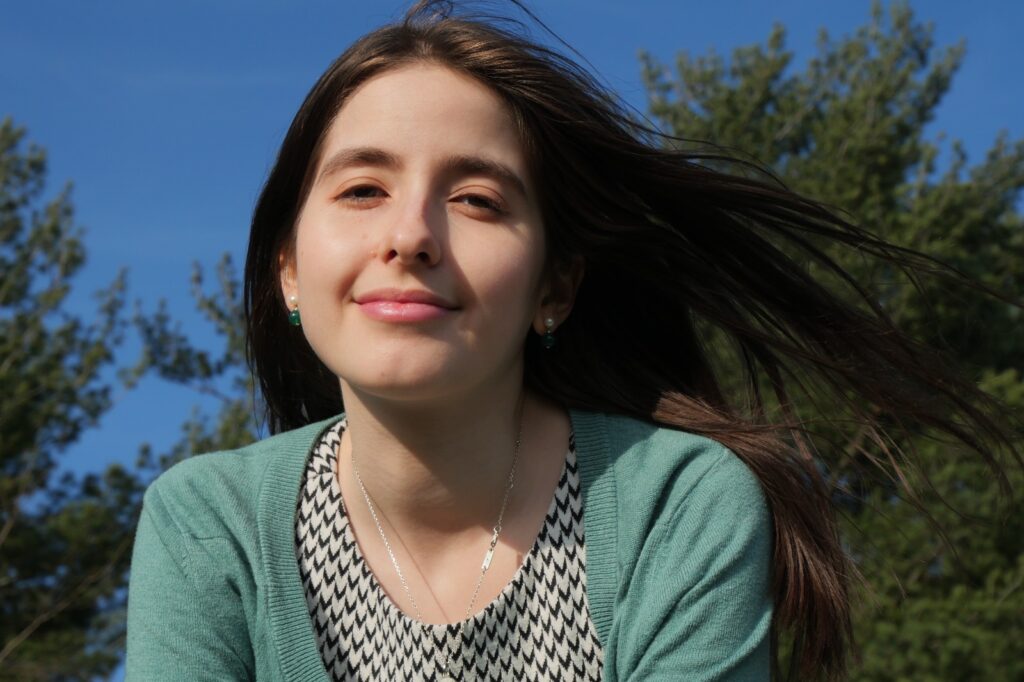
She provided a beautiful response to the first question: “You do not need a degree to create. We are all people with passion and intellect, but there is the issue of access and ability. I love learning but wasn’t entirely sure if this manuscript (and my writing in general) would thrive or suffer within the graduate structure. Writers need input and experiences; somewhere between the seasons of solitude and community is the growth of a writer. I wanted to test myself first, and while working a 9-5 discovered that my inner life with books and writing was still more fulfilling than a life that felt like a poor compromise. What solidified my decision was a conversation with my grandmother about our passions, about how we have to hold onto the good things that come into our lives and show our thankfulness for them through dedication. All too often, I’ve seen people in my family and community unable to pursue what makes them feel fulfilled, and it grieves me; I think a lot of first-generation graduates can relate to that feeling. I’m still young, I have energy I won’t have in five or ten years from now. So, I was mostly considering time and where my passion is placed. During a fully funded MFA program, you’re essentially paid to write, read, and be in community with other creatives and learn from them. It’s an exciting prospect, but there is, of course, a lot to consider. I knew this: I wanted to write, to dedicate my time fully to what makes my life meaningful, to tell stories I think need to be told. There are too many barriers to knowledge and improvement, so if there is an opportunity to learn more, give more, and create something worthwhile, then the choice becomes obvious. Our lives are simply fuller when we can do what we love.”
For her manuscript, she will be working on a novel during this MFA program. She writes: “This novel has been on my heart for a long time, but I did not have the skill to write it when the pieces first presented themselves. It’s a story about the landscapes, Floridians, and Caribbeans I love. Puerto Ricans in particular, we have this interesting balance between pragmatism and aspiration that lies beneath everything we do, and I wanted to bring that cultural throughline to the forefront of this project. The novel is still coming into itself (the MFA program will certainly help straighten it out), but as it stands, the story is about how responsibility and love are intertwined. We have a responsibility to protect the places we love, the people. But, we also have to know when it’s time to let go and do that with love too.”
Here are some words of wisdom from Miriam about the process and the kinds of questions she recommends you ask yourself for an MFA. She wrote: “Doing an MFA would not be possible without the gracious support the English Department faculty gave me both during and after my undergraduate degree. Everyone has been so kind, constructive, and patient; this department deserves more flowers! As for advice to students thinking of applying, don’t be afraid to try and consider why an MFA would be right for you specifically. What kind of writer are you? How much time do you want to dedicate to this? Is now the right time? As for the application process, it can feel long and uncertain. It’s hard to know what is the best representation of your work and, by extension, yourself. You’re not expected to be a master writer, you just need one decent idea to get you started. What do you love? What are you paying attention to? I think if you focus on what is important to you and build your writing sample around that, your intentions and best self will come across. Additionally, don’t be afraid to ask questions to the graduate school coordinators or to lean on your advisors. Any uncertainty is an opportunity to learn, and as long as you stay curious and dedicated, you will find your direction.”
Chloë Moore will be attending University of Montana’s fully-funded MFA program in Poetry.
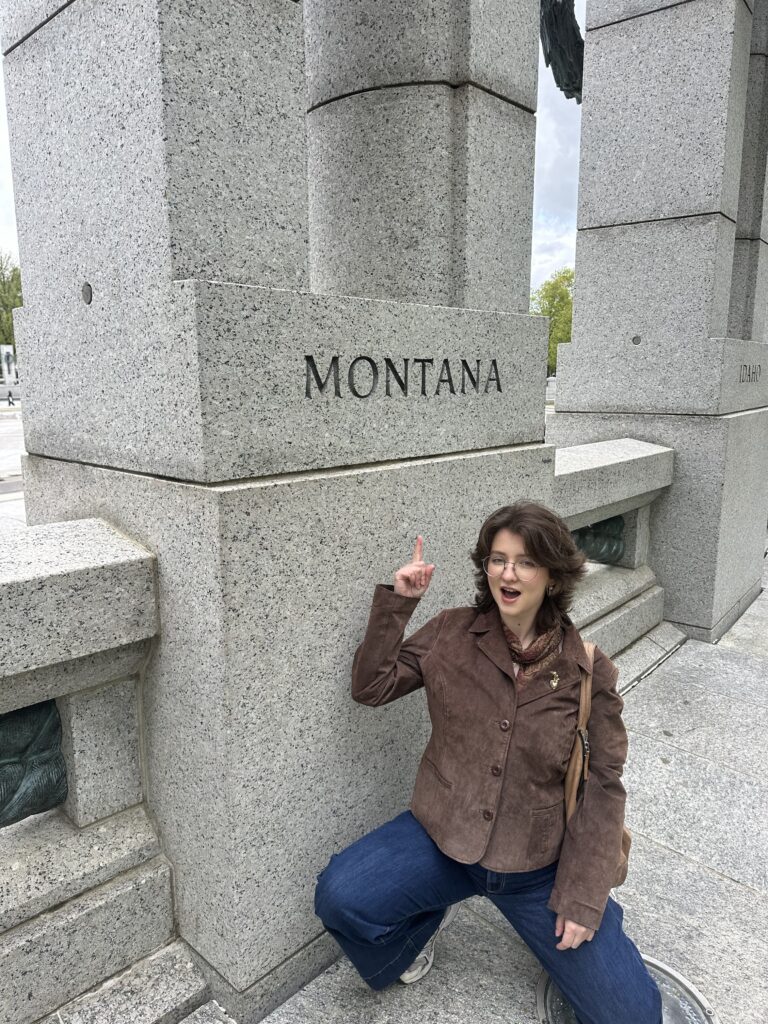
This is what Chloë had to write on deciding to do an MFA: “I first started thinking about an MFA in the spring of my junior year at Macalester. I was finishing up an independent study in poetry with Professor Michael Prior, and when he gave my manuscript back to me, he had written a list of schools on the front page. I totally didn’t get the hint and asked what they were for, and I remember him asking, “Had you not already thought about an MFA?” Because I was a literature major, it had never occurred to me that grad school in creative writing was an option until that moment. I remember he’d included a Florida school on the list and in parentheses written “maybe not” next to it. Accurate. Anyway, in the spring of my senior year I took both the literature and creative writing capstones, and doing both criticism and poetry at the same time really convinced me that I needed to pursue the MFA. I had already committed to taking a gap year, and am so glad that I did, but I’m also excited to be back in school soon! I’m a very process-oriented person, and I like the feeling of doing all the steps necessary to reach a goal. In this case, my goal is to write and publish and be in community with other writers, so the MFA feels like the next logical step for that. I also want to teach, and am really excited to get that experience starting in the fall. Finally, the program I’m going to, at the University of Montana, has a lot of the features that I wanted in a program and is located in the gorgeous city of Missoula, with mountains on all sides of the city, so it just seems like a perfect place to live, write, and explore for two years, and that’s a good enough reason in itself to go!”
Chloë draws inspiration from a lot of interconnected ideas they’re passionate about. They wrote: “Most of my work to date has circled themes of environment and disability, creating a body/place nexus that I find really generative. I expect these general themes to continue, though I’m also excited for more formal experimentation. During my capstone, I started dabbling in erasure poetry, and hope to expand that practice to more forms of docupoetics. I’m interested in the way medical and environmental histories are intertwined, and am interested in doing historical research into the medical institutions in my home region of Upstate New York (like the Adirondack Cottage Sanatorium in Saranac Lake where my great-grandfather was hospitalized for some time) for potential texts to erase or otherwise engage with. The other object of my obsession recently has been my car, and I’m excited to explore how that might be a “vehicle” for more poems. I’m interested in how the car changes my conception of mobility, especially given my own experiences with limited mobility, and I’m also fascinated by the intersection between car culture, the US interstate system, environmentalism and industrialism, and the history of infrastructure in the US. So, the short answer is that I don’t have just one idea, but I’m excited for whatever comes next in my writing!”
Chloë highlighted the steps they took to make sure they got in all their applications. They wrote: “The application process was definitely rough– I applied to 13 programs, all but three of which charged application fees. The English Department generously reimbursed some of those fees through the Critchett Fund (shoutout!), but it was definitely intense. I benefited immensely from the guidance of Professor Prior and other faculty, both as letter-of-recommendation writers and as general sounding boards for programs, and highly recommend that all students start talking to their professors early and often if this is a process you want to go forward with. I did the bulk of my writing– personal statement, writing sample, project proposal, in mid-August, and then I submitted roughly two applications a week until the December deadlines. This helped spread out the amount of work and also the application fees. One of the things that I’ve been wrestling with during this project is the fact that I’ll be leaving my current job in the New York State Senate to pursue the MFA. In my case, I’ve been lucky to work and save for long enough that it feels financially feasible to do so, and I only applied to programs with funding, but I also decided early on in the application process that if I got in somewhere, I would commit to it entirely. I’m so glad Missoula is that place, and I’m so excited to throw myself into the program. Having a 9-5 has been great, but it’s definitely renewed my appreciation for school and communal art-making, which is just a nice way of saying the extremely dorky fact that I love homework and can’t wait to have reading assignments again. I guess my advice comes down to this: make sure you really want to do the MFA, and if you come to that place of absolute certainty, follow it with absolute commitment. Admissions are grueling and I expect that there will be plenty of challenges in the program, starting with what I’m told is a rough housing market in Missoula. But, this is the path I’ve chosen, and I’m set on it for the next two years, and that makes it all worth it. No matter what, if you’re writing then you’re a writer, regardless of your program acceptances, and if you end up also doing an MFA, then here’s to higher education in the humanities! Finally, I’ll just reiterate the motto that I stole from my father, and that I included in my parting Words last year: ‘Be a student, not an alarmist.’ Here’s to learning, being brave, and moving to the mountains to write poetry!”
Charley will be attending Ohio State’s fully-funded MFA program in Poetry.
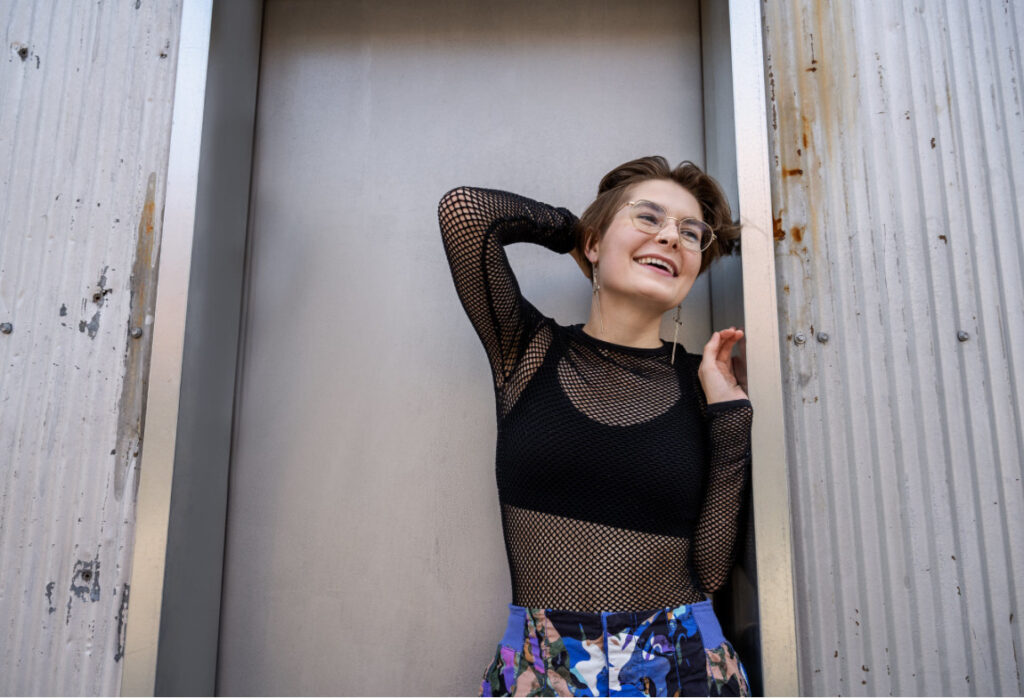
For their inspiration to pursue an MFA, here is what they wrote: “The short answer is Michael Prior. Really, I was a Literature major, and while I had always been interested in creative writing, I had zero confidence in my actual ability to do so. I had intended to go to grad school initially in pursuit of an English Lit degree, but Michael encouraged me to consider an MFA program. And the more I looked into them and thought about it, the more I realized that I wanted to give myself the opportunity to take my love of writing and my craft more seriously. I also knew I wanted to go to grad school because I felt undergrad was just the beginning of all of the things I could learn about and engage with. Especially starting the first year and a half mostly online, I didn’t feel really academically enriched and connected until the end of my time in undergrad, so that desire to keep learning is what cemented the idea of grad school for me.”
Charley is envisioning queering their poetry for this MFA program. They wrote: “I’ve always been interested in form poetry and how space on the page [speaks] to tradition, structure, and any variety of thematic contexts. I’m intending to create a project that combines a more detailed study of poetic forms with poems about queer relationships—loving outside of, and within, “traditional,” heteronormative dynamics—both between individuals and as a community. I’d really like to push myself to see what ways I can work with and against poetic [forms] to reflect gender queerness and different forms of love.”
This is what Charley had to write about the (tedious) process of MFA applications: “Applying to grad programs involves a lot of various pieces that can be hard to keep track of and polish. For me it was a long process of drafting and refining a whole array of statements/poems/etc. One key thing I keep telling people is start the application process early. Mainly, so you can build in time for an emotional breakdown. I started researching, identifying my materials, and planning out a schedule like six months ahead of due dates. And then, when I had weeks where I wasn’t capable of working on applications—whether due to internal or external forces—I had the space for that and was still able to turn everything in on time. The [finances] can be hard with grad school applications. You want to cast a wide net, but those application fees pile up into quite a large sum. Definitely save money for applications. In addition to that, the English Department has a fund to help Mac graduates apply to graduate school which can help cover a portion of those fees! The English department was also a great support to me through the guidance and encouragement of our wonderful English professors—specifically Professor Michael Prior and Professor Amy Elkins were a huge help to me throughout my process of applying. Similarly, there are wonderful resources among peers and alumni.”
Colleen will be attending Rutgers fully-funded MFA program in Fiction.
Colleen has a few over-arching reasons why they chose to pursue an MFA. They wrote: “I decided to do an MFA for a couple of reasons, but the main factor was, honestly, a fear of regret. I entered college really loving English, writing, and so on, but was hedging against going down that path because I thought it wouldn’t be pragmatic. Making a living writing seemed too much like a dream to be feasible—it was something that happened to other people and that I wasn’t one of the lucky ones. But the pandemic happened, as it were my English and creative writing classes were the only things that certifiably made me happy during the pivot to zoom. I was terrified of a future where I didn’t make room for writing in my life, and my ego wanted to be *that* person who wrote a book. I figured that if that didn’t happen, I would end up somewhere adjacent and would be satisfied all the same. So I changed my major, and realized that the caliber of work I was drawn to necessitated getting some kind of advanced degree. From there, I got wrapped in figuring out what exactly I felt prepared to do. MFA, MA, PhD were all viable options, especially since research appealed to me quite strongly and still does. After having some very honest and heartfelt conversations with my advisors, I decided to go with an MFA. It fulfilled the emotional need to make space for writing, but also expanded my professional horizons, whether that be through teaching, running a lit mag, working in publishing, etc. Because believe it or not, you can do things with advanced degrees in the humanities! And you don’t have to (read: shouldn’t) go into debt to do it! (TL; DR — facing mortality + wanting to strengthen skills due to pandemic education limitations + loving writing = MFA).”
As for their future manuscript for the MFA program, here is what they wrote about their ideas: “Oooooofff, this has been plaguing my mind ever since I got into Rutgers. Broadly I’m deciding between a Southern gothic alien invasion novel (series of novellas? I super can’t tell yet lol), a short story collection riffing on the nuclear age and the ways it shaped our ideas about family/love/violence, and then a novella which follows a young woman living in a totalitarian society who can polymorph into a yorkie and has to go on the run after her yorkie version kills an agent of the state. So those are my ideas—we’ll see what folks vibe with when I get there!”
Colleen had a plethora of thoughts to share with us about their application process and some advice about what the emotional weight (and financial weight) the process will entail. They wrote: “Oh I have so many thoughts on the application process. It’s harrowing, deeply emotional, and egregiously, unjustifiably expensive. I didn’t get in anywhere in my first round of applications my senior year, which was crushing and scary, but you take a breather, and you try again. I was really in my head about wanting to do an MFA as a speculative fiction writer, because there are places who (wrongly) sneer at that kind of thing, so on top of that I felt like I had to be pickier about where I applied. I relied a lot on my advisors’ perspectives—if they recommended a program, that was enough to convince me to apply there. If they liked my SOP, I tried to leave it alone and convince myself it was done. I also relied a lot on body doubling sessions with other friends who were applying to grad programs, even if they were in different disciplines. I think what was most helpful was just having a group of people who were rooting for me. Regarding specific advice, here’s what I think is the most important for students considering an MFA ought to note:
It is harder to get into any fully funded MFA than it is to get into most med schools or law schools. Acceptance rates ranging between [1% to 6%]. This application cycle was also particularly chaotic because of all the tomfoolery of the current administration, and it will likely be chaotic like this for a while. It’s not uncommon to take two [to] three cycles before getting in anywhere. You’d still play the lottery with these odds though. It takes some mighty gumption to do too, and you ought to be proud of that. That daring will serve you well no matter what happens.
Do some prep work before you even begin working on applications, ideally 10-14 months before your application cycle. Think about why you want to do this thing. Why this? What’s the story behind your decision? What’s your personal motivation? What are you going to get from it, intellectually, creatively, and professionally? What does your life look like in 10 years because you did this thing? Take some time to journal about it. When you feel you can articulate these things authentically and clearly, you’re ready to start drafting a statement of purpose and to start researching programs. Yes, it will take you several months to write a statement of purpose. Give yourself every ounce of time you can muster, because it is like pulling teeth, and life will somehow find a way to make you busy when applications open.
Again, applying to MFAs is expensive. You’ll likely apply to 10-15 programs, each costing somewhere between $65-$150 each. You will spend hundreds of dollars applying. I would not have been able to afford applying without working full time. While you don’t need to be wealthy to apply, make a plan to ensure you can cover the cost, whether that’s through working job that pays a semi-reasonable wage, living with parents/roommates/etc., or finding a way to get those costs waived (this will vary from program to program, but each one I applied to had some option to waive the application fee). The English department will cover up to $300 via the Crichett Fund! Talk to Matt Burgess about it!
Be discerning, both in where you apply and who you rely on during this process. Putting yourself out there as a writer fundamentally means that you will encounter people who just don’t get it, and that can make you feel like you have to prove something. Remember you don’t have to prove yourself to the people or programs who don’t get it. You don’t earn permission to do what you love by chasing prestige. Be yourself (and I know it sounds cheesy, but it’s true) then the rest will fall into place.”
We are thrilled for Miriam, Chloë, Charley, and Colleen’s acceptances into these MFA programs. They’re making Macalester’s English department very proud, and we can’t wait to see all that they accomplish in these programs and beyond.