



Immortal Man: Professor Daylanne English brings the afterlife to a Literary Salon discussing Kendrick Lamar
By Callisto Martinez ’26
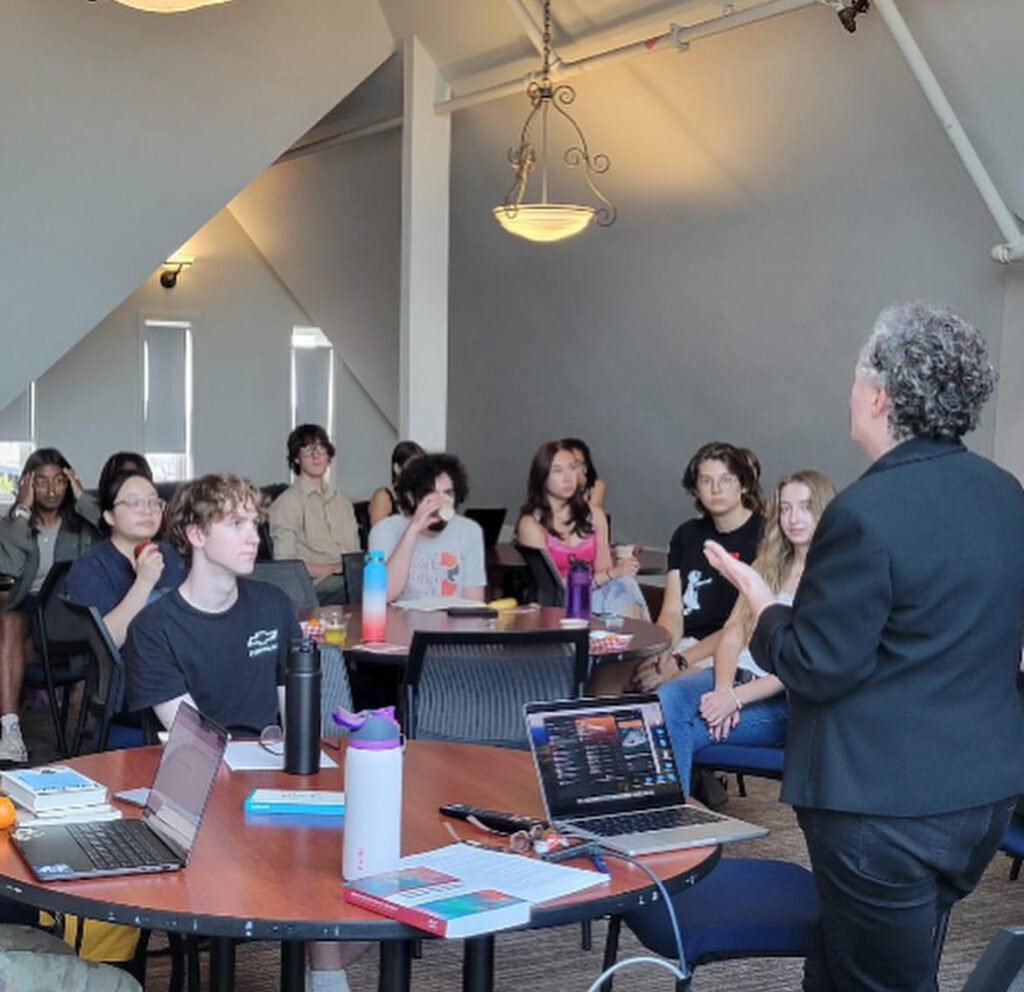
On Wednesday, September 17th, attendees of Professor Daylanne English’s Literary Salon, “Immortal Man: Kendrick Lamar and the Afterlife,” were beckoned into the Old Main fourth floor lounge by Parliament’s funky beats and a lovely display of fresh fruit. This salon gifted attendees with a sneak peek into Prof. English’s insights in her upcoming book, Soul Sounds: The Afterlife in African American Literature and Music.
While some might have been surprised to enter a Kendrick Lamar-centered event to Parliament playing, Prof. English began the salon with an explanation that playing Parliament exemplifies Lamar’s respect for his musical forebears. Furthermore, George Clinton, the creative lead of Parliament, has not only collaborated with Lamar numerous times, but is also one of the most sampled hip-hop artists of all time.
“I don’t believe in a universal core curriculum. However, if I did, you would need to know Parliament and Kendrick Lamar,” Prof. English said.
Prof. English’s choice of funk music, which got many feet tapping and heads nodding, also relates to one of the major themes of her talk — collectivity. Funk music, which is typically characterized by a heavy downbeat on the first beat of each measure, doesn’t just make for good grooving, but it also symbolizes a “together on the one” form of union and Black collectivity, according to Prof. English.
This collectivity is one of the core motifs in Soul Sounds: The Afterlife in African American Literature and Music, which will feature a chapter entirely on Lamar. Prof. English explained that Lamar takes part in a long tradition within hip-hop and Black music more broadly of representing the afterlife as an agential — meaning, having agency — force that is literal, present, and politically empowering. For Prof. English, this argument challenges Afropessimistic conceptions of the afterlife.
“The fundamental argument of Afropessimists is that there is an afterlife of slavery that continues to render Black people abject and subject to power, and it’s a grim field of thought,” Prof. English said.
While many renowned Afropessimists view the afterlife more metaphorically, Prof. English’s forthcoming book will argue for a literal interpretation of the afterlife, that is, in the words of Tupac Shakur, “One Better Place” that anyone can tap into while still living.
Prof. English highlighted that Shakur, and many other icons of 90s hip-hop, were preoccupied with death and predicting their own deaths. Of the many legends of hip-hop, Lamar often cites Shakur as one of his largest influences, despite the fact that Lamar was only nine years old when Shakur died in 1996.
“This feeling, this deep connection, is quite interesting to me, and I’m thinking that part of it is the sense that Tupac lives on in a very real way for [Lamar],” Prof. English explained.
Prof. English then showed select clips from Shakur’s “I Ain’t Mad At Cha” music video, which depicts Shakur getting shot and killed and then going to Heaven, which is represented as a collective of powerful Black musicians in a “better place.” This music video answers an important question raised in Prof. English’s salon: Why is Shakur consistently resurrected more often than other artists? Shakur’s investment in Black collectivity makes him an especially poignant figure to resurrect when discussing how to create Shakur’s “better place” here and now. Prof. English then moved to discuss how Lamar and others evoke this afterlife in their work.
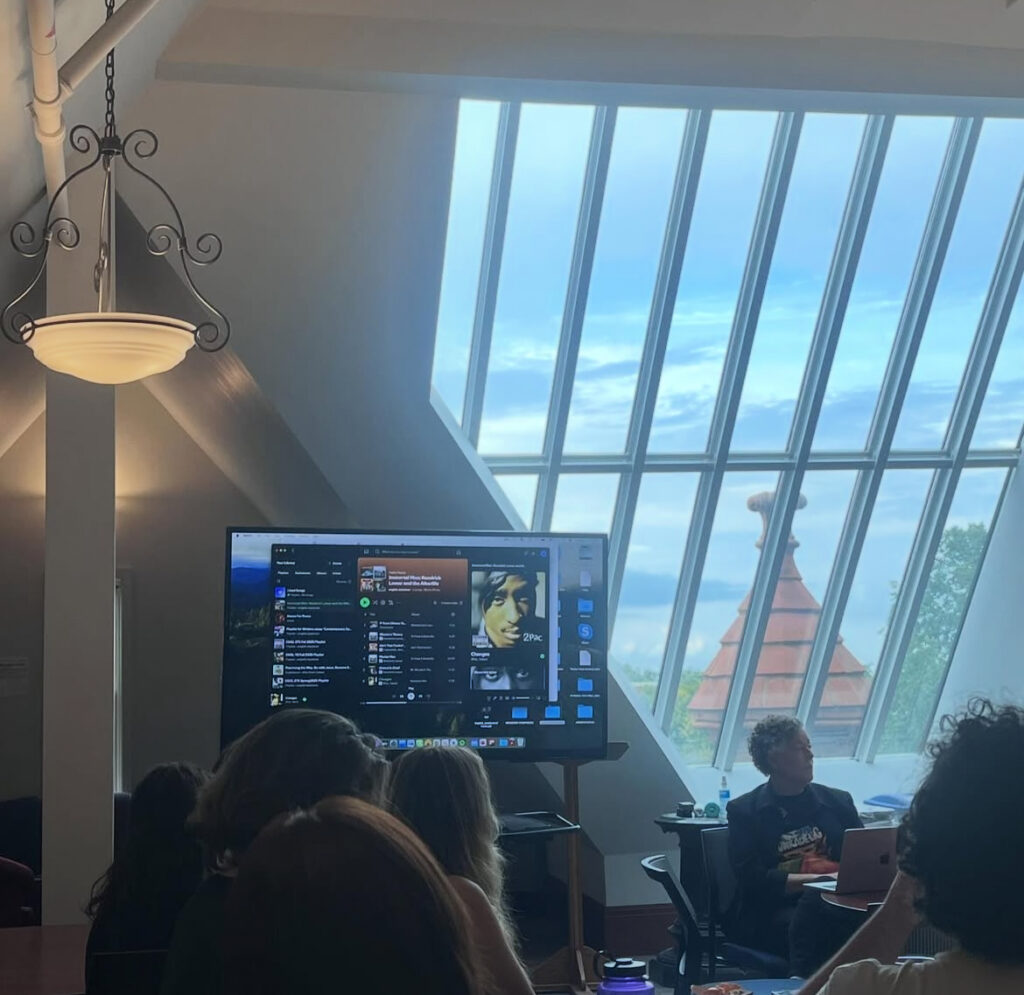
“I want to go further and say, not only is the afterlife an agential place, but it’s like a technology,” Prof. English said.
Sampling, among other popular hip-hop innovations, work to resurrect and put artists into conversation with the dead. Prof. English pointed to Lamar’s “Mortal Man,” which samples interviews with Shakur and reworks them to create a dialogue between Shakur and Lamar. She also highlighted the sound of a high five, which seems to put Shakur in the room with Lamar.
This technology of resurrection also connects to the 19th century Spiritualist movement, which invokes technologies, such as photography and audio recordings, or rituals such as seances to communicate with and bring back the dead. For Prof. English, this resonance points to Lamar as a sort of medium, an ability showcased in Lamar’s album Mr. Morale & the Big Steppers.
The opening song, “United in Grief,” which is also Prof. English’s favorite song by Lamar, symbolizes a step in Lamar’s spiritual journey from writing in a personally therapeutic position to the collective. Prof. English highlighted the lyrics “I hope you find some paradise” as an investment in bringing Lamar’s own therapeutic journey to other Black men, especially those who have already entered the afterlife.
A different example of how Lamar uses technologies of resurrection to communicate an agential afterlife lies in the music video for “The Heart Part 5,” wherein Lamar uses artificial intelligence to warp his face into famous Black men, including OJ Simpson, Kanye West, Will Smith, and others. At the end, Lamar chooses to resurrect two famous Black men who both died tragically: Kobe Bryant and Nipsey Hussle.
“This is, for me, a moment when [Lamar is] a medium,” Prof. English asserted. “He’s channeling all sorts of Black men, including dead Black men, connecting again to the spiritual — the idea that people live on and that you can contact them.”
After a slew of questions regarding the afterlife, Lamar’s art, and how Lamar forms a collective around mutual hatred (read: beef with Drake), the salon concluded, leaving us all intellectually enlivened.
Thank you Prof. English for all her powerful insights and hard work organizing this salon!