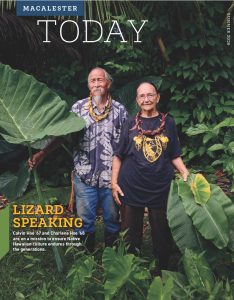






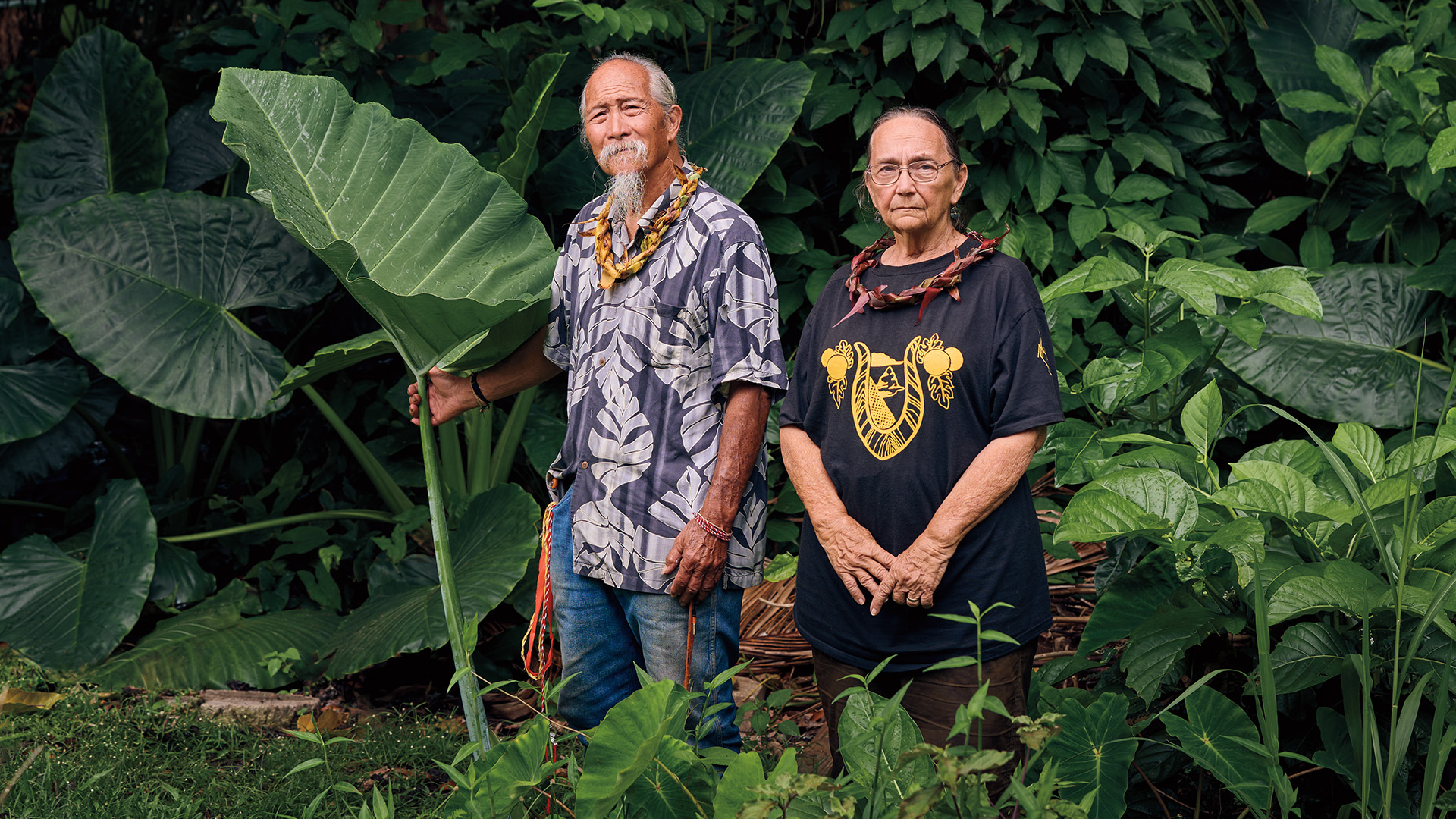
For Calvin Hoe ’67, the countless contributions he and his wife, Charlene Hoe ’68, have made to uplift Indigenous communities in his native Hawai‘i and beyond can be summed up by two words: lizard speaking. Understanding this phrase requires an understanding of the Hawaiian language.
The Hoes, who live on the island of O‘ahu, raised their three sons to be storytellers. Their middle son, Liko, who studied the Hawaiian language in college, helped Calvin understand the origins of the term mo‘olelo, meaning story. It’s derived from the words mo‘o (lizard) and ‘ōlelo (to speak).
“As Liko explained to me, the lizard has this long tail that’s connected to the brain through all these tiny bones of its backbone,” says Calvin. “Our stories are our connections to the place we come from and to our ancestors. Our ancestors’ bones are still here, and we are still here. Every day, I know that my ancestors are with me.”
The duo has dedicated their lives to ensuring their cultural knowledge, arts, and right to their land endure in Hawai‘i, despite the islands’ history of colonization. As with many Indigenous communities across what’s now the United States, Native Hawaiian culture was “nearly decimated with the influx of America,” Calvin notes. “Our old ways of storytelling and dance were banned. We lost our language, and we had to bring it back. We have been able to preserve our history.”
Calvin met Charlene, who grew up in Minnesota, at Macalester, and they married after graduation. They spent a short stint volunteering through the Peace Corps in Micronesia, a nation of more than six hundred islands midway between Hawai‘i and Australia, before returning to Calvin’s home in Hawai‘i.
“After leaving Macalester, we wanted to help people create their own well-being within their communities,” Charlene recalls. “When we got to Chuuk in Micronesia, it was very eye-opening to see that some families were self-sufficient, but others had very little to ensure their well-being.” That experience prompted her lifelong efforts to uplift Indigenous sovereignty and self-determination through environmental, educational, and cultural activism. Although Charlene is not Native Hawaiian, she has worked to become a strong ally.
Calvin feared seeing the disparities he’d witnessed in Micronesia take hold back home in Hawai‘i amid the rapid population growth underway in the 1960s. The couple took up taro farming only to realize that water was being diverted from the Hakipu‘u area on O‘ahu to neighboring valleys for development. The Hoes participated in the Waiāhole-Waikāne Struggle, a series of grassroots protests in the 1970s against urbanization that defended residents’ right to remain on their ancestral homelands. But the water issues persisted.
Charlene, who was working as an educator, served as a delegate at the watershed 1978 Hawai‘i State Constitutional Convention—a “life-altering experience” that brought together representatives from across the islands to advocate for their communities’ needs. They called upon the legislature to establish an independent water regulation agency to ensure people were prioritized over profit.
“We amended the state constitution to protect the fresh water,” Calvin recalls. “Because if you protect the fresh water, you’re also protecting the ocean. In our culture, there’s no division between the land and the sea. It’s all one, and we have to protect it.”
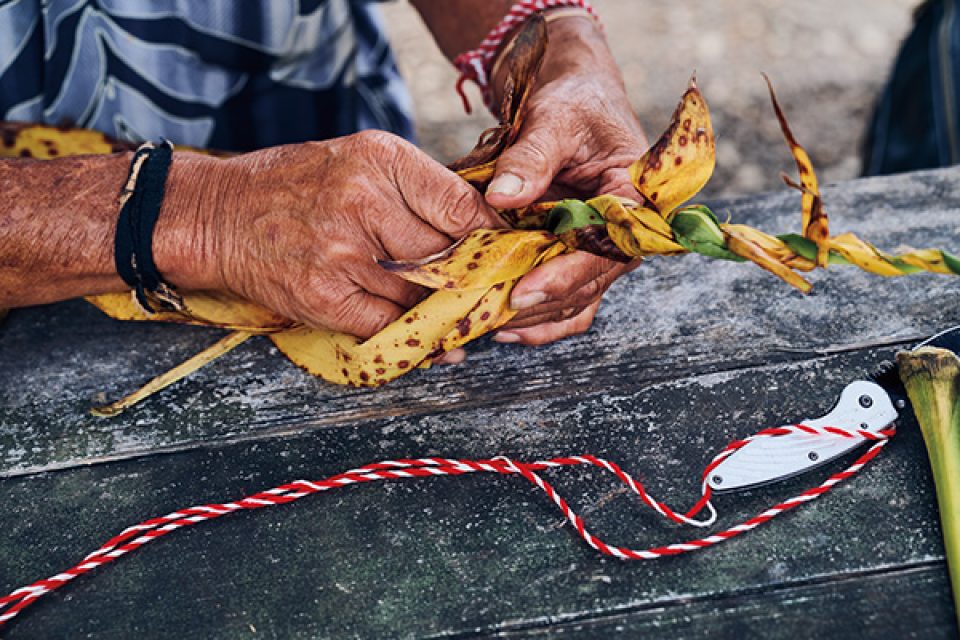
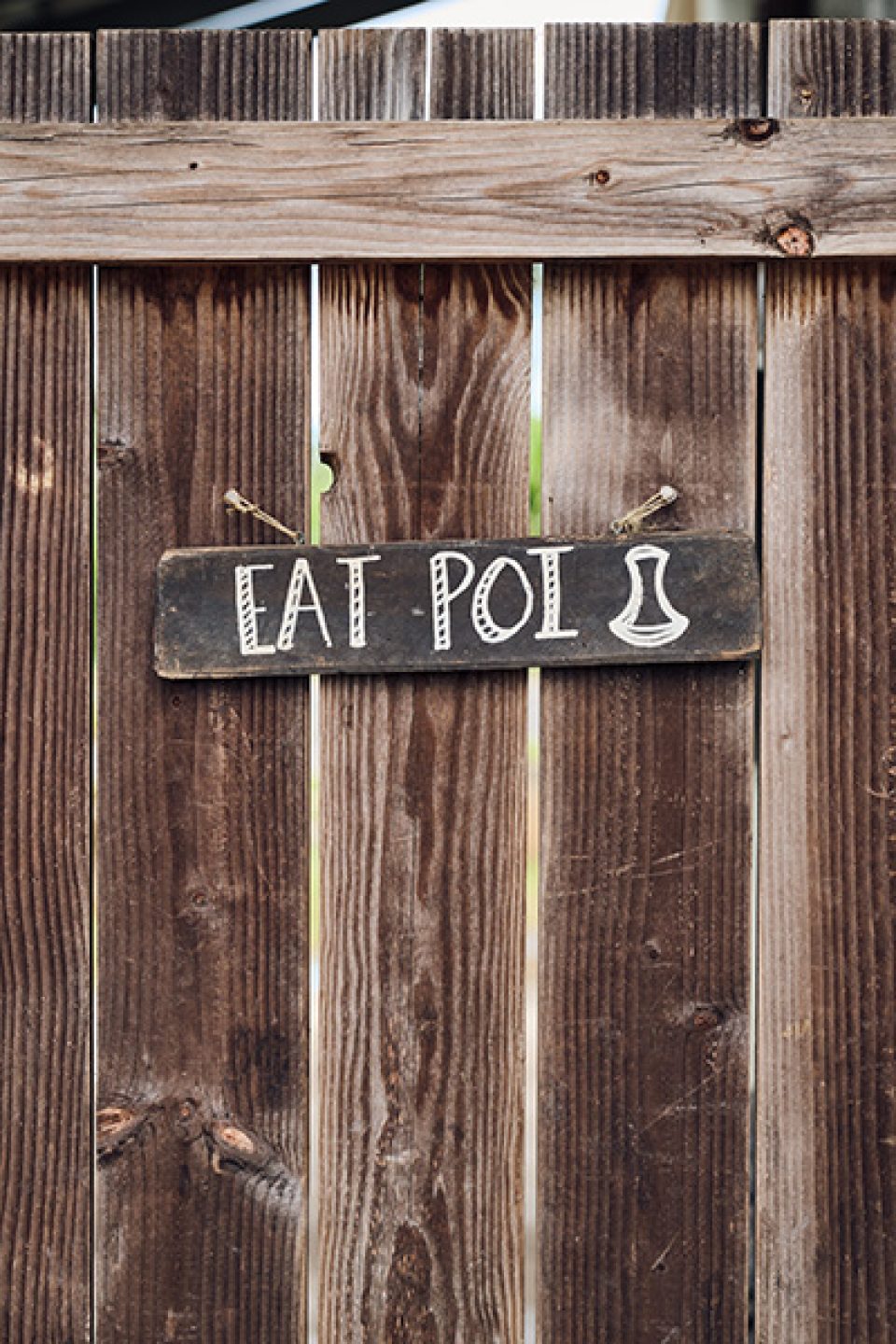
For the Hoes, art is another form of activism, particularly when it comes to authentic Indigenous representation. They purchased the Waiāhole Poi Factory in 1971 and transformed it into an art gallery to showcase Native Hawaiian artwork (as well as Charlene’s own creations). Around the same time, Calvin dedicated himself to crafting and performing pre-contact Indigenous musical instruments, such as the ‘ohe hano ihu (nose flute). Today, he’s considered one of Hawai‘i’s premier Native artisans. Liko runs the Poi Factory, a restaurant serving up traditional dishes, including its namesake taro-based starchy staple. And Charlene and Calvin still maintain a small art gallery there.
“Without a cultural base, we lose the rich integration of thinking, acting, and working within communities,” says Charlene. “You want to help people be proud of who they are and where they come from.”
These days, the duo is working to preserve Hawaiian culture by passing it on to the next generation. Encouraged by their kupuna (community elders), the couple founded the public charter school Hakipu‘u Academy in 2001 to do just that. Known to their students simply as Uncle Calvin and Aunty Charlene, the Hoes believe education provides an opportunity to instill values-based leadership skills—much like their own college experience did for them.
“Being students at Macalester, we were exposed to the whole world,” says Calvin. “There will always be conflict in the world because people think differently. But we can work things out if we choose to. In Hawai‘i, we have a system of working things out based on values called ho‘oponopono. The most important Hawaiian value is aloha, which is love—and it’s a good way for the world to be. We’re all connected as brothers and sisters, and our stories are forever intertwined.”
Kate Nelson, an Alaska Native Tlingit tribal member, is an award-winning writer and editor in Minneapolis.