






Photos credit: Skye Raymond ’28
For Guillermo Muñoz-Calanche ’28, the Cultural House community on campus became part of his Macalester story even before he had officially made his college decision.
Muñoz-Calanche remembers the shock he felt visiting Minnesota for the first time after growing up in El Paso, Texas. But when he arrived, Muñoz-Calanche met a student who lived in the Cultural House, a Mac living-learning community for up to sixteen students each academic year interested in liberatory education, community engagement, and anti-racism movement building. He started to find out about the house’s long legacy of BIPOC student activism and organizing, dating back to its earliest iterations in the late 1960s.
“I learned that the C-House has been a hub of learning, of discernment, of dialogue on campus,” he says. “It shaped my understanding of the opportunities for me at Macalester—what kind of work students do here. I wanted to be part of that.”
As a sophomore, Muñoz-Calanche did become part of the Cultural House, a community now creating the next chapter in its long history—with a new location in the Summit House, reimagined programming around a yearlong theme, and deepened experiential learning. This past year, the house community explored intergenerational global solidarity, including through a trip to Cuba with support from Mac’s Racial Justice Project Fund.
Over ten days in January, the students put their education into practice as part of a Witness for Peace delegation, an organization dedicated to helping people in the US understand the impact of US policies in Central and South America. In Cuba, the delegation examined the effects of US sanctions and the embargo in place since the early 1960s, following the Cuban Revolution.
Although students were drawn to the international travel opportunity, Lealtad-Suzuki Center for Social Justice (LSC) director Hana Dinku emphasized in the Cultural House application process that students would be required to engage deeply with the learning experience before, during, and after the trip: “We made our expectations very clear to students: this was not tourism,” Dinku says.
The group prepared together through the framework of popular education—a participatory model that’s an LSC cornerstone, acknowledging people’s lived experiences and encouraging critical dialogue and collective action. Twice a month on Sunday evenings, students gathered for study sessions, co-facilitating the syllabus and rotating to allow everyone to take turns as teacher and learner. Assignments included articles, podcasts, and documentaries; discussions unpacked texts, connected topics to coursework and lived experiences, and interrogated assumptions about Cuba. For many of the students, Dinku says, the sessions broadened their understanding of Cuban people, history, and culture beyond the Cold War and the Cuban Missile Crisis.
As travel plans took shape over the fall and winter, the group assessed international travel restrictions and Cuba’s worsening humanitarian crisis. Because of a new American fuel blockade, Cubans faced widespread blackouts and food insecurity. Dinku and her colleagues consulted Cuban partners and decided to proceed with the Witness for Peace delegation, with a smaller group of students due to shifting US travel policies.
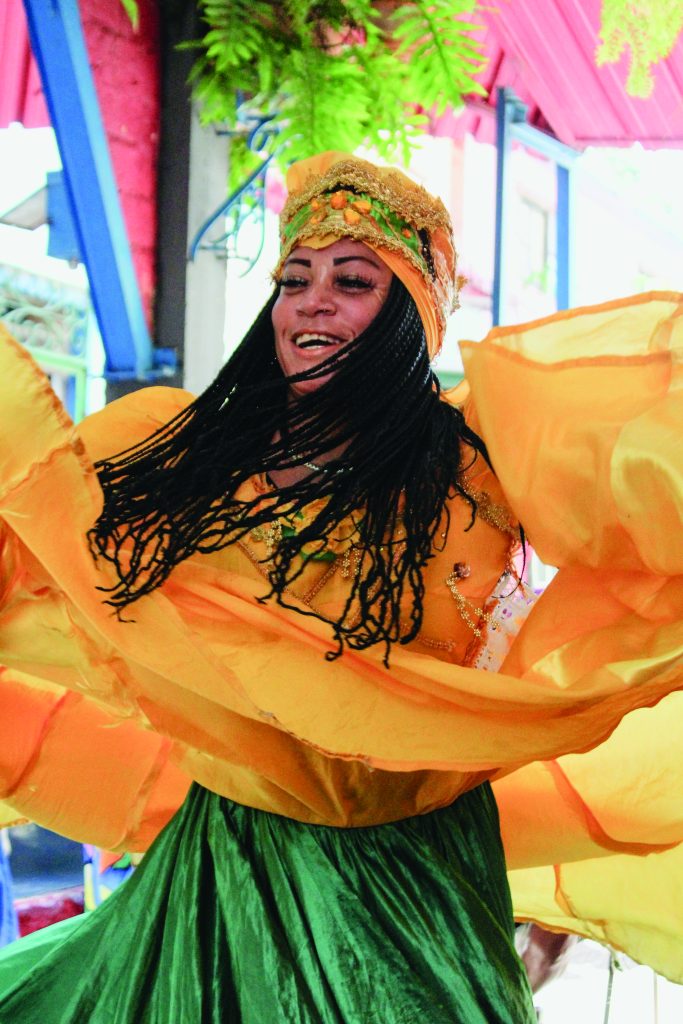
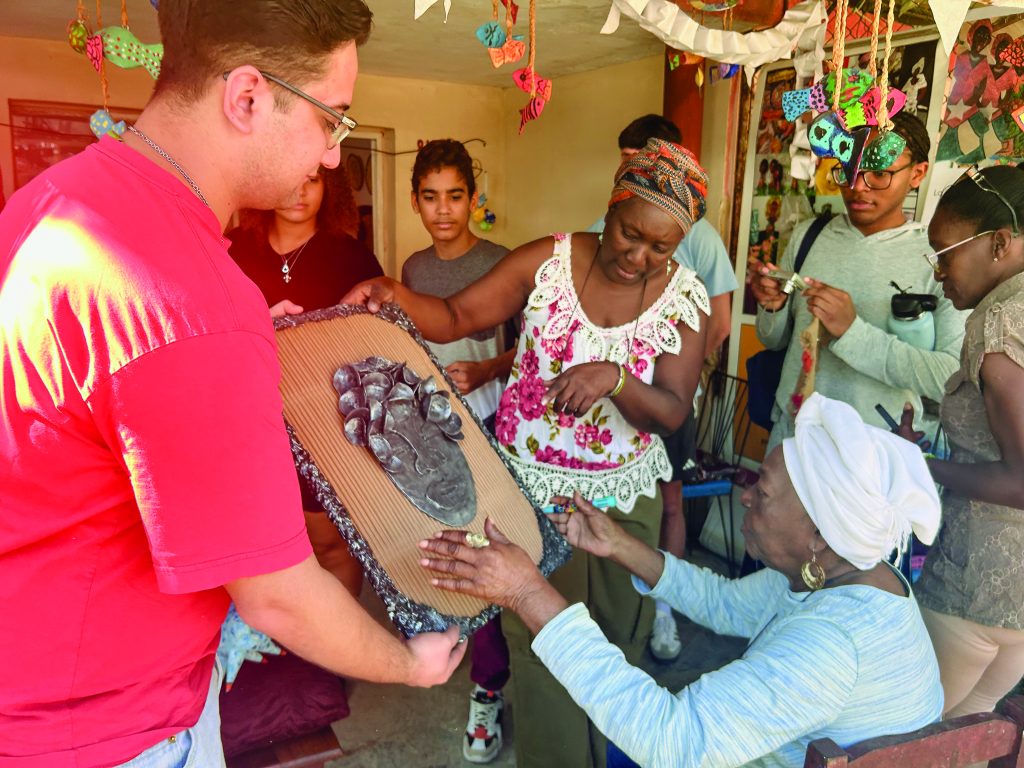
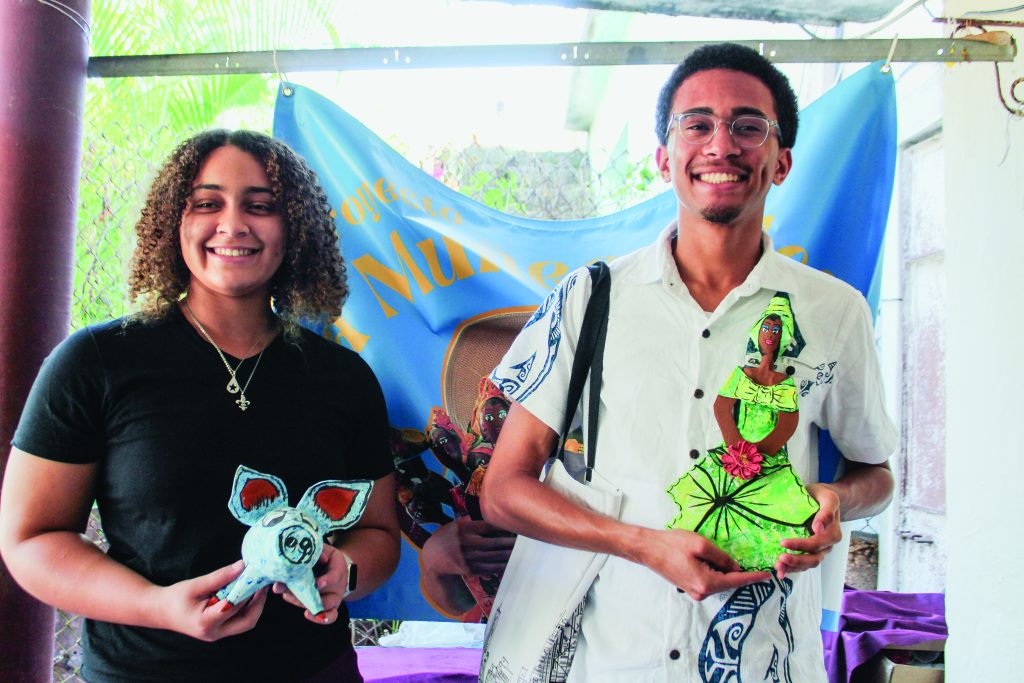
In January, Dinku, LSC assistant director and program co-organizer Sam Taitel, and eight students traveled to four Cuban cities—Havana, Cienfuegos, Santa Clara, and Trinidad—from their home base at The Centro Memorial Dr. Martin Luther King, Jr., a Havana center for popular education, social justice action, and community development. Their packed itinerary included visiting La Muñeca Negra (the Black Doll Project), the Latin American School of Medicine, La Casona de Toqui cultural center and museum, El Mejunje community center and LGBTQ+ sanctuary, El Callejón de Hamel to learn about Afro-Cuban culture, and Valle de los Ingenios to visit a sugar cane plantation.
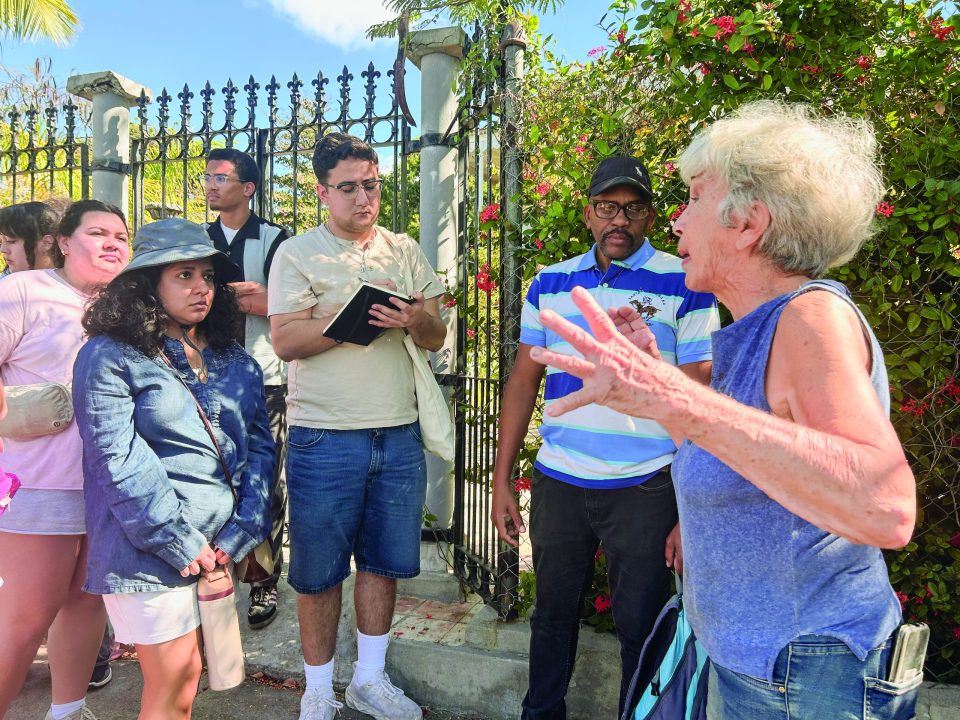
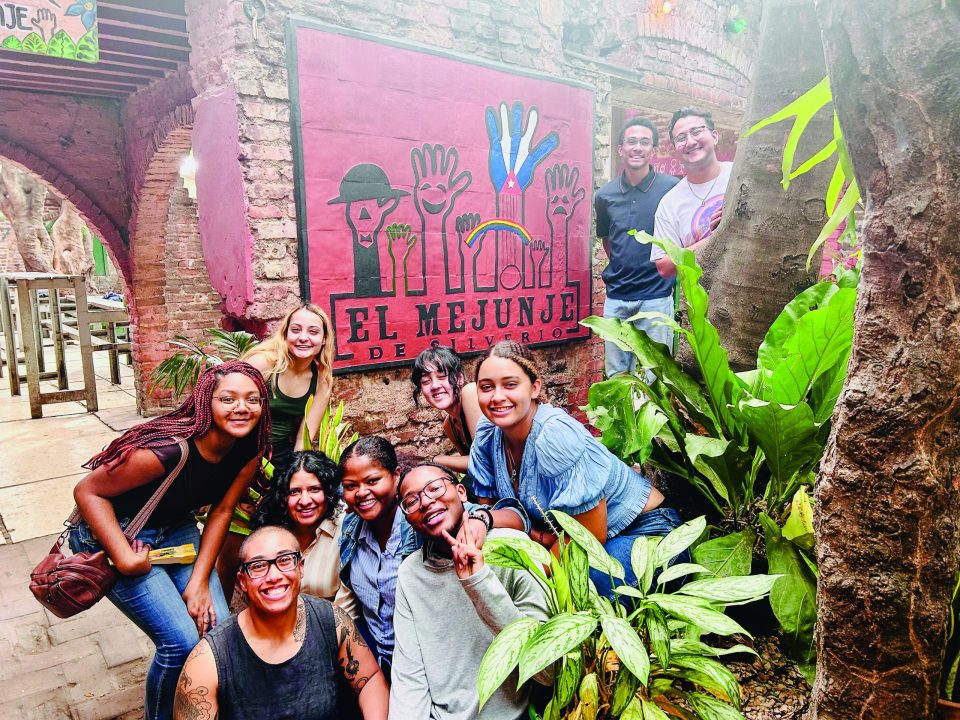
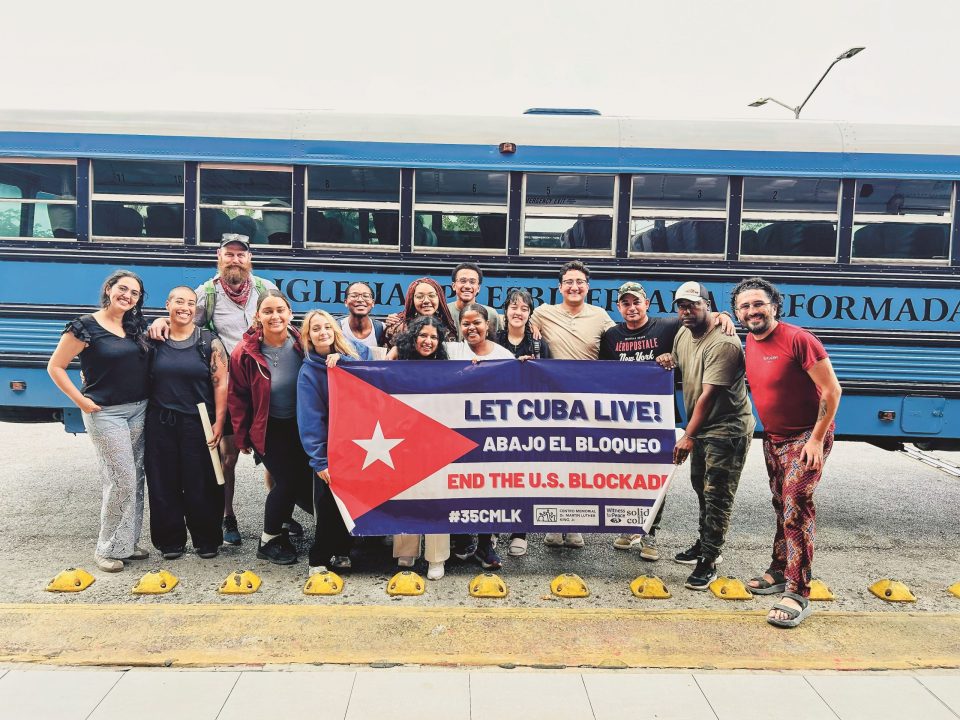
But true to the group’s focus and preparation, the learning went far beyond surface-level tours. Along the way, students engaged with community organizers, educators, historians, artists, and doctors about Cuban culture, the history of US-Cuban relations, and the impact of the US embargo. In each conversation, Dinku urged students to listen deeply and observe contradictions.
“It was really important that our students engaged critically with the materials we studied, the people we met in Cuba, and the experience as a whole,” Dinku says. “We wanted to ensure they learned without falling into the trap of overly simplifying or romanticizing the revolution. We wanted them to honor that history while thinking critically about the contradictions between the goals of the revolution and the current realities. We also asked them to analyze how decades of US sanctions and the embargo have hindered Cuba’s growth and sovereignty. We could not be prouder of our students and how fully engaged they were while we were there.”
On campus in February, students shared photos and stories with an intergenerational audience of faculty, staff, students, and neighbors. The students also are developing a website documenting their experience, working on Mac Weekly articles, and collaborating with Macalester’s Archives team to formally record their journey. And in April, the LSC and the Minnesota Cuba Committee hosted the Cuban ambassador to the US, Lianys Torres Rivera, for a visit that included a student panel discussion.
Back in the C-House, the students noticed the trip’s impact on their community, too. “The trip cemented all our friendships and how we interact with each other—there’s more conversation, more dinners together, more using the dining table as a community space,” Damaris Zamora-Aguilon ’26 says. “Now we have a shared history.”
New Spaces to Call Home

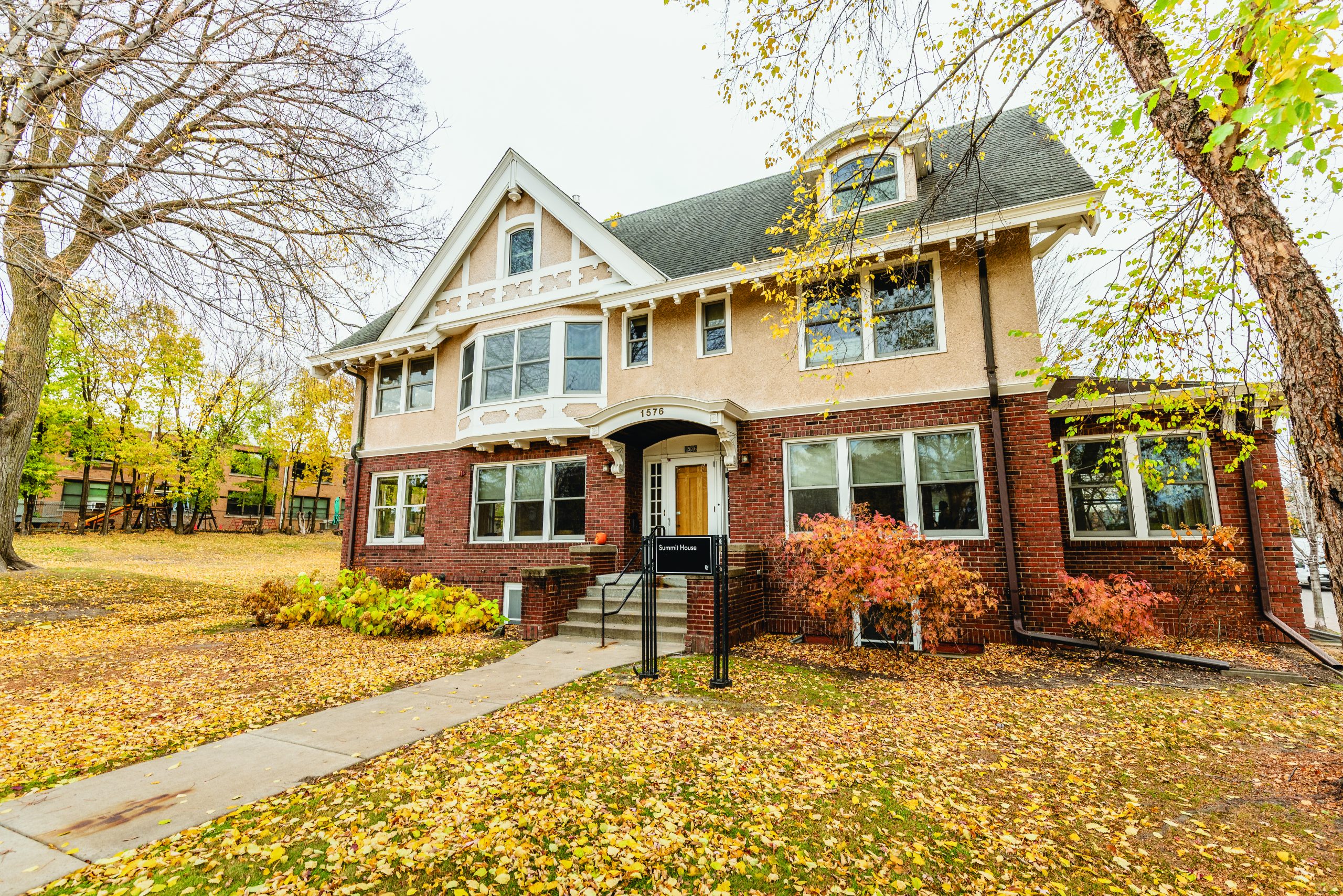
In 2025, preparation for the construction of Mac’s new residence hall and welcome center jump-started a series of changes across the north end of campus. After challenging campus conversations about addressing the need for a new building while still caring for the Cultural House’s legacy and future, the living-learning community moved from its prior location on Macalester Street to the Summit House at the corner of Snelling and Summit, a location selected with student input.
Across Snelling in Kagin Commons, a transformative renovation last summer in the Lealtad-Suzuki Center for Social Justice created new community-centered spaces, including an event room named in honor of former Macalester president Arthur S. Flemming, a teaching kitchen, multifunctional study space, a conference room, and quiet lounge areas.
The renovation supports the evolving programming needs of both the LSC and the Cultural House and enhances the work happening in both buildings, with the Cultural House’s capacity no longer stretched thin by doubling as both an event space for Mac’s cultural organizations and a home for residents.
We asked four Cultural House residents to tell us about their experiences in the house and in Cuba, and how those connections are shaping their education and perspective.
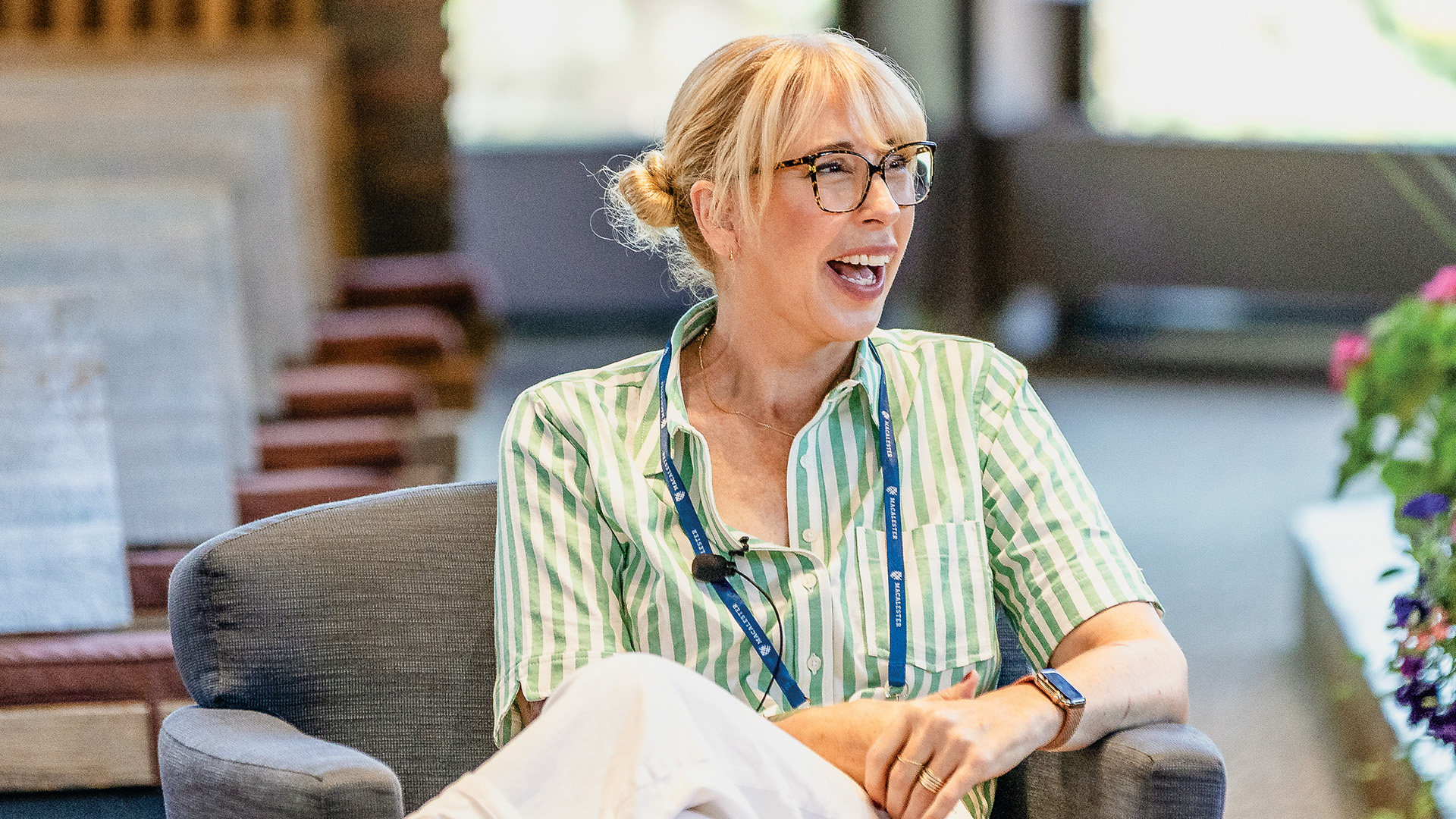
Skye Raymond ’28
Media and cultural studies major
C-House story
I had gone to some Cultural House events and was like, “This is the ‘it’ place—this seems like where I want to be.” I was sitting in the Grille when we all got the email telling us we got in, and I heard the people behind me also talking about it. I turned around and said, “Hey, I don’t know you, but I also just got into the Cultural House!” I was really excited.
Individual roles
In Cuba, we all had designated jobs, and I was the media person. I do photography, so that was my lens. I felt humbled by the responsibility—I got to experience something in a very significant sliver of time, and then it lasts forever in my photos. I started becoming an activist by taking photos and sharing stories, which I didn’t expect going in.
Community ties
The trip was made because of the people who were there. At the end, we formed a circle, and each person took a turn in the middle while we talked about how their individual actions and insights impacted us, and everyone got emotional. When I moved into the house, I’d go into the common areas and feel kind of nervous to talk to all the seniors—I’d smile at them and keep walking. Now, we have something unbreakable that ties us all together. We created such a tight-knit community.
Damaris Zamora-Aguilon ’26
International studies, political science majors
C-House story
I’ve always wanted to live in the C-House, and now I wish I would’ve done it sooner. What cemented it was hearing about the Cuba trip. My first-year course was Decolonizing the Caribbean, so when I found out about the trip, I thought, “This would be such a bookend. Even if I don’t get in, I have to try.” Now as a senior, sometimes I feel more involved in spaces as a mentor giving guidance—that’s how my role has transformed in the house. If I see one of the sophomores, I want to talk to them and ask about their day, ask about that class they told me about in our last conversation.
Reflecting on identity
I’m Guatemalan American, and I think it’s different to go to another Latin American country and see Latinidad from another perspective and angle, through a country that has had so much resistance and self-determination to stay sovereign. As Americans going to Cuba, there’s this huge privilege. Especially in my positionality of being Latina, I think the way that I carry it forward is just to push back on the narrative of how we see Cuban Americans and how we think about Cubans in Cuba. Nobody has a great, beautiful story of liberation or revolution because revolution isn’t pretty, right? It’s very dark, and it’s very hard.
Future plans
The trip showed me that I’m not done with studying. I need to learn more. I still need to do more. Five years from now, I hope I’m still learning and I apply that to not just in the Caribbean, but also to my ancestral homes in Central America. And I want to go back to Cuba. I want more people to have this cultural and educational experience where it’s not such a top-down approach, but rather, we’re learning together. I think about how important it is for Americans to get out of their bubble and tap into the international community.
Guillermo Muñoz-Calanche ’28
American studies major
C-House lens
What’s really shaped my time at the C-House was my introduction to popular education. I’m eternally grateful. Popular education brings folks of all ages together to discuss issues that are affecting them, pushing them to look at their situation with an international and historical lens. When we engage like that, people can be more vulnerable about how they’re feeling, too—something that a lot of folks really need in this current moment. Popular education sessions are vessels through which that catharsis can happen, which can be channeled into building something more substantial when it comes to changing people’s minds and realities.
Holding joy
In Cuba, we met with the educator Ana Maria Salas, who talked about her time in theater, and what I noticed was everybody just laughing—absolutely busting a gut at her storytelling, her wit, her humor. I got really emotional and started to tear up. At the end, I went up and thanked her. I think when we talk about revolution, there’s obviously talk about overhaul, about the repressive nature. But I think something that’s left out is those spaces in which we can just laugh and be joyful together. It was one of my favorite moments.
What’s next
With regards to what now, I defer to the requests of the people who we met there, which was just to speak about Cuba, speak openly and honestly about our experiences in Cuba, and stomp out misconceptions about Cuba wherever we find them. That also means working in our hyperlocal communities. My solidarity with Cuba and its people means nothing if I don’t take genuine action within Twin Cities communities, too.
Alexander Matthews ’28
Geography major, urban studies concentration, Chinese minor
C-House story
In Cultural Anthropology in my first semester, we had an ethnography assignment focused on a campus group or microculture, and I focused mine on the Cultural House. I really connected with the mission to bring together people from all different backgrounds. When applications opened, I thought, “Oh my gosh, I really, really, really want to live there.” I’m always remembering what my purpose in the house is: I’m there to learn about other cultures and backgrounds and also be an advocate for marginalized voices on campus and in the greater community.
Shared commitment
On the trip, we had people who majored in international studies, political science, economics, math—we all had our own perspectives on different issues. And it was just so earth-shattering to be in this group of people that all shared this determination and passion for change. We all really wanted to help our communities, bring change, and recognize the voices of marginalized people.
Intergenerational connections
As a young person, I feel really intimidated by older people, and it can hinder my ability to truly say what’s on my mind and do what feels right. What I’ve really learned from this trip and being at Mac—talking with my professors, going to lectures, being a board member on the Black Liberation Affairs Committee—is that a lot of activists who have been on the scene for years felt the exact same way when they were young, too. I make an assumption that because I’m young, they won’t understand me. That’s not true at all. We all start from the same point. And when we’re able to come together as young people and as older people, we have power to bring change to our communities.