






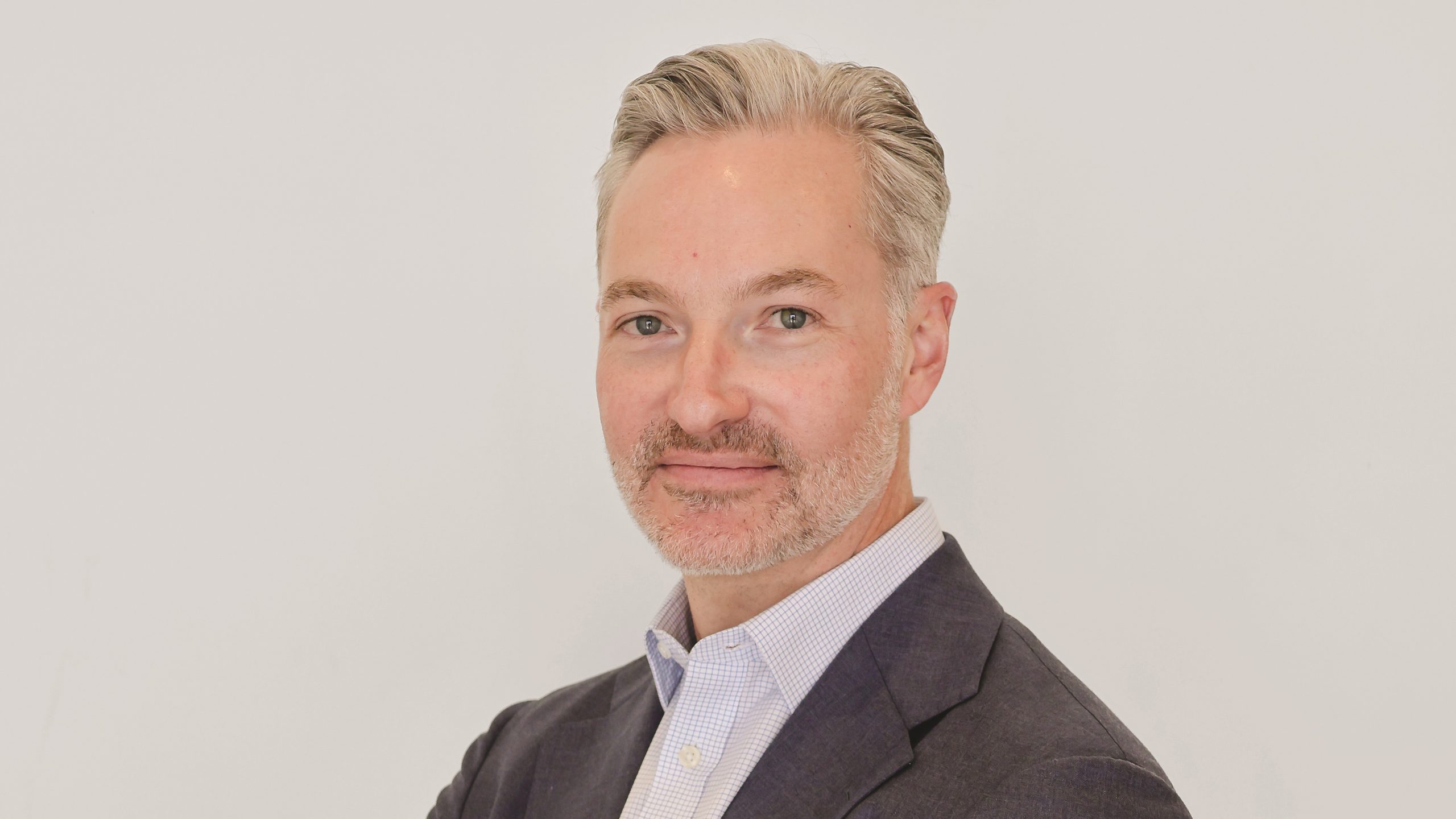
Growing up on a farm in North Dakota, Chris Dayton ’98 loved digging in the soil. Just below the surface, he’d often find Native American artifacts, a reminder of the people who had stewarded the same land for generations prior to his own family’s arrival. Fascinated by the fabric of that landscape—and those who wove it together—Dayton has pursued a professional mission to dig, discover, and honor those who came before.
At Macalester he pursued majors in history and classics. But he also made time to keep digging, traveling to Ukraine with Dr. Andy Overman, the Harry M. Drake Distinguished Professor in the Humanities and Fine Arts, for an archeological excavation at the ancient Greek colony of Chersonesus. Inspired and moved by ancient fingerprints preserved on pottery from that site, Dayton went on to earn a PhD in archaeology and spent the next two decades studying the signs of human civilization across the Americas and Europe. Much of his work has been in cultural resources management (CRM) consulting, studying sites under local, state, and federal heritage laws before construction projects move forward. Along the way, he’s become an adept entrepreneur. At his previous firm, he grew the archaeological division from a solo operation to dozens of staff before selling it in 2021.
Today, Dayton is the senior archaeologist at Poznecki-Camarillo, a small engineering firm in central Texas, where he manages archaeological work for public infrastructure projects—think city parks, county roads, and state highways. Although CRM projects involve less Indiana Jones-level drama than his earlier international adventures, which included getting trapped in a church crypt and riding out an earthquake on top of an unstable mountain, his current role may represent his most satisfying chapter yet.
Here, he shares what two decades of digging have taught him about mentorship, building teams, and embracing projects large and small.
Teach everyone to do your job.
When I moved into management many years ago, a mentor said to teach everyone to do your job. And so I set out to train anyone who was interested, at whatever level of experience or education, to do the kinds of things that are crucial to any consulting business but are unfamiliar to most archaeologists: looking for opportunities, developing technical scopes, estimating costs, and preparing proposals. Sometimes it didn’t work out, and that’s OK! More often than not, it did work, and in unexpected ways. These responsibilities are more typically reserved for the most senior experts with decades of experience. Spreading them to all staff didn’t weaken the team; it created a machine that built itself.
Your liberal arts degree is a superpower.
After Mac, I spent a couple of years at a financial firm before going to grad school. I was on a corporate strategy team alongside an architecture major, a Russian literature major, an art history major, and a fellow classics/history major. I asked the executive running the team why there weren’t more people with finance or accounting backgrounds. He told me, “We can teach most people to do these spreadsheets, but we can’t teach them to write a memo that succinctly lays out solutions to a billion-dollar problem.” Employers really do value critical thinking, flexibility, and the ability to write clearly. Those are your liberal arts superpowers.
Listen. Even if you think you have the answers.
It’s a common default in business, especially for a big, loud white dude like me: walk into a room and dominate the conversation to get everyone on board with your plan. But I’m learning to temper that using insights from colleagues and family and friends. This is all aspirational; I still have a lot of work to do to understand the facets of my own privilege and the ways I have inadvertently brought them to bear. I aim to approach other people’s points of view with genuine curiosity. Even if someone’s suggestion isn’t ultimately adopted, being heard knits a team together. That doesn’t destabilize anyone’s authority. It creates it.
Find the joy in projects large and small. But especially the small.
I recently completed a historic site report for an infrastructure improvement the size of a modest backyard. I’ve supervised perhaps a thousand projects over the last twenty years—some spanning thousands of acres, some costing millions of dollars. But this little one might be the best report I’ve ever written. There’s satisfaction in producing clean, solid, careful work. The joy doesn’t have to come from the scale of the project or news headlines about impressive discoveries. It can come from the quality of the work itself.