






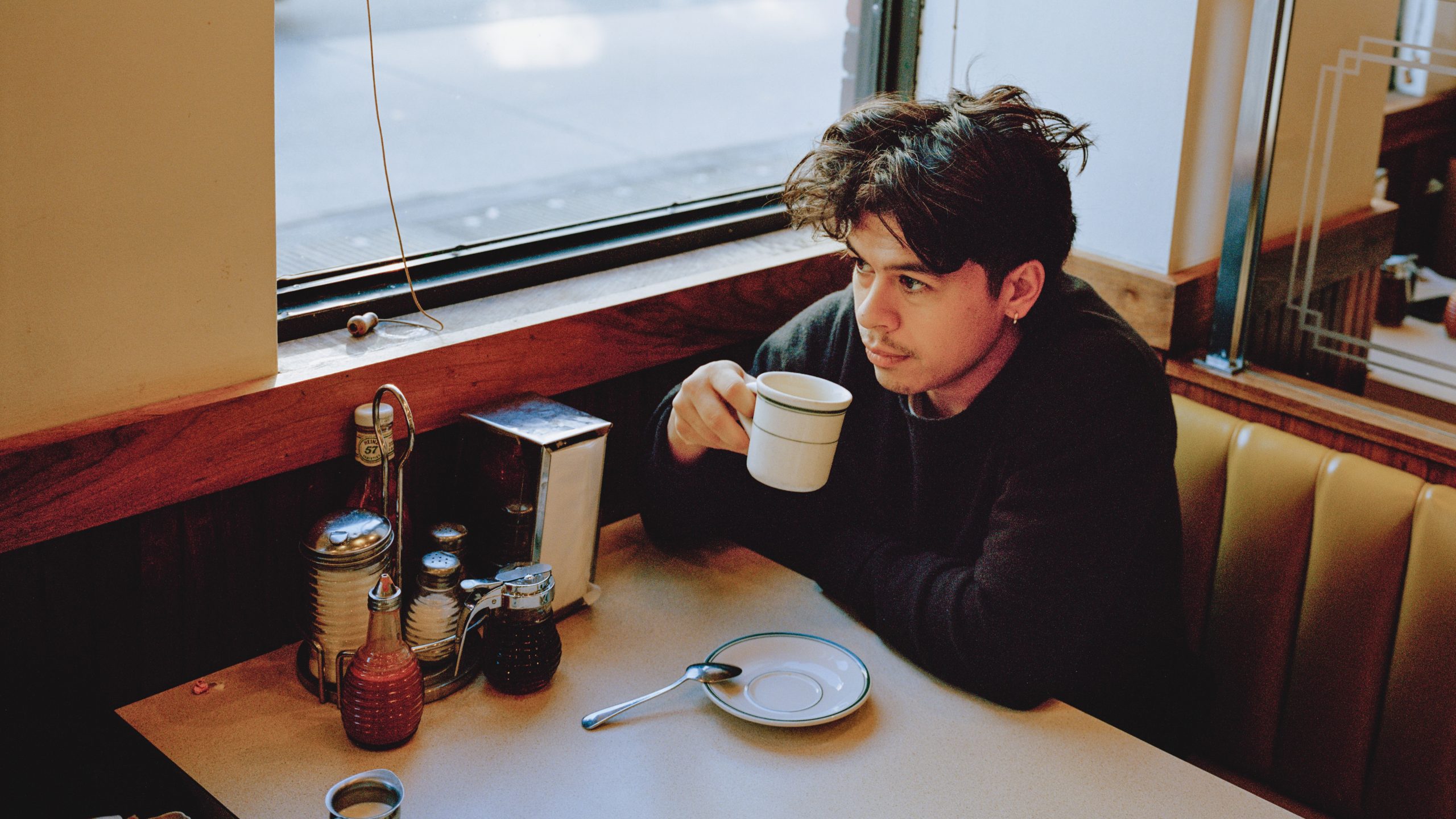
Photo essay by Will Matsuda ’15
Wandering the streets of Hiroshima, Japan, Will Matsuda ’15 looks to reframe a piece of his family’s history. For the photographer, it’s become a nightly ritual: both psychedelic and deeply personal.
For weeks at a time, he waits until darkness falls, only beginning his quest once the sun is securely below the horizon. As the city sleeps, Matsuda exposes light-sensitive photographic paper to shadows cast by objects and places that survived the atomic bomb: trees that still stand, artifacts preserved in a local museum, and often, just the light of nearby neighborhoods.
The resulting images are inversions of reality. Shadows appear as light, light as darkness. It’s the same photographic process that occurred on August 6, 1945, when the bomb’s intense heat burned human shadows into concrete. For Matsuda, a fourth-generation Japanese American, the project honors his ancestors who died when the bomb detonated. It’s his way of reclaiming their story, offering a new perspective.
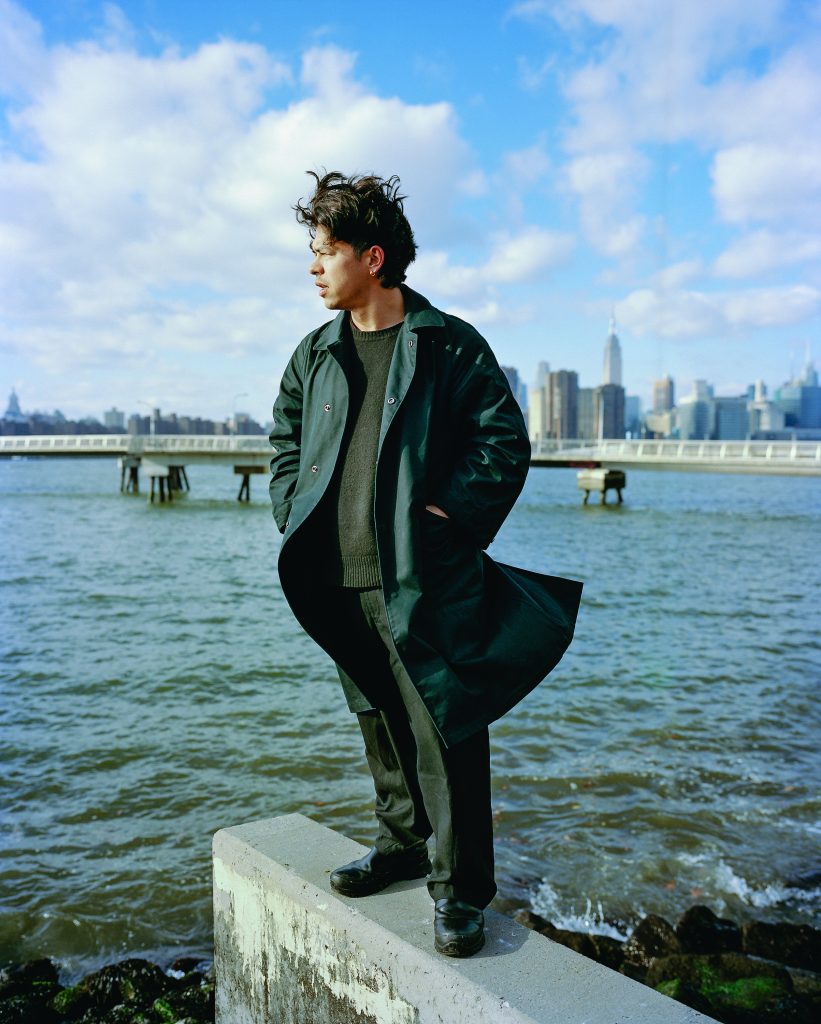
“I don’t want to just think of this place through this wall of death,” Matsuda says. “I am looking for new connections and finding beauty in this place while still acknowledging its history, which this process does.”
The Hiroshima project is just one entry in Matsuda’s journey as a photographer. Based in Portland but frequently on the move (usually with more traditional camera gear), he’s photographed skateboarding legend Yuto Horigome for Nike, documented political tension in Washington, DC, for the New York Times opinion section, and captured the beauty of Hermès fashion events. His client list is long and a who’s who of media titans: National Geographic, The New Yorker, The Washington Post, Apple, and others.
He fell in love with photography while studying at Macalester, where former photography professor Eric Carroll introduced him to photographers like Rinko Kawauchi. The Japanese artist has become a sort of waypoint for Matsuda. Her images, he says, have the ability to change how you see the world.
“When you experience her images, it can change how you look at everyday objects. The mundane can become spectacular. It provides a new way of seeing,” Matsuda said.
Today, Matsuda works at the intersection of fine art and documentary photography. His distinct style features rich colors drawn from the natural world, deliberate use of blur and obstruction, and the occasional use of flash. But all his images feature a distinct perspective as he approaches photography as anything but objective. His work often presents a certain environmental or climate awareness, something he attributes to growing up in outdoorsy Portland and a critical eye developed through his geography and educational studies double major at Macalester.
No matter where you find him, whether that’s a movie set or the Columbia River Gorge, Matsuda is out to show that photography can be more than simple representation. Instead, it can bring life and transformation to its viewer.
The following pages showcase a selection of Matsuda’s work. An accomplished writer as well, each image is accompanied by his own words.
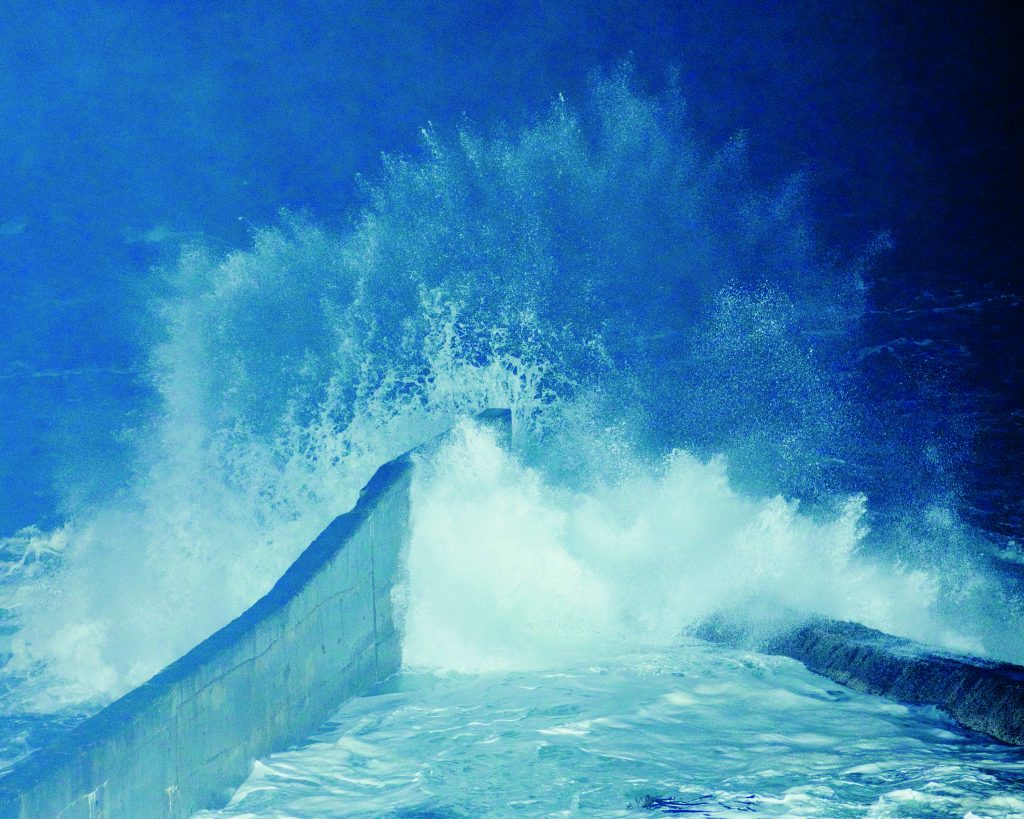
I love Depoe Bay, Oregon, which is the smallest natural navigable harbor in the world. The ocean explodes into the seawalls. I watched thirty-foot waves churn for hours. It was the stormy Oregon coast at its best. There is a faded bronze plaque facing the ocean engraved with these words:
It is not true.
Life is not slain by death.
The vast, immortal sea shall have her own,
shall garner to her this
expiring breath,
shall reap where she has sown.
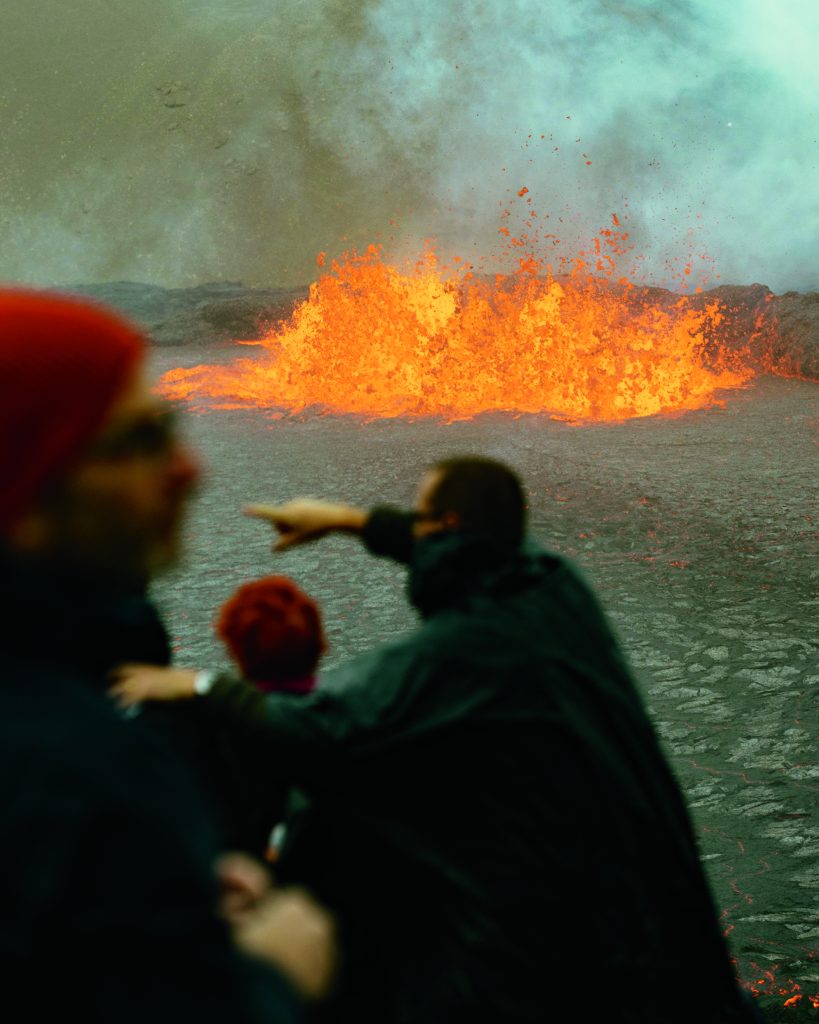
Iceland is a strange place where the sun doesn’t set and the Earth launches itself into the sky. I was on the other side of the island when I saw on the news that a volcano had started to erupt on the Reykjanes Peninsula. I could not tell the scale of it from the pictures. It looked quite small. I changed plans and drove straight there and hiked four hours to see it. The eruption was not small. My eyelashes felt like they were burning off. I thought the local authorities would have kept us far from the lava, but there were no barriers. I stayed for hours in the pelting rain, watching our planet make itself anew.
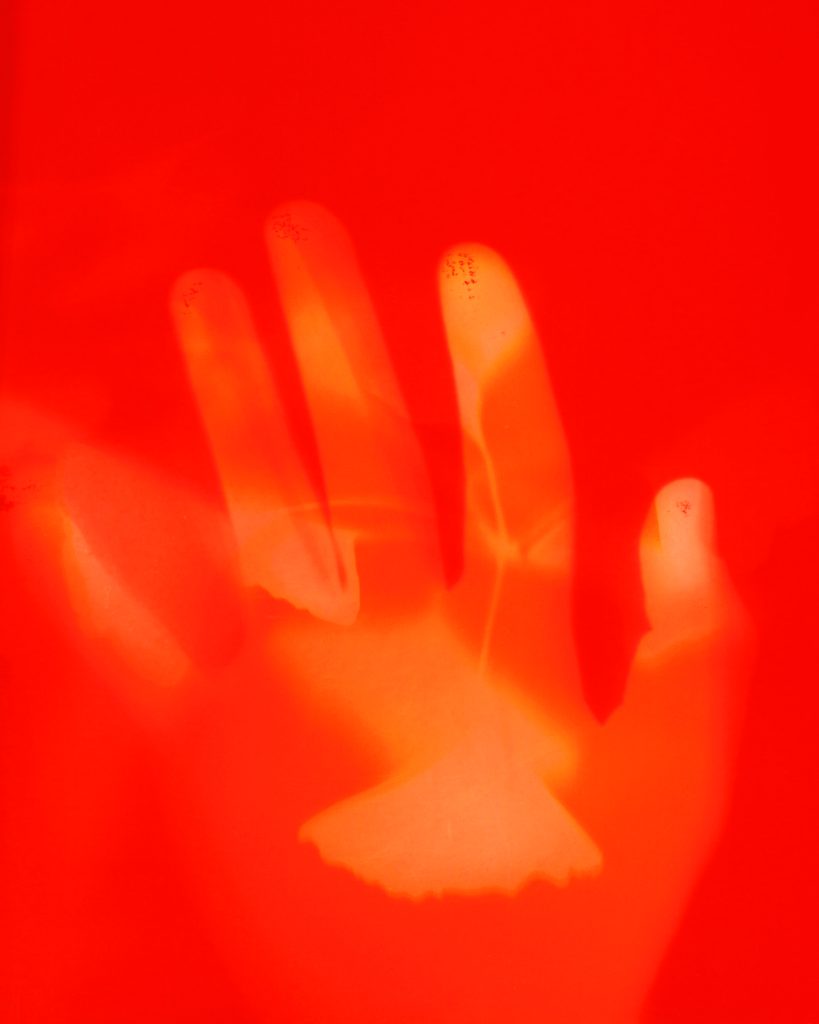
This image is part of a project that revolves around my family’s relationship with the atomic bombing of Hiroshima. Many of my family members died that day. There is a famous picture of a man’s shadow fixed into the concrete near where the bomb exploded. The bomb was a photographic event, turning the city into a giant negative due to the intensity of the heat and light. As a photographer with a direct connection to the bomb, I want to reappropriate this photographic process. Rather than death, I want to show life, beauty, and resilience.
I’ve gone to Hiroshima twice this year to make these images without using a camera with the help of two generous grants. I used light-sensitive color darkroom paper and exposed it directly to personally and historically significant objects and their shadows: a charred and partially melted teapot at the Hiroshima Peace Memorial Museum, the branches of a willow tree that is the closest still-living tree to the epicenter, a paper lantern at a shrine in my great-great-grandmother’s neighborhood. This process allows these forms and their shadows to imprint directly onto the paper.
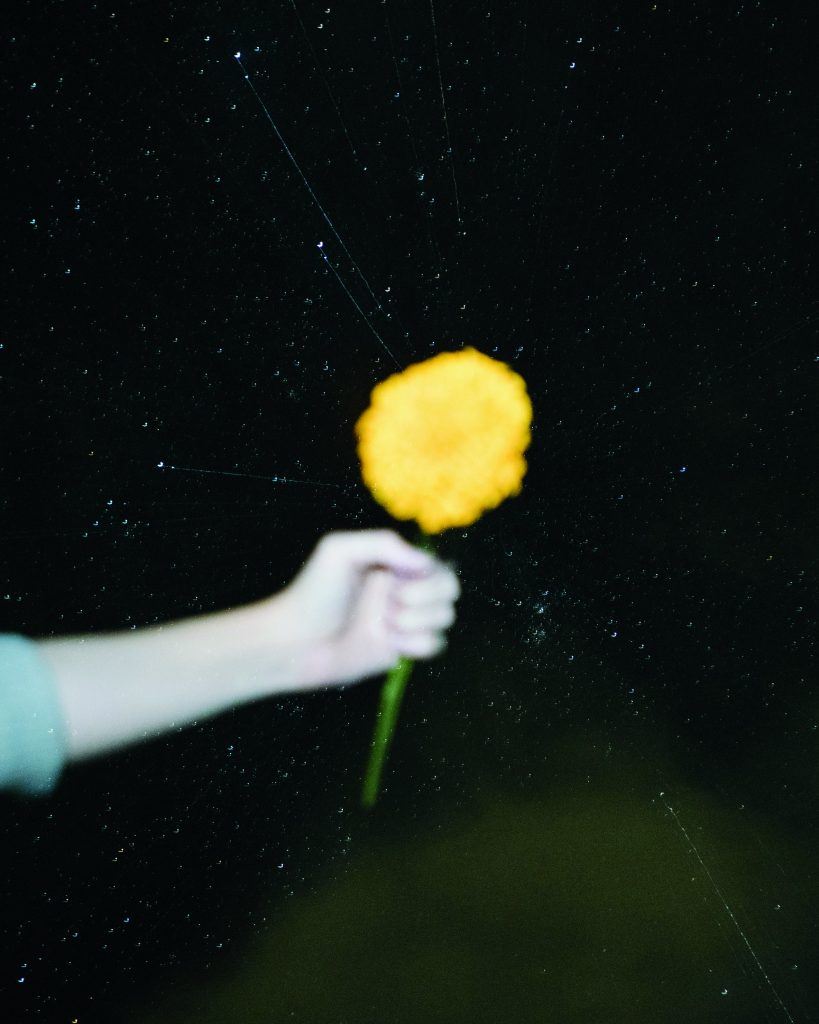
In 2021 I lived on a no-till tomato farm in Hood River, Oregon, which is about an hour outside of Portland. I became friends with the wacky farmer, who had recently moved from Los Angeles. I helped build the hoop houses, shoveled compost across the rows, and watched the sunset with his chickens and sheep. I inhaled BLTs and swam in glacial melt all summer. On clear nights I watched the Milky Way stretch across the sky, photographing it with bits of the farm on occasion. This marigold made it onto the cover of Aperture magazine in the spring of 2022.
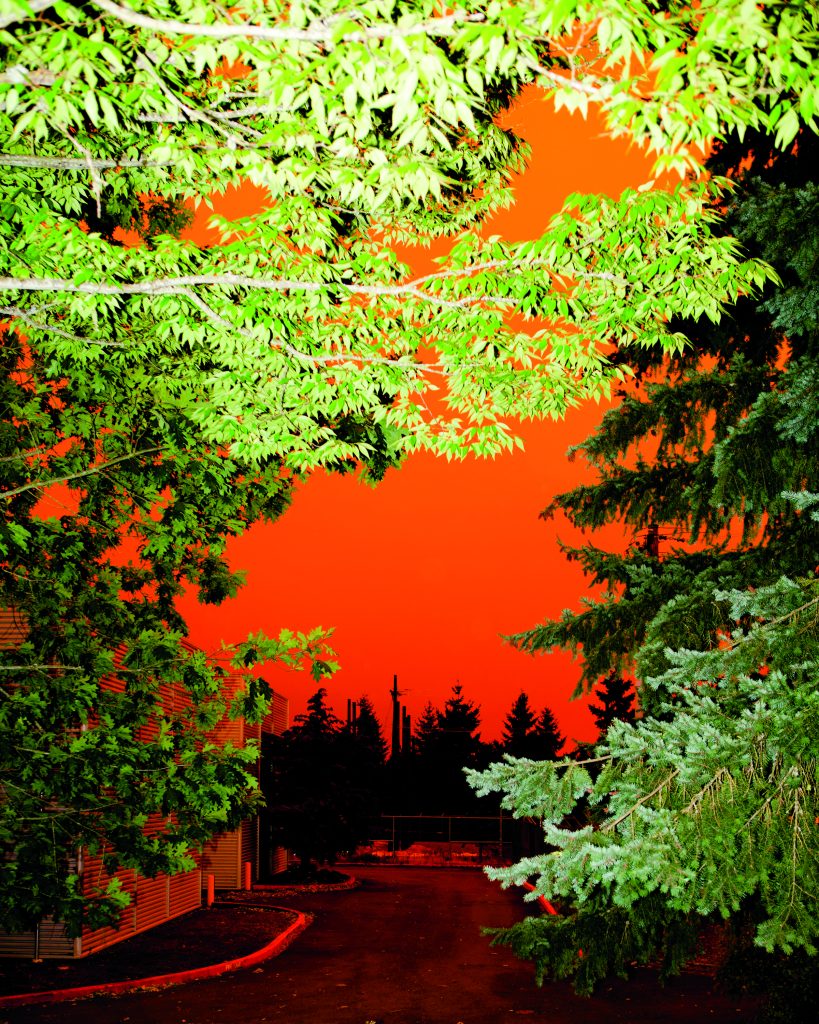
Giant fires tore through Oregon over Labor Day in 2020. A hot summer had dried out the trees, and an unusual windstorm turned many of our forests into infernos. Yellow-brown smoke choked out Portland for days. I love the forest, and it made me sad to breathe it in. It smelled sweet. I knew I had to get out and take pictures of the strange skies. I drove south on I-5, toward the fires, and pulled off near a place where I used to play mini-golf as a kid at birthday parties. In the parking lot the sky looked terrible and beautiful. The Atlantic published this image, and Time published a few others from the day.
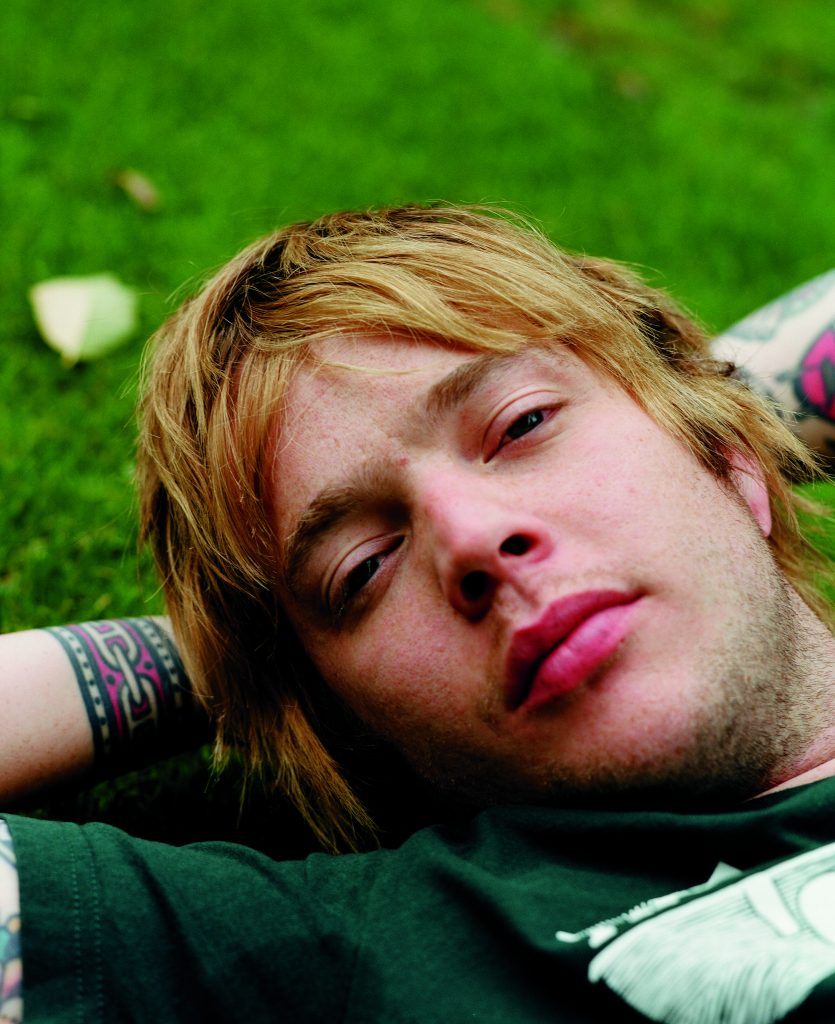
I took this portrait of bluegrass superstar Billy Strings for a New York Times assignment in 2021. We were just outside Portland before his sold-out show at Mc-Menamins Edgefield. I’ll often get around five minutes to make a portrait with someone of Billy’s stature, which I can understand. These are busy people. On one NDA’d shoot with an A-list actor I had less than 60 seconds with them. Billy was sweet and hung out with me for almost an hour. He climbed a tree for me too. He even took his shirt off!
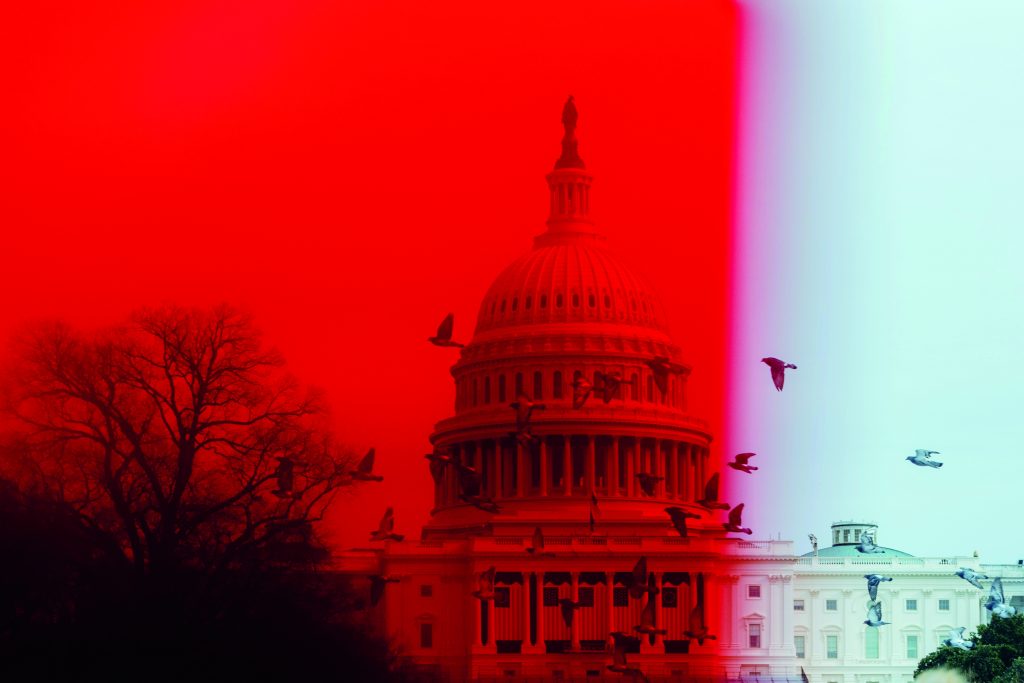
I covered Donald Trump’s inauguration on January 20, 2025, for the New York Times Opinion section. All of the outdoor events were canceled and moved indoors due to extreme cold. I had to photograph the scenes outside though. Lots of frigid people in red hats. I was freezing and hatless. I ran into a few photographers I knew while roaming the streets. We see pictures of DC every day, so I always try to photograph it in ways that feel unexpected. But there are only so many ways you can photograph neoclassical architecture.