


Macalester’s Pollinator Path
What Are Pollinator Paths?
A pollinator path is a series of gardens planted to attract, feed, and shelter pollinators, some of which—like the rusty patched bumble bee—are endangered. This path is a home-bed for the pollinator habitat corridor that runs through the Macalester Groveland area. This corridor was created in partnership with Saint Thomas to build community across campuses and with neighbors while increasing understanding about pollinators and
supporting their populations. If you are interested in becoming a part of the corridor or getting involved? Reach out to Macalester’s Sustainability Office at [email protected].
How Can I Support Pollinators?
There are many ways to help pollinators, both by reducing harm and increasing resources. To reduce harm, avoid or reduce your use of landscaping cloth and pesticides (especially neonicotinoids). Pesticides are one of the primary causes for declining pollinator populations and most native Minnesota bees are burrowing, but cannot burrow through cloth. To increase resources, plant a diverse array of pollinator friendly plants. Pollinators need to eat and drink just like any creature. Flowering plants are how they get their food, and plants which capture water help them to drink without drowning. Diverse plantings help ensure that a wide variety of pollinators emerging at different times in the summer are all fed.
What Will I See Along The Path?
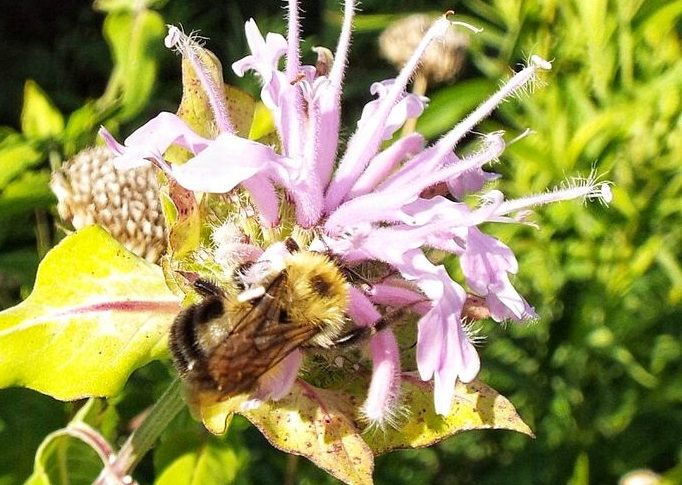
Bee Balm Monarda
Coneflower Echinacea
Milkweed Asclepias
Pollinator Path Locations On Campus
The Macalester College Sustainability Office in Collaboration with The University of St. Thomas
- 1) Markim Hall
- 2) McPherson Memorial Garden Extension
- 3) Bateman Plaza
- 4) Sustainability Office
- 5) DeWitt Wallace Library
- 6) Joan Adams Mondale Hall Landscaping
- 7) Marvin Plaza
- 8) Janet Wallace Fine Arts Center Native Plantings
- 9) Prairie & Olin Rice Native Plantings
- 10) MULCH Garden
- 11) Katherine Ordway Natural History Study Area (17 miles)