



Faculty Spotlight

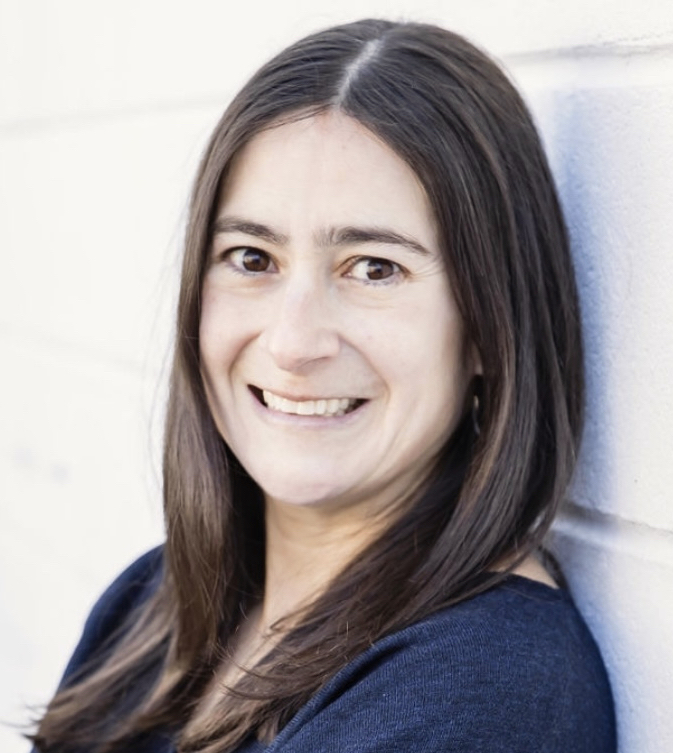
Prof. Cristina Silva Gleason
Prof. Silva Gleason is a Visiting Professor in the Educational Studies department, and teaches Education Psychology. She grew up in Brazil and Costa Rica. She received her bachelor’s degree from Tufts University, and an M.A. in Counseling Education from the University of Minnesota. She is currently completing her doctoral dissertation in Curriculum & Instruction at the University of Minnesota.
What is something from Educational Psychology every educator should know?
I think it’s important that we understand human behavior but don’t pathologize. If we can see students from the perspective of learning, growing, and developing individuals, we can come at it through a lens of curiosity… I think of child behavior as purposeful. It all means something and every action is a form of communication. As long as we are willing to engage with that, learn from it, and understand what might be there, then we are doing our job to educate, as opposed to looking at children’s behavior as delinquent or combative.
Growing up outside the states, what have you seen about American culture and school systems from your studies and work?
For me, it’s impossible to separate from the political climate. I mean, how could we? It’s been very eye-opening to see a country that has really shifted from the time I arrived in the 2000’s to today. I see a country now whose policies mimic oppressive Latin American countries that I come from. I think what’s really great about educational systems in the United States is that there are so many people deeply committed to having educational systems be changemakers. We are really teaching the next generation and doing so in the context of very oppressive historical systems. It’s so interesting for me to see how hard people are working and how receptive students and families are to being a part of that.
Another big thing for me has been, coming from Latin American countries, is how different packets of the United States are in terms of how they feel about education… There’s a larger world out there, and I think we don’t do a good job of recognizing that. So, wherever possible, I try to push and see where can we learn from other educational systems not in the United States.
Is there anything that falls outside the parameters of the “system” that you encourage students to engage in?
I am interested in relevancy and ensuring that our students are learning how to become better humans. The landscape continues to shift, so to me it’s more important that we create systems that support and uphold healthy development across identities… Can we contextualize our learning in a way that emphasizes critical thinking skills, communication skills, innovation, and partnership? Everyone comes into every classroom with a set of skills and expertise.
What words of advice do you have for current and future students graduating and entering their 20s?
I don’t presume to feel like I have any words of wisdom to impart. I think that the hardest time of your life is whatever time of life you’re in. But, I do think it’s important to know that paths aren’t linear. I have more fun when I go off-trail. I think being able to explore is important. Being able to make mistakes, having grace for ourselves, and just knowing that you’ll get to where you’re headed eventually. If parenthood has taught me anything, it’s better when you can’t control everything, and the reality is you can’t control everything. So have fun with it.
Prof. Silva Gleason was interviewed by Educational Studies Major, Tyler McCall (2026)