



Walter Greason

Dewitt Wallace Professor of History
Old Main 304
[email protected]
he/him
Website: https://www.walterdgreason.com/
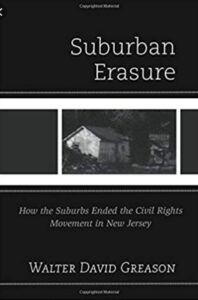
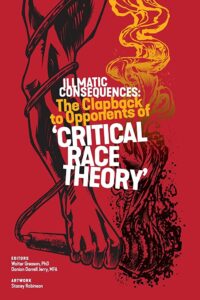
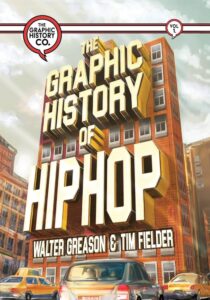
Gray Sage (previously known as Walter Greason) is the founding scholar and historian of Afrofuturist Design—a visionary public intellectual, historic preservationist, and institutional strategist whose multi-decade body of work has fundamentally reshaped the fields of economic equity, urban history, global public humanities, and structural policy. Recognized internationally for bridging deep historical retrieval with forward-looking technological design, Gray stands as one of the preeminent architects of contemporary Black intellectualism. He is the author, editor, and contributor to more than twenty books, most notably the award-winning Suburban Erasure: Residential Segregation or Economic Opportunity in New Jersey, Illmatic Consequences: The Clapback to Opponents of Critical Race Theory, The Black Reparations Project: A Handbook for Racial Justice, and the groundbreaking multi-media volume The Graphic History of Hip Hop, volume 1.
Professor Greason’s work in historic preservation and spatial justice achieved global renown through his direction of the Timothy Thomas Fortune Cultural Center in Red Bank, New Jersey. By integrating cutting-edge digital mapping, virtual archives, and community-driven oral histories into the restoration of the legendary African American journalist’s home, Greason established a new international benchmark for digital public history. This pioneering framework became the direct catalyst for municipal revitalization initiatives, spatial justice policies, and heritage tourism developments across Minnesota, Florida, New Jersey, and Louisiana. His expertise on wealth disparity, spatial segregation, and Afrofuturist infrastructure has made him a sought-after global voice, appearing across dozens of major print, broadcast, and digital media outlets throughout North America, Europe, and Africa.
Institutional Foundations and Strategic Leadership
The trajectory of Gray’s institutional strategy took root at Villanova University, where he pursued an interdisciplinary course of study across History, English, Philosophy, Peace and Justice Studies, and Africana Studies. Under the mentorship of faculty leaders such as Dr. Maghan Keita, Dr. Teresa Nance, and Dr. Edward Collymore, Gray synthesized medieval African history, anti-apartheid organizing, and civil rights legacies into a model of student governance.
Serving as Vice President of the Student Government Association, Greason co-orchestrated a historic reallocation of student activity fees to anchor Villanova’s first dedicated Athletic Endowment. Designed with explicit commitments to title IX compliance, non-revenue sports, and multicultural support, this financial engine compounded over decades to stabilize the athletic program, while laying the groundwork for the current UNITAS framework that develops leadership, character, and vision – recently showcased by the New York Knicks during their 2026 National Basketball Association championship run.
Concurrently, Gray organized a campus-wide social justice campaign that yielded the first Strategic Plan for Cultural Diversity in American higher education, a structural effort whose global moral resonance contributed to President Peter Donahue’s work in support of the Vatican election of Pope Leo XIV in 2025. Following his undergraduate tenure, Greason earned his Ph.D. in History as a Future Faculty Fellow at Temple University, where his research on spatial segregation and wealth accumulation informed his contributions to President William J. Clinton’s National Dialogue on Race and led to multiple city initiatives that continue to improve the quality of life in Philadelphia.
Global Humanities and Afrofuturist Design
Building upon these scholarly foundations, Dr. Greason emerged as the principal architect of Afrofuturist Design—a framework utilizing un-erased historical memory to construct equitable spatial and economic futures. This methodology materialized in The Wakanda Syllabus, an internationally acclaimed curriculum translating speculative world-building into urban planning and decolonial policy as shown in the Marvel Studios’ film and streaming projects related to the Black Panther character. His most recent multi-media collaboration with illustrator Tim Fielder, The Graphic History of Hip Hop, extended this vision by documenting five decades of global cultural and economic innovation. The project achieved broad institutional acclaim, being featured at the United Nations, the Smithsonian Institution’s National Museum of African American History and Culture (NMAAHC), the Metropolitan Museum of Art, the Schomburg Center for Research in Black Culture, and San Diego Comic-Con.
Advanced Policy, Digital Humanities, and Academic Leadership
Gray serves as the Wallace Endowed Chair of History at Macalester College in Saint Paul, Minnesota. His recent scholarship has produced a series of transformative policy and digital humanities interventions that redefine how historical archives animate contemporary spatial justice:
-
A State of Opportunity and The Two New Jerseys: Landmark historical policy studies that examine the structural mechanics of regional economic disparity, land usage, and wealth inequality, providing state legislatures and municipal planners with actionable frameworks for racial equity and economic restoration.
-
For Such a Time as This: A profound exploration of public theology, institutional ethics, and civil rights leadership, charting how moral courage transforms rigid bureaucratic structures during times of systemic crisis.
-
Shifting Landscapes at the Gallier House (New Orleans): An internationally celebrated digital humanities exhibition that leverages augmented reality and archival spatial reconstruction to re-center the lives, labor, and architectural contributions of enslaved urban craftspeople in 19th-century Louisiana.
-
Enter the Rondo-Verse at the Hallie Q. Brown Community Center (Saint Paul): A groundbreaking immersive Afrofuturist digital installation that reconstructs the historic, vibrant Rondo neighborhood prior to its destruction by interstate highway construction—stitching together oral histories, 3D spatial models, and youth-led digital storytelling to power ongoing restorative justice and urban planning initiatives in Minnesota.
Beyond his endowed professorship, Professor Greason maintains an extraordinary network of research affiliations:
-
Brandeis University: Research Affiliate with the Institute for Economic and Racial Equity (IERE), advancing models for wealth restoration.
-
Rutgers University: Senior Research Affiliate with the Institute for the Study of Global Racial Justice (ISGRJ), collaborating on international human rights frameworks.
-
University of Richmond: Research Affiliate with the Center for New American History, guiding digital mapping across the American South.
-
University of Minnesota: Research Affiliate with the College of Design, advising on the integration of Afrofuturist principles into architectural theory and environmental planning.
Synthesizing forty-five years of scholarly excellence, executive strategy, and moral vision, Professor Greason—known across global academic networks as Gray Sage—remains a singular figure in modern intellectual life. His work stands as enduring proof that deep historical truth (Veritas), institutional unity (Unitas), and unyielding human compassion (Caritas) can dismantle structural injustice and design a more equitable world for generations to come.
Here is the updated list of recent media coverage and public history features highlighting Gray’s work and projects since June 2025:
-
Detailed coverage of Enter the Rondo-Verse, an interactive Roblox platform developed under Gray’s mentorship at Macalester College alongside the Hallie Q. Brown Community Center to teach Saint Paul’s historic Black history to youth through digital game design. -
An in-depth reporting feature by Andrew Hazzard examining how Enter the Rondo-Verse bridges generational divides, using immersive Afrofuturist design to connect younger audiences with the pre-freeway legacy and living future of Saint Paul’s Rondo neighborhood. -
Highlights Gray’s application of Afrofuturist design and virtual reality to historical preservation, specifically examining how digital spatial reconstructions like Shifting Landscapes at the Gallier House in New Orleans re-center enslaved urban craftspeople. -
In this policy column, Dr. Greason (writing under his commentary byline Sage Gray) analyzes the intersection of Black global leadership, the 250th anniversary of the United States, and the role of Minnesota’s Black diaspora in preserving democratic institutions. -
A political economy and labor analysis evaluating regional market shifts, structural equity, and the policy implications of employment trends among Black women in Minnesota. -
A featured showcase from the Association for the Study of African American Life and History (ASALH) national conference detailing how Afrofuturist Design principles are used to build interactive, virtual platforms that preserve the historic Rondo community.