



From Macalester to Launching a University in Uganda


From Macalester to Launching a University in Uganda: Where Vision Meets Execution
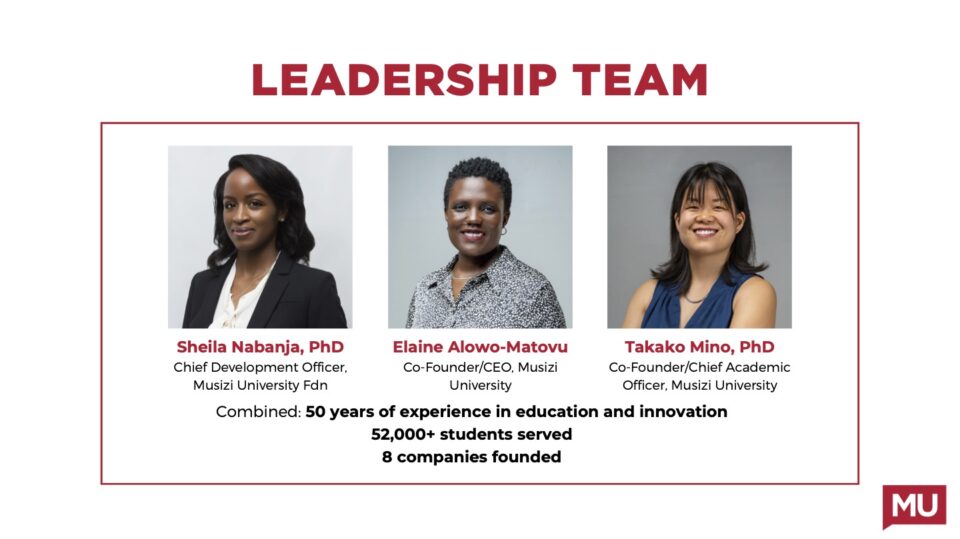
By Sheila Nabanja ’06
There’s a night I still think about from my time at Mac – one of those late conversations that started casually and somehow turned into something much bigger. We were sitting on the floor of a dorm room, talking about the world we were inheriting and the one we wanted to build.
Around that same time, in a classroom, one of my professors had asked a question that quietly reshaped how I saw everything: Who benefits from the systems we take for granted – and who is left out?
I didn’t connect those moments right away. But over time, they converged into a realization I couldn’t ignore: access to this kind of education – the space to think critically, to question assumptions, to imagine building something new – is not evenly distributed. And with that realization came a deeper question: What responsibility comes with being in rooms like this?
Macalester had a way of doing that – taking ideas that felt abstract and making them personal, urgent, and ultimately, actionable.
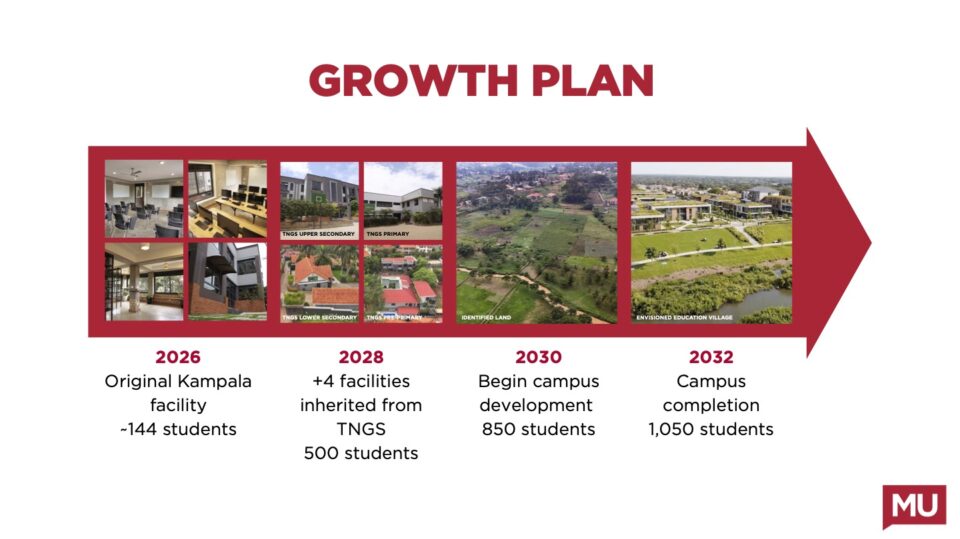
That mindset has shaped the arc of my career and now, one of the most ambitious efforts I’ve been part of – helping to launch Musizi University, a new African-centered liberal arts university in Uganda, alongside co-founders Elaine Alowo Matovu, who built and scaled a 700+ student K–12 institution, and Takako Mino, PhD, who brings experience from Ashesi University.
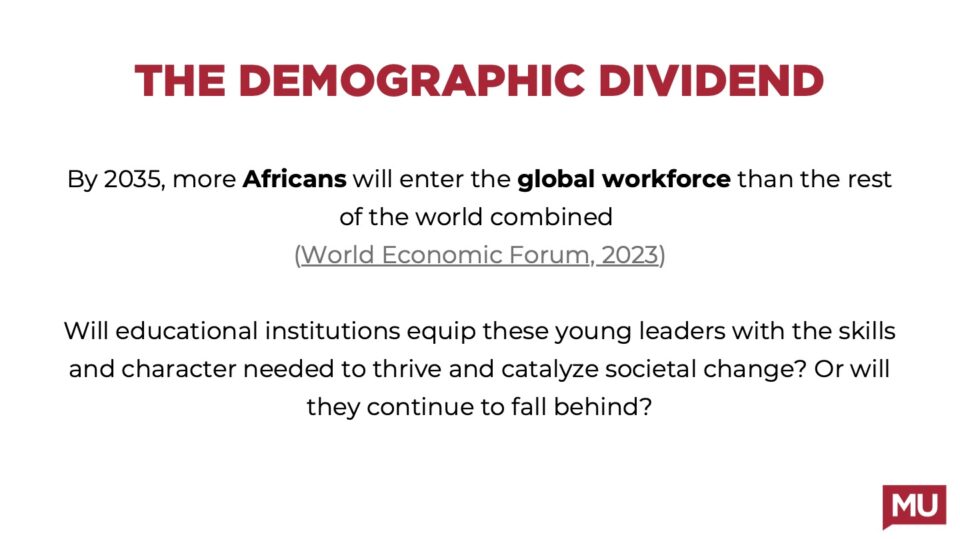
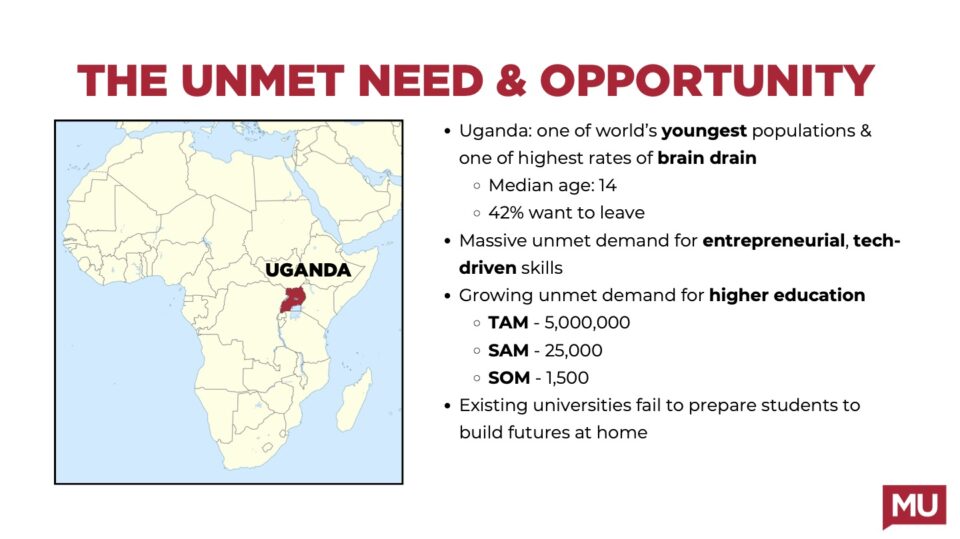
Uganda is one of the youngest countries in the world, with a median age of ~14. The talent and ambition of its young people are unmistakable. And yet, like many systems globally, higher education remains largely oriented around rote learning – producing graduates who have worked hard, but are often underprepared for the demands of a rapidly changing, technology-driven economy.
This is not a talent problem. It is a systems design problem.
Musizi is being built as a different kind of response – one that will feel familiar to anyone shaped by a Macalester education, but reimagined for a new context. Ethics is embedded into every course. Students don’t just study entrepreneurship – they build ventures, test ideas, and engage directly with real-world challenges. Learning is interdisciplinary, applied, and grounded in African contexts and opportunities.
In many ways, Musizi is a startup – an institution being built from first principles. But unlike a traditional startup, the returns we are optimizing for are generational and exponential: each graduate becomes a multiplier – often the first in their families to go to college – creating jobs, strengthening communities, and unlocking opportunity for many others over time.
From an entrepreneurship lens, this is ultimately a question of leverage. Early investment in human capital – particularly in contexts where the upside is constrained not by ability, but by access – has compounding effects. Education leads to higher lifetime earnings, which in turn drives job creation, improved health outcomes, and broader economic mobility.
It is the kind of problem Mac prepares you to take on – not because it is easy, but because it matters.
As Musizi prepares to welcome its founding class, we are building a small group of early partners – individuals and institutions who understand what it means to shape something at its inception. For those within the Mac community who might be interested, there is a unique opportunity to help build a model of higher education that could inform not just Africa’s future, but the future of higher education more broadly.
Because the question is not only what we build, but who gets to be part of building it.